
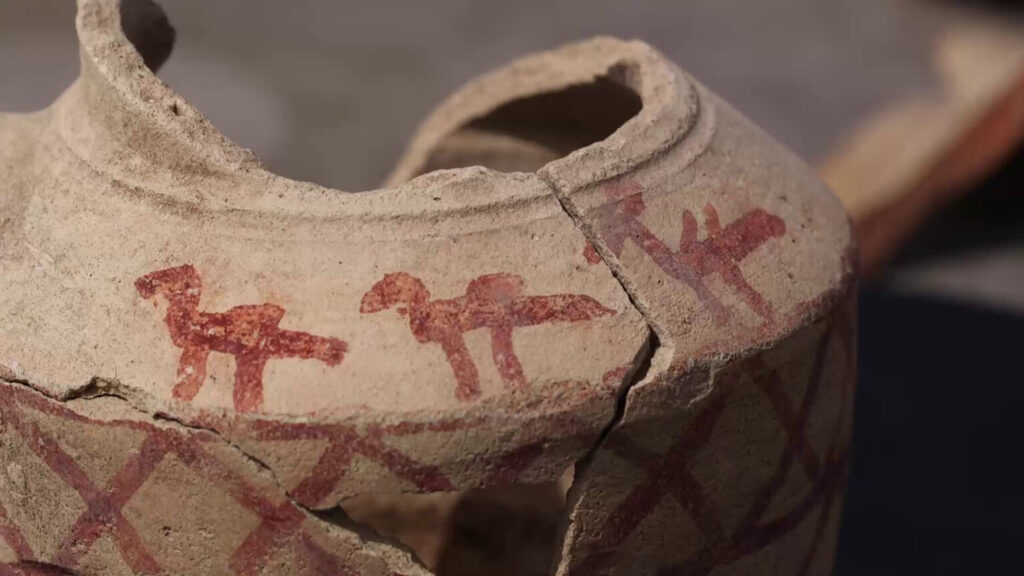
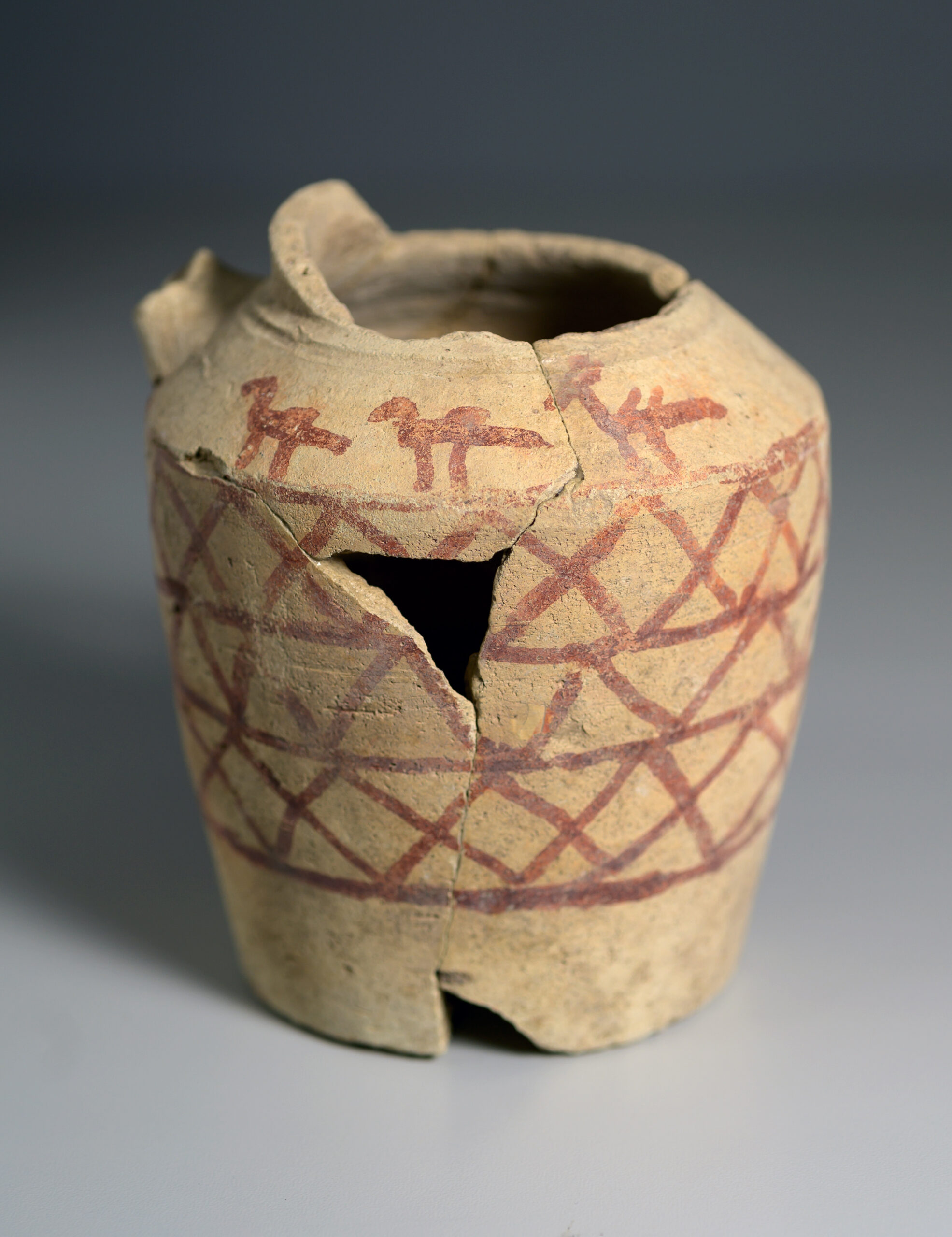
A beautifully decorated red clay jug, estimated to be around 1,200 years old, has been unearthed during excavations by the Israel Antiquities Authority (IAA) at Khirbet ‘Anim in the Yatir Forest. Among the striking features on the vessel are painted images of camels, a discovery researchers say offers important insight into the economic and cultural life of the Abbasid period (9th–10th centuries CE).
Camels: The Economic Lifeline of the Desert
“The decision to depict two camels on the jug reflects just how central they were to life during this era,” explained archaeologists Oren Shmueli, Dr. Davida Dagan, Dr. Anat Cohen-Weinberger (IAA), and Dr. Katia Cytryn-Silverman of the Hebrew University of Jerusalem. The team presented their findings Thursday at the IAA’s 20th annual Southern Research Conference, held at Ben-Gurion University.
“Camels were the dominant overland transportation method for moving goods,” they explained. “Their role was essential to the economy, particularly as sea and land transport methods evolved from Roman and Byzantine technologies to more desert-adapted solutions during the early Islamic period.”
More Than Just a Jug
The jug, used for storing liquids, features geometric red designs alongside a caravan of animals, including at least one clearly identifiable camel, and possibly an ostrich or donkey. The researchers believe this art speaks to a pivotal economic shift in the region:
“In Roman and Byzantine times, ships and carts were primary modes of transport. But in the early Islamic period, the camel, known as the ‘ship of the desert,’ took center stage as the essential overland transporter,” said Shmueli.
A Window Into Life Underground
The colorful jug was found during renewed excavations in a cave converted into a dwelling that originally served as an underground olive oil press, dating back to the early Islamic period, around 1,300 years ago. The dig was part of a development project by Keren Kayemet L’Yisrael (JNF) to make the site accessible to visitors. Conservation experts from the IAA have also carried out extensive preservation work on both the oil press and a nearby Byzantine-era synagogue.
Ancient Synagogue and Community Life
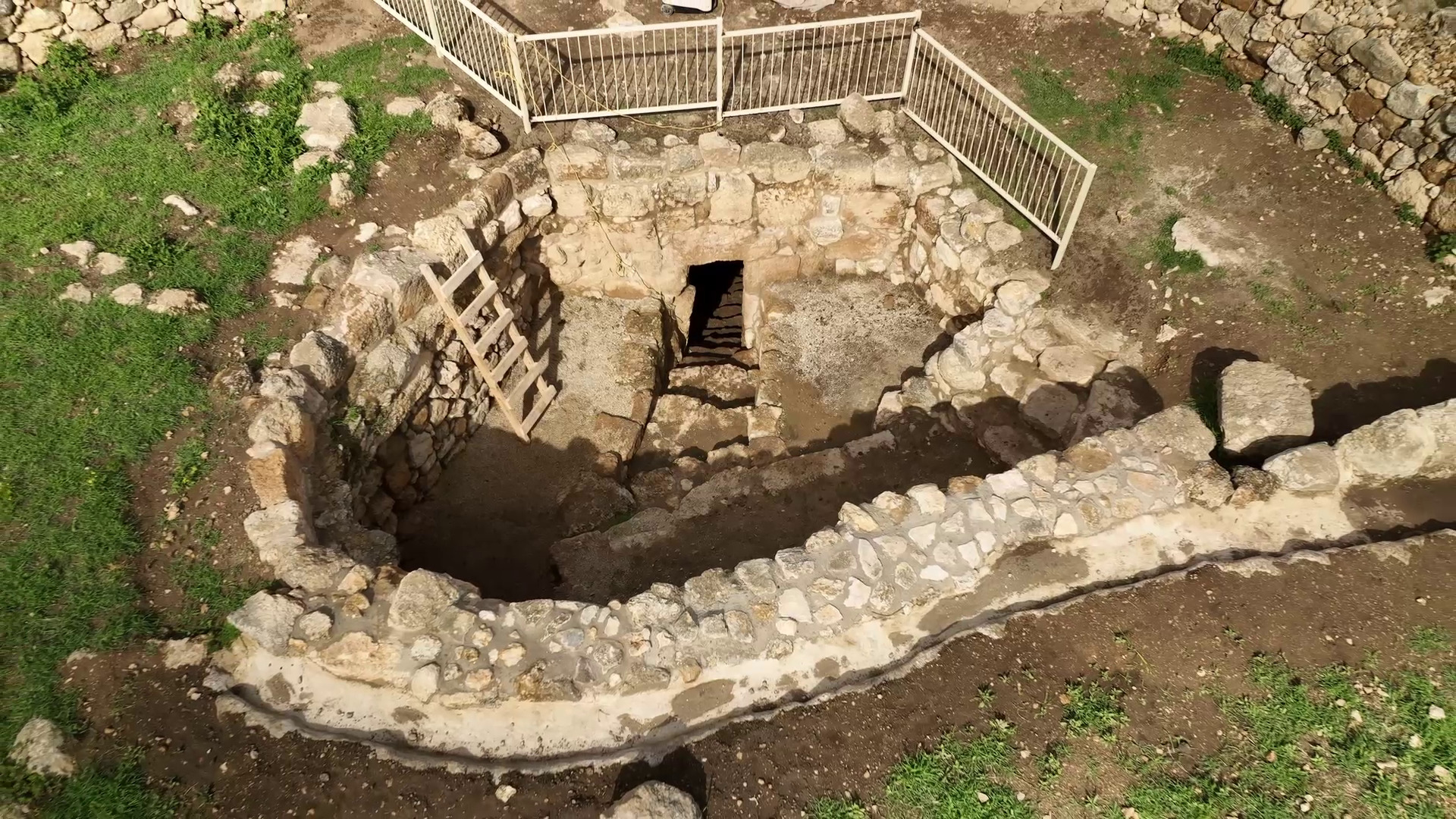
The synagogue structure, first uncovered 40 years ago by the IAA and the Avshalom Institute, features well-preserved mosaic flooring and provides clear evidence of the vibrant Jewish community that once lived in the area.
“Roughly 1,500 years ago, this region was known as Daroma, home to both Jewish and Christian communities,” said Shmueli. “There’s no doubt the synagogue at Khirbet ‘Anim was the religious heart of a thriving Jewish population.”
An Ancient Olive Oil Factory
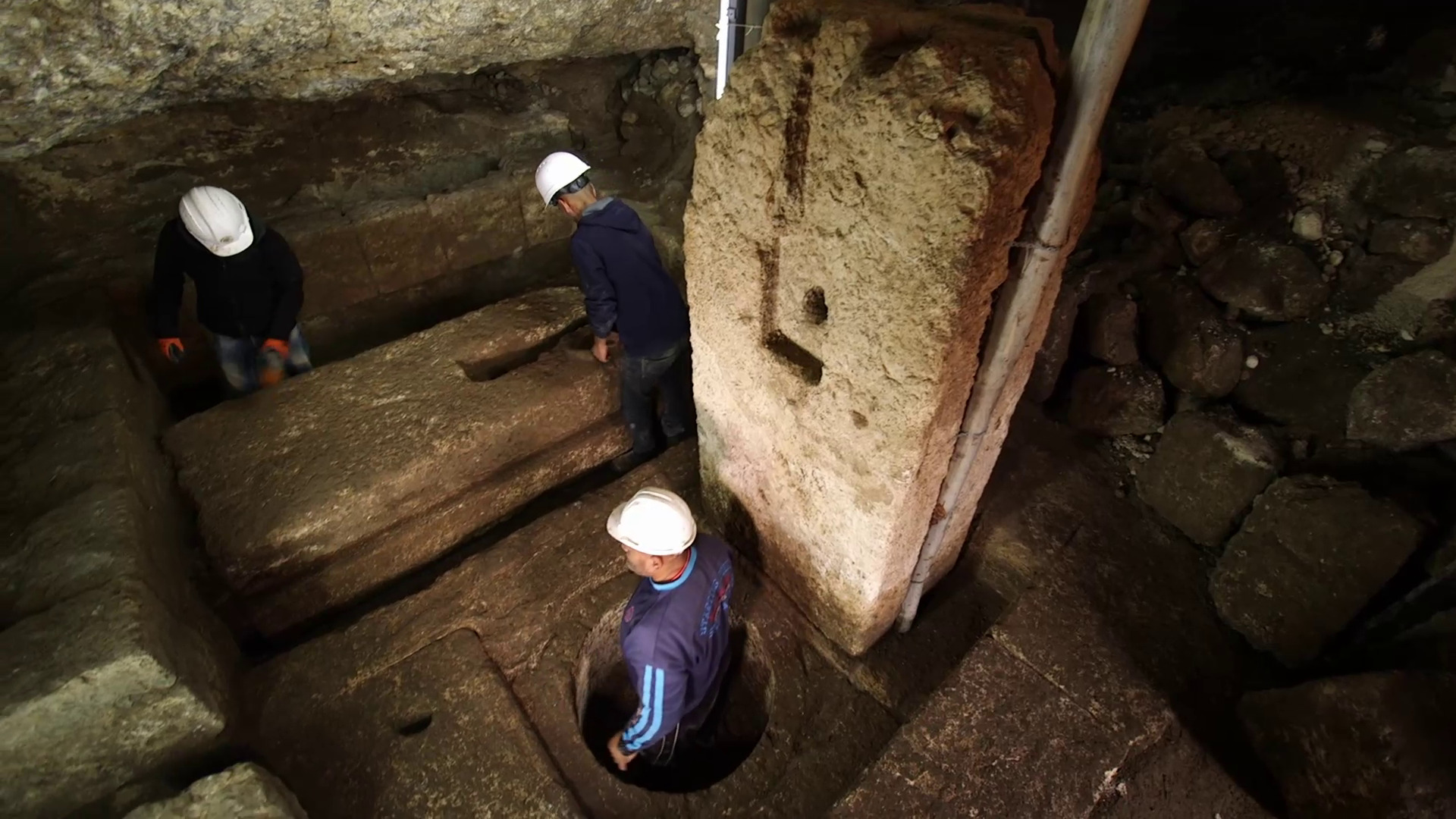
The fully excavated olive oil production facility, located deep inside a cave, includes two massive pressing stones known as “Nitzavei Yehuda”, part of a sophisticated system for extracting oil. A wooden screw, once fitted between the stones, was used to press olives and channel oil into a stone basin at the center.
“The unique aspect of this oil press is its advanced and orderly construction,” said Shmueli. “Essentially, this was an ancient factory, equipped with a high-tech machine for its time.”