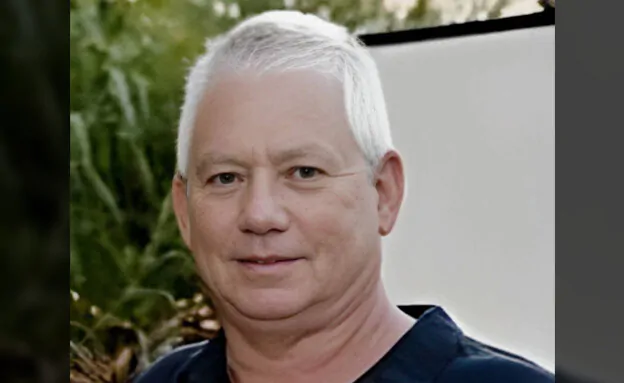

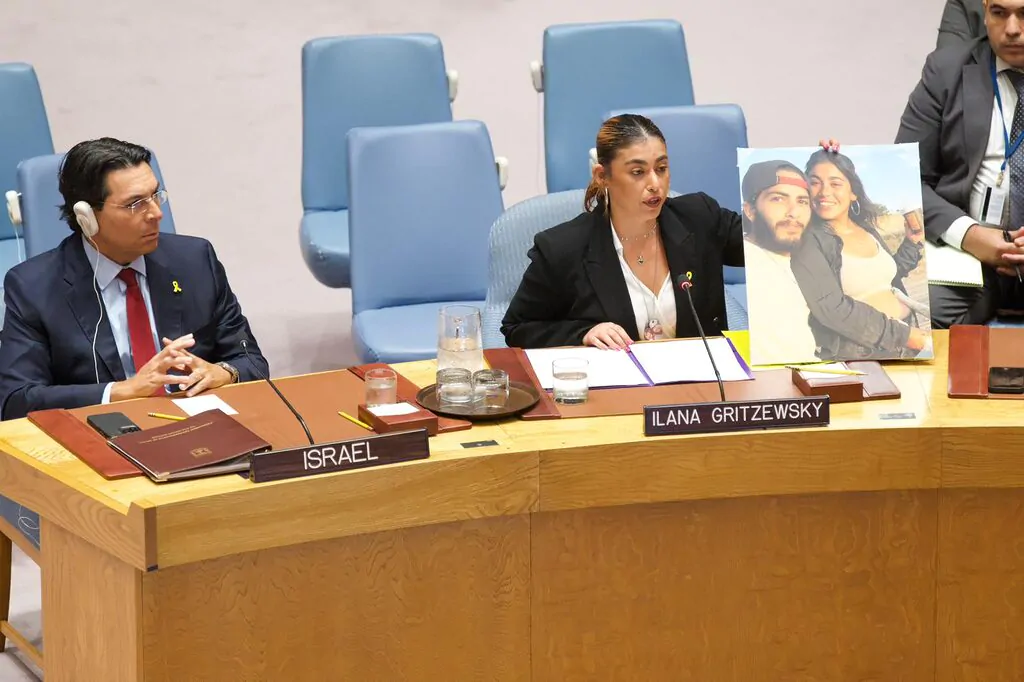
Ilana Gritzewsky, who was held for 55 days in Hamas captivity in Gaza, testified on Wednesday evening before the UN Security Council in New York. In a deeply personal and emotional speech, delivered in English before world ambassadors, she bravely recounted the moments of her abduction, the abuse, and her time in captivity – alongside a direct appeal to the Council to act for the immediate release of the hostages, among them her partner Matan Zangauker.
“I stand here not only for myself, but on behalf of those still in captivity, and on behalf of those who were murdered and silenced forever.”
“When I Needed You – You Weren’t There”
Gritzewsky spoke about her childhood in Mexico, in a deeply rooted Jewish home, her studies in human rights, and her involvement in international organizations such as the UN, UNICEF, and the Red Cross. “But when I needed them most – they weren’t there,” she accused. At age 16, she immigrated alone to Israel. “I wanted to feel safe.”
Together with Matan, she built a home in Kibbutz Nir Oz, a bakery, and a greenhouse – “until October 7 shattered everything.”
Ilana recalled how she first hid with Matan in their safe room – “he held the door, and I tried to calm our dog, Nuni” – until they were forced to flee. She found shelter in the home of Gadi and Yehudit Haggai, who were murdered and abducted to Gaza.
“The Terrorists Sexually Abused Me”
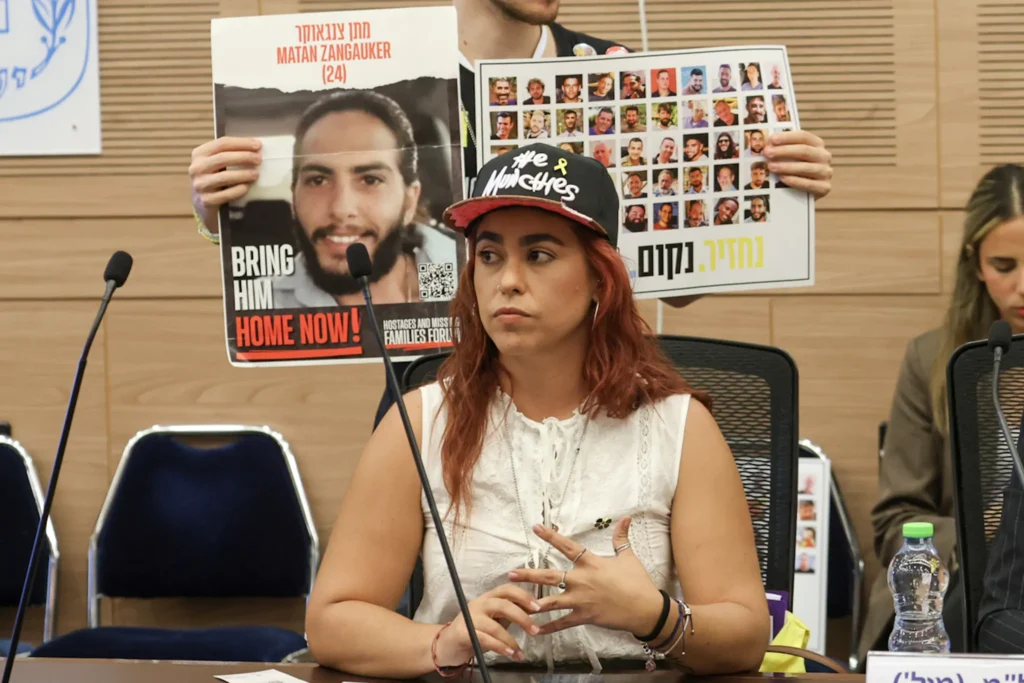
She described the harrowing moments of her abduction, while clutching a picture of her partner, Matan: “They grabbed me by the hair, beat me, tried to film me, I begged them not to rape me and not to kill me. They threw me onto a motorcycle, and on the way they began to sexually abuse me – until I fainted. When I woke up, I found myself half-naked, surrounded by terrorists.”
She suffered a broken jaw and pelvis, ear damage, and a burn on her leg. “One of them told me I would never be released, that I was beautiful, and that we would marry and have children.”
She was repeatedly moved between houses, tunnels, and filthy apartments. “We spent 40 days with almost no food or water, without medicine, under ongoing psychological terror. I lost 12 kilos. I was denied medication despite preexisting conditions. They decided when we could talk, when we could sleep, when we could go to the bathroom. Every chickpea was only after they had taken the meat and rice for themselves.”
Four days before her release, she was taken to Nasser Hospital, and from there – to a tunnel. There she met fellow hostages Eitan Horn and David Cunio and learned for the first time that Matan was still held in Gaza. “I begged to see him. They said ‘later.’ But ‘later’ never came. In the end, I had to leave with a hole in my heart.” She said she was repeatedly deceived, promised false releases, forced to strip for fear of tracking devices – until she was freed after 55 days.
“I Have a Safe Room – Matan Does Not”
“People look at my face and think I am free,” she told Council members. “But trauma doesn’t end with release. Every siren takes me back there, to hell. The difference is that I have a safe room – and Matan does not.”
“I survived, but my soul is still there. Until everyone returns – none of us are truly free.”
The Hypocrisy of the International Community
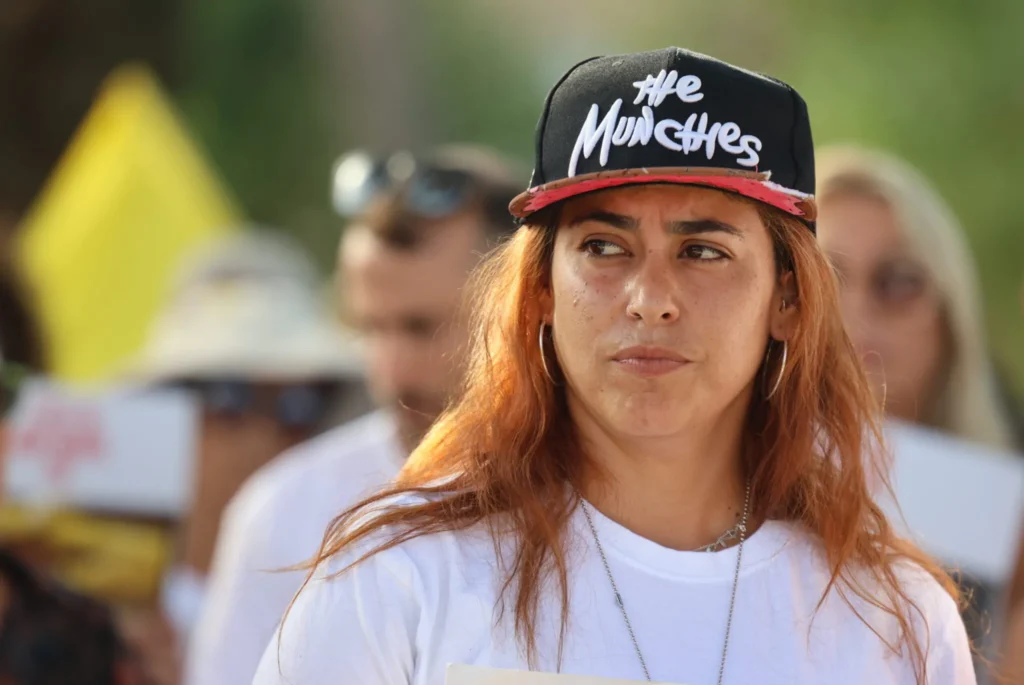
Gritzewsky courageously faced the UN audience and accused the international community of moral blindness. “Why are cartels in Mexico considered terrorists, but Hamas – which raped women, burned children, and abducted the elderly – is not condemned in the same way? Why is our pain questioned?” She urged the Council to act immediately: “Not tomorrow, not in the distant future – now. Bring them home.”