
Early Life
Raoul Wallenberg was born this week, 113 years ago, on August 4, 1912, in Lidingö, near Stockholm. He was raised in a well-established Christian Swedish family involved in banking, diplomacy, and industry. His grandfather, Gustaf Wallenberg, took on the role of father after Raoul’s father died before his birth, and educated him with a humanist worldview.
Thanks to his grandfather’s connections, Wallenberg worked in South Africa and later in Haifa, where he met refugees from Nazi Germany and became aware of their plight. After returning to Sweden, he joined a company owned by a Hungarian-Jewish businessman and traveled across Nazi-occupied Europe. During these missions, he studied German bureaucracy and witnessed Jewish persecution firsthand.
Work in Hungary
During World War II, Hungary was allied with Nazi Germany. While Hungarian Jews initially fared better than those in other Axis countries, everything changed in March 1944 when the Nazis invaded. Within weeks, deportations to Auschwitz began. Around 700,000 Jews were in immediate danger.
The Jewish community established the Aid and Rescue Committee in an attempt to organize emigration. Sweden’s embassy in Budapest, operating under neutral status, began issuing protective documents to Jews. Swedish diplomat Per Anger led the effort, though its scale was limited. Sweden appealed to Hungary’s government to halt the deportations and requested reinforcements for its diplomatic mission.
At the same time, the U.S. set up the War Refugee Board. Recognizing Sweden’s efforts, the board initiated a new mission to rescue Jews in Budapest. Jewish businessman Koloman Lauer recommended his partner – Raoul Wallenberg – who knew Hungary, understood Nazi bureaucracy, and was known for his negotiation skills, improvisation, and courage. Wallenberg was appointed to lead the mission.
The Rescue Mission
Before departing for Budapest, Wallenberg requested extensive powers: official diplomatic status, a large budget, permission to bribe local officials, and use of diplomatic premises to protect Jews. The request was so extraordinary that Sweden’s prime minister had to consult the king. The requests were granted.
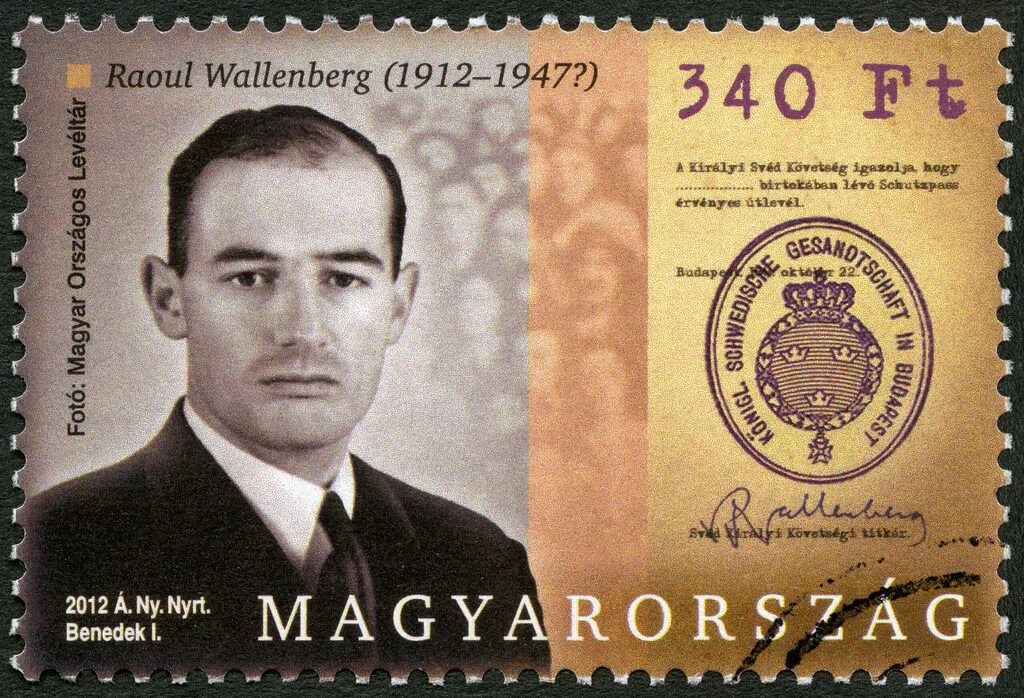
Wallenberg arrived in Budapest on July 9, 1944. By then, around 400,000 Hungarian Jews had already been deported to Auschwitz. He focused on saving the 200,000 Jews still in the city. His main tool: Swedish protective passports – elaborate documents filled with stamps and symbols that looked official but had no real legal standing. Initially authorized to issue 1,500 documents, he expanded this to 4,500 and in practice distributed over 13,000. He assembled a local team of hundreds.
In August 1944, deportations temporarily stopped, and Horthy considered breaking with Germany. But on October 15, the Nazis staged a coup. Horthy was replaced by Ferenc Szálasi, leader of the anti-Semitic Arrow Cross Party. Wallenberg now faced a far more dangerous and chaotic situation.
The Arrow Cross Regime
Under Szálasi’s regime, protections for Budapest’s Jews were revoked. Thousands were murdered in the streets, their bodies dumped into the Danube. Tens of thousands were sent on death marches or forced labor. Around 100,000 remained in the ghetto under harsh conditions.
Led by Adolf Eichmann, the Nazis tried to accelerate the deportation of the remaining Jews. Wallenberg persisted: issuing thousands more protective passports, establishing about 30 safe houses flying the Swedish flag, and maintaining contact with prisoner convoys. He confronted officials, including Eichmann, to secure Jewish releases under Swedish protection. He used unconventional means: bribes, threats, even physical confrontations. He distributed documents at train stations, climbed onto boxcars, and sometimes relied on a mere official-looking note.
During the death marches, he reached prisoner convoys, handed out papers, and rescued Jews using Red Cross trucks. By war’s end, he had directly saved at least 20,000 Jews. Estimates suggest his efforts contributed to the survival of about 100,000.
The Arrest and Disappearance
On January 17, 1945, shortly after Budapest was liberated from Nazi control, the Red Army arrested Wallenberg. He and his driver Vilmos Langfelder attempted to contact Soviet command and the new Hungarian government but were taken to Soviet headquarters in Debrecen, then handed over to the NKVD. Wallenberg was transferred to Moscow, first imprisoned at Lubyanka, then at Lefortovo, and likely later sent to a labor camp in Siberia. His mother, Maj von Dardel, tried to obtain information through diplomatic channels, but the Soviets claimed he was under “protective custody” for his own good.
Only in 1957 did the Soviets release an official statement claiming Wallenberg died in prison on July 16, 1947. However, many testimonies suggested otherwise. Former inmates reported seeing him even in the 1950s. The Soviet regime stuck to the death claim, which remained unchanged even after the fall of the USSR.
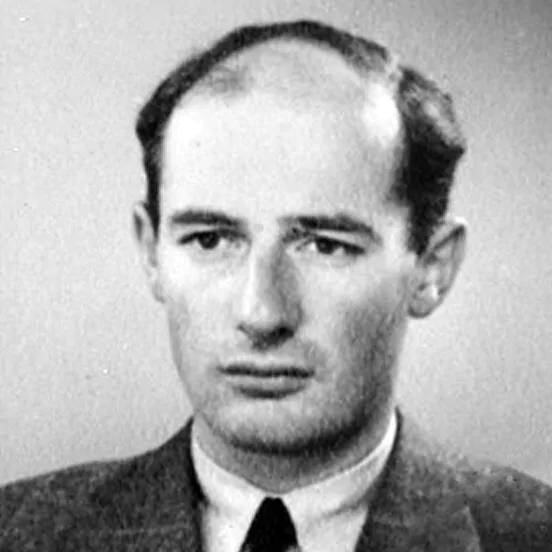
In 2007, documents from the FSB were handed to Russia’s Chief Rabbi Berel Lazar. These included photos from Wallenberg’s passport, prison records, and an autopsy request form. But none shed new light.
Theories
The reasons for his arrest remain unresolved. One theory is that Wallenberg sought to discuss a post-war reconstruction plan for Hungarian Jews, which aroused Soviet suspicions. Others suggest he was suspected of being an American agent or that his ties to the “Joint” and the wealthy Wallenberg family made the Soviets fear he held sensitive information about Jewish assets moved to the West.
Efforts to uncover the truth have continued for decades. In 1989, his personal belongings – including his passport and clothing – were returned to his family. In 1991, Sweden and Russia established a joint investigative commission, which spent over a decade gathering thousands of documents and interviewing witnesses. In 2001, each side published its own report: Sweden concluded his fate after 1947 remained unclear; Russia maintained he died that year in custody but gave no conclusive evidence.
In 2010, research suggested Wallenberg may have been “Prisoner No. 7,” interrogated six days after his official date of death. In 2012, a Soviet directive was uncovered instructing that documents about him remain classified. Although in 2000 Russia acknowledged he died in captivity, it did not specify how.
The Mystery Endures
In 2015, a study claimed Soviet authorities suspected Wallenberg of being involved in indirect equipment deals with the Nazis. In 2016, the former KGB head’s diary revealed Wallenberg may have been executed on Stalin’s orders to cover up Soviet-Nazi dealings in South America. His body, it claimed, was cremated. This too remains unverified.
In 2017, his family filed a lawsuit against the Russian security services for blocking access to key documents. The mystery remains. In 1979, his mother and stepfather died by suicide, within two days of each other – a result of long-standing despair. His relatives continue to demand answers. Wallenberg, who saved thousands, vanished without explanation, and the question of his fate is still unanswered.
What Can We Learn?
The value and sanctity of life were cheapened during wartime, and even more so during the Holocaust. Wallenberg proved it could be otherwise. He didn’t stand aside or wait for orders. He chose to act – to protect, to help, to save. He showed that one doesn’t need a weapon to be a hero. He saved, directly or indirectly, tens of thousands of lives.
The sanctity of life was his guiding principle. If there is a right way to remember him, it is to sanctify life every single day – to live. May we be worthy of him and of the other Righteous Among the Nations.