

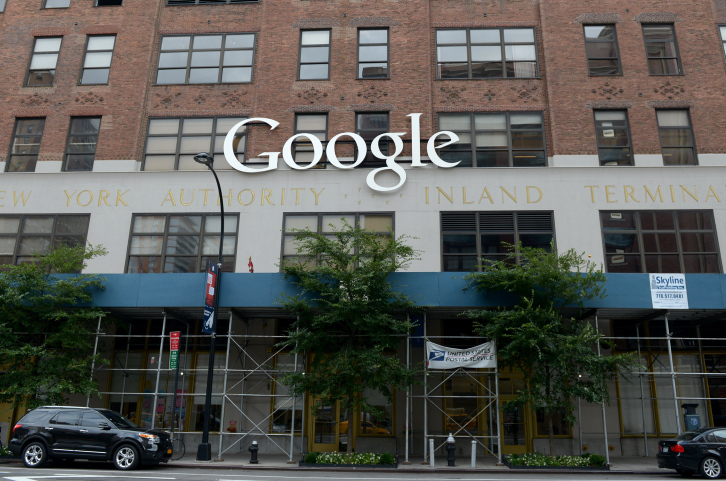
The adults among us surely remember a time when there were several strong options for Internet search engines: Explorer, Firefox, Bing, etc. But it seems that in recent years everyone only uses Google Chrome, Google’s search engine, as a convenient default. But last week the American court gave legal and legal expression to this feeling, declaring that Google constitutes a monopoly in the field of search engines.
Declaring Google as a monopoly has legal consequences; the US government can examine steps to break up the monopoly (usually this is done by breaking it up into several subsidiaries that will have to compete with each other). An action like this is an intervention by the government in the free market, but an intervention that is done for the sake of the free market – because in the absence of competitors, there is no real market. According to the American Ministry of Justice, this did not happen naturally, when over the years Google carried out its transactions in a way that would ensure its strengthening and control over the field of search engines.
According to reports, the US Department of Justice is considering splitting Google into three companies – Android, the Google search engine, and the Google Chrome browser. Such a split of Google, which is one of the most powerful companies in the American stock market under an ‘alphabetical’ framework. Alphabet has a market value of 2 trillion dollars, more than that of Russia, and 4 times that of Israel. This will have significant consequences for the American stock market and the entire global economy. The consequences are not necessarily positive or negative, and such a significant change mainly has a significant potential for future growth. In any case, it remains to be seen whether the dissolution will actually come to fruition – such a radical move has not taken place since the 1980s, and there are other options on the table, with less regulation.