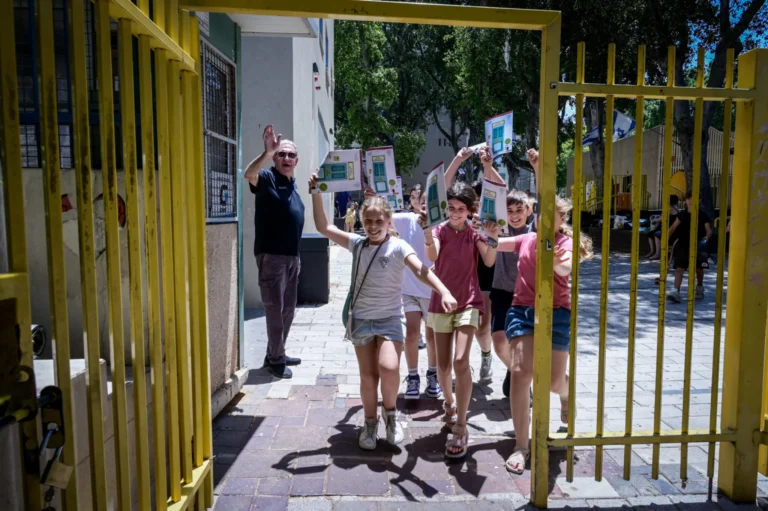
A massive wave of solidarity from Israel and abroad surged into our lives following the horrific events of October 7th. Thousands of volunteers and donors, along with various organizations, mobilized for the national effort to assist soldiers, evacuees, the wounded, and bereaved families, demonstrating a level of giving that may be unprecedented since the founding of the state.
However, this is not the story of Project Magen.
Long before October 7th, since 2006 in fact, the organization has been working to provide protective measures and security solutions across the country in a quiet, professional, and thorough manner.
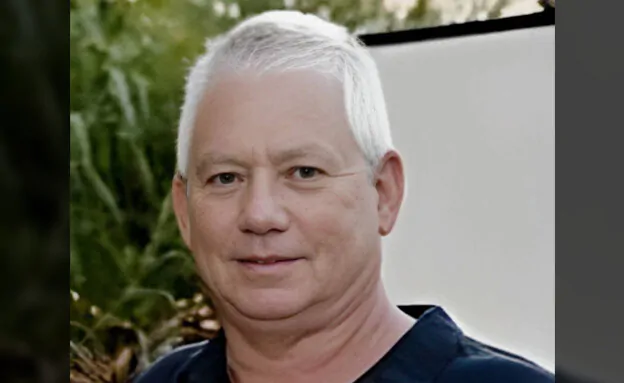
Shmuel Bowman, CEO and one of the founders of the organization, sat down with us to discuss the establishment of the organization, its activities since October 7th, and its unique approach.
“In 2006, right after the Second Lebanon War, a group of American and Israeli friends approached the Home Front Command and asked how we could help. At that time, the Home Front Command realized that many shelters were turning into storage units and were not available for public use. Additionally, they understood that public shelters were not very relevant for several reasons. First, they are not always accessible to someone walking down the street or sitting in a café, and mainly, they are not accessible. We discovered that about 50% of the population is unable to reach a shelter. There are elderly people, people with disabilities, families with children—so many people who cannot descend the shelter stairs quickly enough.”
“We realized we had to do something, so we founded Operation Lifeshield a US based organization and later the Israeli Project Magen to provide bomb shelters. Bomb shelters are really a very simple thing that meets a very significant need. For example, if someone goes to eat hummus in Sderot or goes to a synagogue or a shopping mall, there is a simple solution that hardly disrupts their life. Basically, we are trying to create what we call: ‘Living as normally as possible in an abnormal reality.'”
“So we try to give everyone peace of mind—Jews, Muslims, Druze, Circassians, whoever—knowing that they can walk around calmly. We may not be a large organization, but we are very focused on this area. Distributing bomb shelters, renovating shelters, that’s our thing.”
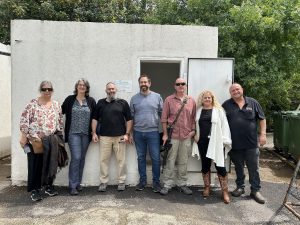
Reaching Out to the Security Officers
“We are in contact with the security officers every day. Every day. In the Gaza border region, in the north, even with security officers in the center, we try to stay constantly updated and know everyone’s needs.”
“Our relationship with the security officers, as I mentioned, is very strong. On October 7th, I didn’t have to search for who the security officer was here or there. They were all on my speed dial. Thirteen of my friends were killed in that attack, most of them were security coordinators in the communities.”
“Therefore, right after October 7th, I asked them three questions: What do you need now, what will you need in a month, and what will you need in a year?”
“It’s very important to us not to be an ATM. We initiate meetings with municipal engineers, council heads, and especially with security officers to build a strategic plan that fits the place and the population’s needs. The goal is for every project to end with real security improvement, not just putting a bomb shelter next to a pool that looks nice for a donor in Los Angeles or New York. We want to do real actions with real impact.”
“For example, for the Upper Galilee Regional Council, we provided not only bomb shelters but also firefighting ATVs and communication devices. In other communities, we understood that the topography of the Galilee reduces cellular reception, which is critical in emergencies, and we obtained means to improve reception. Everything is according to the real needs of the place, not according to public relations that look good in photos.”
“Additionally, we don’t just donate and close the door. Were we in the Galilee? Great, so we left. No. We continue to maintain contact with the communities and remain aware of their needs.”
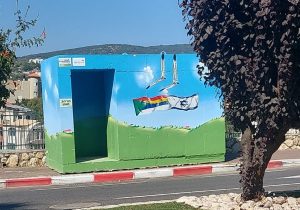
An Organization at War
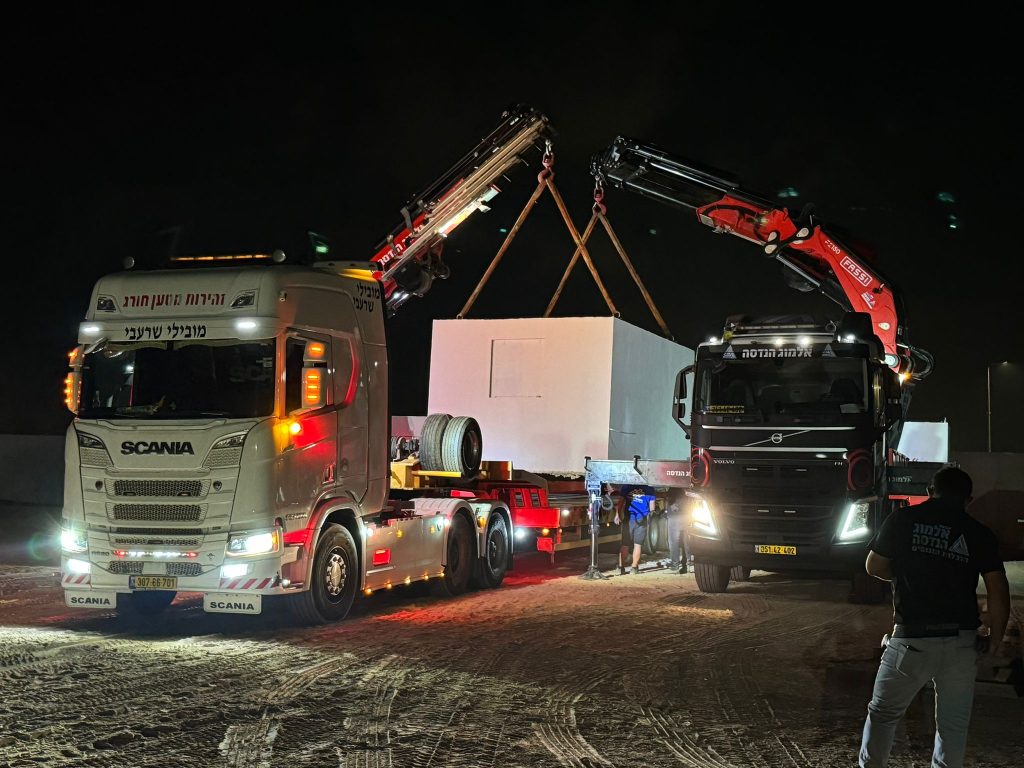
“One of the more complex events that happened to us occurred very close to October 7th. In the first days after the disaster, when there were still terrorists in the area, the security officer of Sha’ar HaNegev approached me. He said that despite the dangerous situation, there were some families in Kfar Aza who were very determined to bury their loved ones in the kibbutz cemetery. Although there was one bomb shelter in the old section of the cemetery, the new areas were completely exposed. The army approved holding a funeral there only on the condition that a bomb shelter would be present. Therefore, it was decided to enter in a convoy of military vehicles along with a crane to move one of the protective units in the kibbutz to the cemetery.”
“The problem was that only two people knew the exact locations of the units: Shahar, the security coordinator of Kfar Aza who was killed—and me.”
“The convoy, consisting of four military jeeps and me, set out from the Netivot area, and in Tekuma, we met with the crane. When we arrived at the area, the soldiers told me that I knew the area best and that I should drive at the front. The situation was simply surreal. My Mazda CX was driving at the head of a convoy of military jeeps, with me in my Tilley hat and Canadian accent, explaining the situation at every military checkpoint.”
“The scenes in Kfar Aza were horrific, a full-blown war zone. I tried to keep telling myself: Don’t look right or left. You have a mission, focus on it.”
“And indeed, we found one bomb shelter that we could move, and it was transferred to the cemetery. Later, we looked for additional bomb shelters, but they were not possible to move.”
“The thought that thanks to this, some families were able to bury their loved ones in the place they wanted gives us so much meaning. It sharpens in an incomparable way the importance of these actions.”
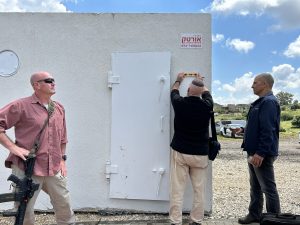
Every Last Penny
“In the days following the outbreak of the war, the demand for bomb shelters was enormous. The stock in the country was completely depleted, and the only way to provide bomb shelters was by transferring them from places where they were not needed. The problem was that the army had recruited many truck drivers, and there were hardly any available drivers. Somehow, I found one driver, a guy named Almog, and I told him: Let’s make a deal—you work only for me, and I’ll hire you every day. We transferred dozens of bomb shelters over a month and a half with the remaining funds the organization had at that time because we understood the utmost importance. And indeed, by November, more donations started to come in, and every shekel we spent on this project was reimbursed.”
Praying to Become Redundant
“When we founded the US organization, we called it: Operation Lifeshield, an operation, a temporary event. Over time, unfortunately, we realized that what we hoped would be temporary 18 years ago has become a permanent reality. The great hope is to reach the day when these bomb shelters will no longer be needed. I’m waiting for the day when we can focus on other things, on donations for educational projects or hospitals, and stop relying on these and other protective measures.”