

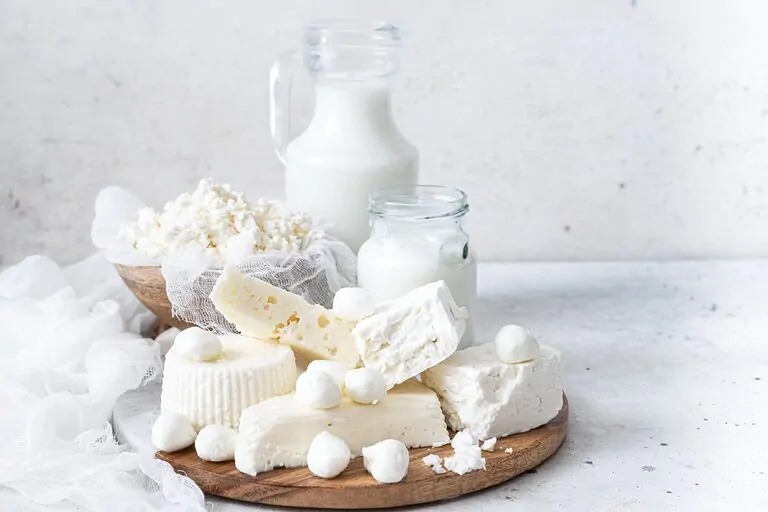
Dairy doesn’t have to be the enemy of your diet—quite the opposite. Shahar Smith, a healthy-lifestyle consultant, believes that Shavuot is exactly the right time to bring dairy to the forefront—as an important part of a balanced, weight-supportive diet.
“The issue isn’t the cheese—it’s our choice of which cheese to bring home and how we include it in our meals,” she explains.
Nutritional Benefits
According to Smith, dairy products are an excellent source of complete protein—readily available and well absorbed by the body—and they contain essential minerals, with calcium at the top of the list. In hard cheeses, she notes, calcium levels can reach 1,000 mg per 100 grams—several times higher than in plant-based sources. “Calcium from dairy is better absorbed, which is especially important for women of childbearing age and during menopause.”
עוד באותו הנושא
- Selichot Season Opens with Spiritual Power and Unifying Prayer at the Western Wall
- On the 1st of Elul 1897, a National Return to the Land Joined the Spiritual Return to God
- Israel’s Archaeological Breakthroughs Reveal a Fragile Heritage and Unexpected Discoveries
- Israeli Doctors at the Forefront of Medical Achievements Worldwide
How Do You Know What to Choose?
Smith’s first piece of advice: start by reading the label. “The difference between a cheese that benefits your health and one that harms it lies in the fine print,” she stresses. “Avoid products that contain added sugar, fruit purees, starches, artificial sweeteners, and flavorings.”
What to Look For
- Choose low-fat cheeses—up to 5% fat for regular use.
- Don’t be afraid of hard cheeses with 9% or even 15% fat—as long as they’re free of additives (you can also enjoy richer cheeses in moderation as part of your daily fat intake).
- Go for products with a short, simple ingredient list—ideally just milk, salt, and sometimes beta-carotene as a natural coloring.
Options for the Sensitive
Smith also emphasizes the medical considerations: “Anyone allergic to casein—the protein in milk—must avoid dairy entirely. But for those who are lactose intolerant, there are now good options: low-lactose yogurts, hard cheeses, and cottage cheese. Even unsweetened soy milk is a decent alternative—it offers protein similar to regular milk, but without excess carbohydrates.” She adds, “It’s best to choose products free of preservatives, starches, and stabilizers.”
The Recommended List
Smith shares her go-to list of dairy products—no complicated prep, high in protein, and backed by clean ingredient labels:
- Natural yogurt with 25 grams of protein – “Perfect for a light, satisfying meal.”
- 5% cottage cheese – “27 grams of protein per container—great for baking, spreads, and salads.”
- 5% Hemed cheese – “A rich cheese that works well in sandwiches and cooked dishes.”
- 5% mild Bulgarian cheese – “Delivers salty flavor without the heavy fat.”
- 3% Tuv Ta’am soft cheese – “Ideal for cooking and baking.”
- 9% hard cheese without preservatives – “Naturally colored with beta-carotene, high in protein and quality calcium.”
What to Cook for the Holiday
Her top recommendation: vegetable-based quiches low in carbohydrates, made with low-fat cheeses and eggs. “Zucchini, onion, or mushroom quiches—with a small amount of flour—can be tasty, nutritious, and easy to digest,” she says. “Instead of cream cheese, I use 5% cottage cheese—it creates a creamy texture with the flavor of yellow cheese.”
Even creamy dishes can be balanced. Using 9% or 15% cream with vegetables like kohlrabi—which turns crispy when baked—can result in an impressive and light dish.
And for dessert? Smith suggests updating the classic cheesecake by using high-protein yogurts, soft cheeses like Tuv Ta’am or Canaan, and even a low-carb crust.
This Holiday Starts from Within
As the holiday approaches, Smith reminds us of its deeper meaning: “You can definitely combine festive meals with healthy choices. But what truly fills us isn’t the cheese—it’s receiving the Torah with joy. When we focus on what matters most, our eating becomes more mindful and enjoyable. It nourishes both body and soul.”