

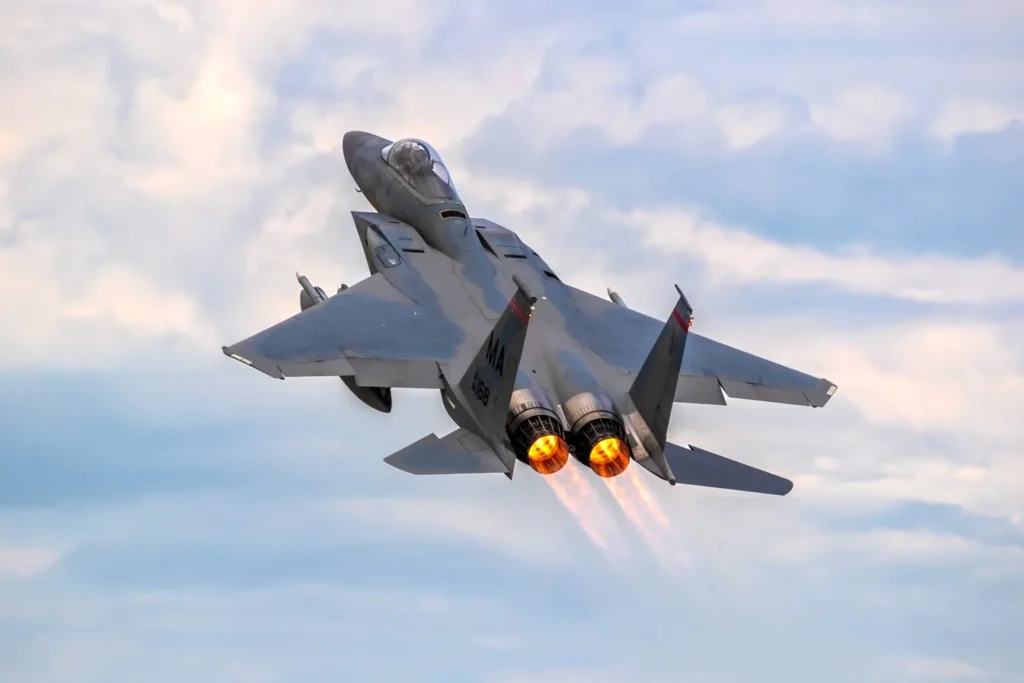
U.S. Air Force F-15E Strike Eagle jets were recently spotted carrying a never-before-seen loadout: six pods of APKWS II precision laser-guided rockets.
Altogether, that’s 42 guided rockets capable of hitting aerial targets with exceptional accuracy—and at a cost far lower than any comparable weapon system.
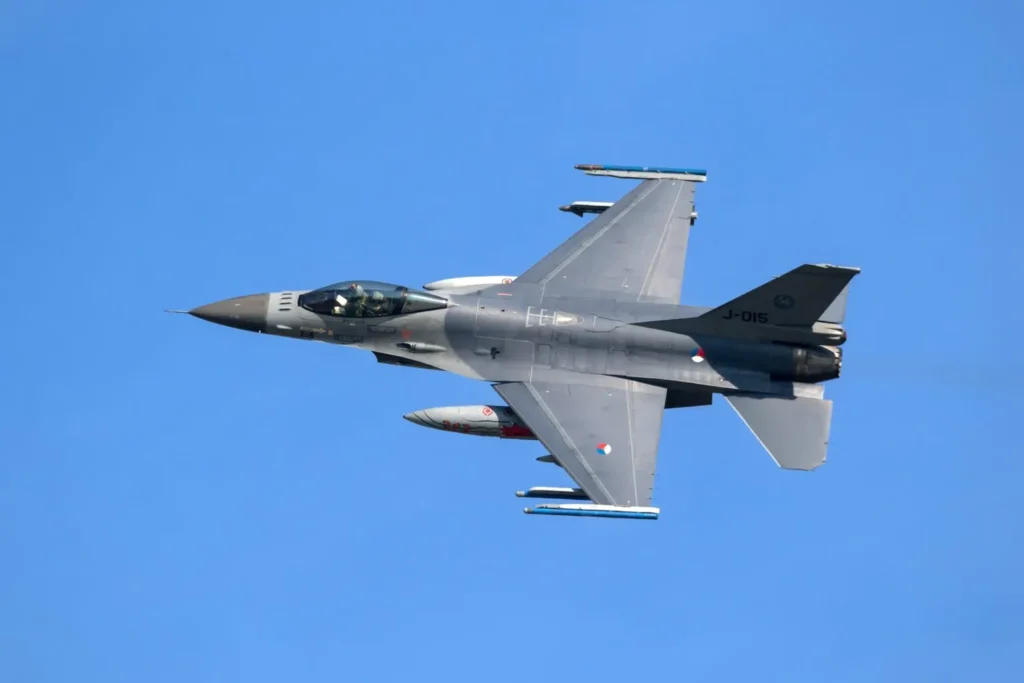
This type of rocket has already proven itself in combat. Over the past year, U.S. F-16s have downed Houthi drones in the Red Sea using APKWS II rockets, guided by laser designators mounted in targeting pods.
Now, the F-15E takes this capability even further—combining the rocket pods with eight air-to-air missiles.
That’s a beast-mode-for-drones loadout. pic.twitter.com/YdNRHgkwzP
— The Merge (@MergeNewsletter) May 22, 2025
The Weapon Changing the Game: What Is APKWS II?
APKWS II (Advanced Precision Kill Weapon System) is an upgraded version of the classic 70mm rocket. The key innovation lies in a laser guidance unit placed between the warhead and the motor, turning a basic rocket into a deadly precision weapon.
While an AIM-9X missile costs about $500,000 and an AIM-120 exceeds $1 million, each APKWS II rocket costs only around $20,000—a huge saving that gives pilots far more flexibility.
On an F-16, two pods triple interception capacity. On an F-15E, the configuration of six pods plus eight missiles provides 50 interception opportunities in a single sortie—an unprecedented figure.
U.S. Fighter aircraft shoot down Iran-backed Houthi one-way-attack drones with AGR-20 FALCO Advanced Precision Kill Weapon System (APKWS) Laser Guided 2.75″ Rockets.#HouthisAreTerrorists pic.twitter.com/bDoVnKwotc
— U.S. Central Command (@CENTCOM) March 19, 2025
Why Is This a Game Changer?
- Effective against drones and cruise missiles – APKWS II is optimized for engaging moving but stable targets that don’t maneuver sharply.
- High accuracy with laser guidance – Rockets are guided using a laser designator from a pod such as the LITENING (nicknamed “Barkat”), or via “buddy lasing” between aircraft.
- Low cost, high usability – Each aircraft can carry many rockets for the price of a single missile.
- Future upgrade in development – A version now in progress will incorporate an infrared sensor, enabling semi-autonomous “fire-and-forget” capability.
Proven in Combat
The use of APKWS II rockets against aerial targets isn’t theoretical—it’s already happening in the field.
Since early 2024, U.S. F-16s have been documented flying over the Red Sea armed with air-to-air rocket pods alongside traditional missiles, as part of operations to intercept drones launched by the Houthis in Yemen.
Footage has shown successful engagements in which these laser-guided rockets were fired at drones and brought them down.