
Despite the closure of the Israeli pavilion at the Venice Architecture Biennale, the Bezalel School of Architecture managed to ensure a strong Israeli presence at the event.
100 Students and Faculty from Bezalel
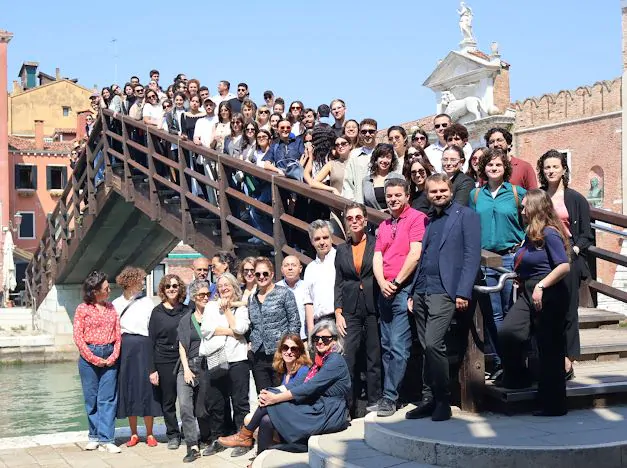
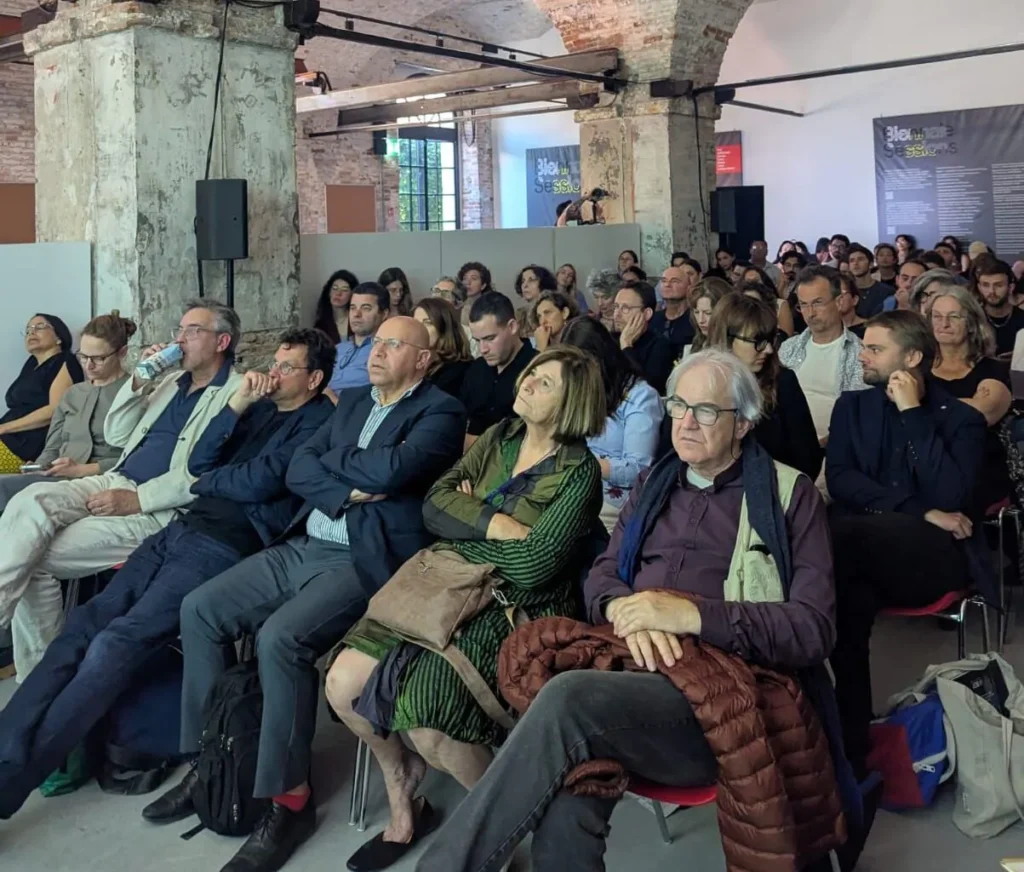
During the opening weekend, held May 10–12, an international conference and workshop took place with the participation of 100 students and faculty members from Bezalel, in collaboration with top academic institutions such as ETH Zurich and The Bartlett School of Architecture at UCL London.
The Bezalel School of Architecture led the conference and workshop, which focused on the role of architecture in times of uncertainty, crisis, and instability. Participants discussed issues related to war, trauma, destruction, and the climate crisis, with an emphasis on the connection between architecture, ethics, and spatial justice.
“We broke through the walls of boycott and refusal”
The Venice Architecture Biennale is one of the most significant and influential events in the global world of architecture and art. This year, the Israeli pavilion – inaugurated in 1952 – remained closed to visitors for the second year in a row. “In a time of crisis in Israel’s international relations, marked by boycotts and the collapse of academic agreements, we succeeded in breaking through the walls of boycott and refusal,” said Prof. Arch. Els Verbakel, Head of the School of Architecture. “Beyond Bezalel’s presence in the vacuum that was left behind, this marks a significant achievement in ensuring the continuity of Israeli participation and activity at the Biennale,” she added.
“Committed to designing spaces that promote justice, equality, and inclusion”
Bezalel’s presence at the Architecture Biennale follows its notable participation in last year’s Venice Art Biennale, where Bezalel alumnae represented both Israel and Germany – a rare achievement on the international art scene. Once again this year, the involvement of the School of Architecture highlights the institution’s accomplishments and its critical engagement in global academic discourse.
Prof. Verbakel also addressed Bezalel’s educational approach: “Architecture does not exist in a sterile void; it is born of complex social, political, and cultural contexts. At Bezalel, we strive to cultivate architects who can recognize these complexities and act within them with responsibility and sensitivity. Our participation in the Biennale is a statement of our commitment to designing spaces that promote justice, equality, and inclusion.”