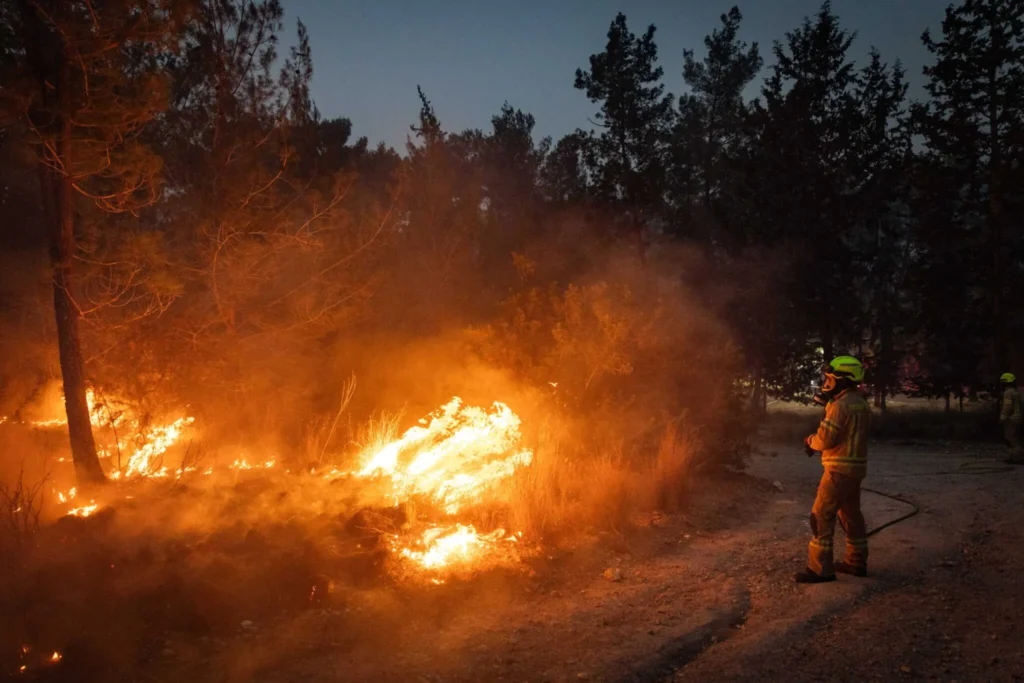


Ayalon-Canada Park, commonly known as “Canada Park,” is located east of the Ayalon Valley and stretches across approximately 12,000 dunams (close to 3,000 acres). It lies north of Highway 1, between the Latrun and Sha’ar HaGai interchanges. Since Wednesday, major wildfires have been sweeping across the Jerusalem Hills, and large parts of the park have gone up in flames. Police and the ISA (Shin Bet) are investigating whether the fires were deliberately set by terrorists. In a related incident, an Arab resident of East Jerusalem was caught on Wednesday attempting to start another fire.
The City Was Destroyed During the Arab Conquest of the Land of Israel
On the eastern side of the Ayalon Valley, along the Latrun ridge, once stood the ancient settlement of Hammat. Over time, the name was changed—by the Greeks or the Samaritans—to “Emmaus,” likely a distortion of the original name. The site is first historically noted in the context of the Battle of Emmaus in 165 BCE, during the Hasmonean Revolt. In the following period, Emmaus became a Jewish city.
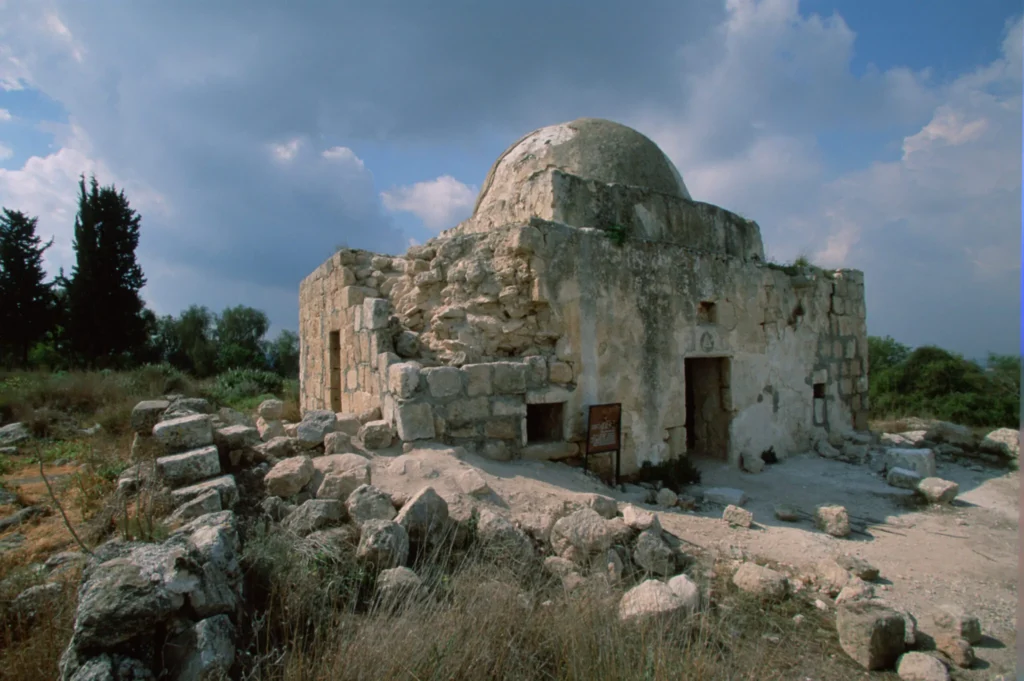
The semi-Hellenized historian Josephus refers to Emmaus as a small town in the 1st century BCE. Under Roman rule, the site became a colonia, and by the 3rd century CE, it was known as Emmaus Nicopolis. The city was famous for its large bathhouse and aqueduct, which drew water from springs that still exist within Canada Park today. As often happened in the history of the Land of Israel, the city was destroyed during the Arab conquest.
The Park Was Built on the Ruins of Three Arab Villages
The land that now makes up Canada Park once contained three Arab villages that existed until 1967. The first, Deir Ayyub, was located in the eastern part of the park near Sha’ar HaGai. It was destroyed during the War of Independence and, following the armistice with Jordan, remained a no-man’s-land and was never rebuilt. The other two villages, Imwas and Yalu, were evacuated by the IDF during the Six-Day War, and their homes were later demolished.
Six Years Later: Canada Park Was Founded
The Jewish National Fund (KKL-JNF) established Canada Park in 1973 as a recreational and picnic site. Its original name, “Canada Park,” was chosen in appreciation of the Canadian Jewish community, which contributed significantly to its development. For many years, Canadian Jewry continued to support the park’s maintenance.
However, in the early 1990s, a CBC (Canadian Broadcasting Corporation) investigation spotlighted the Arab history of the area. The report emphasized that the park was located beyond the Green Line—a fact that, according to critics, should disqualify donations from Canada (which are tax-exempt) from being used for its development.
Following the criticism, the JNF issued an apology for using Canadian funds in this way, and the park’s name was changed to “Ayalon Park.” To distinguish it from another park of the same name near Tel Aviv, its final name became “Ayalon-Canada Park.” The name “Ayalon” refers to the biblical city of Ayalon, which was in the territory of the Tribe of Dan.
The Fire Is Also an Opportunity
The history of the Land of Israel in general—and of Canada Park in particular—reveals a recurring pattern: while the Jewish presence focused on building, development, and renewal, Arab elements often brought destruction and arson. The battle being waged by firefighters in recent days is a direct continuation of the Jewish struggle for independence against Arab rioters. Since the beginning of the Zionist movement over a century ago, many Arab migrants have benefited from the prosperity brought by Jewish settlement. Yet at the same time, they’ve learned they can challenge Zionist sovereignty without paying a real price.
In addition to the necessary security steps and penalties for terrorism—including revoking citizenship and deportation—there is a need for a deeper Zionist response. Beyond encouraging aliyah, the State of Israel must strengthen its connection with Jewish communities around the world. At the same time, Diaspora Jewry must understand that their bond with Israel cannot hinge on political considerations.
The fire that destroyed Canada Park is not just an act of environmental terrorism—it’s a national warning sign, a call to reignite the flame of Jewish partnership.