

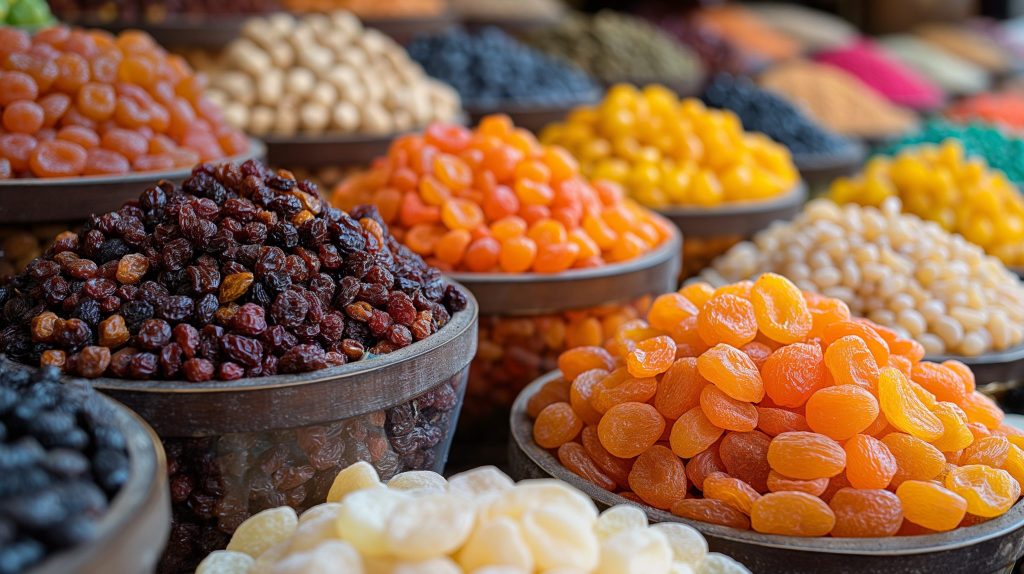
With the arrival of Tu Bishvat, the holiday of tree planting and nature’s renewal, many questions arise about one of its most iconic symbols—dried fruits. Are they as healthy as they are often perceived? How many should you eat? And do they affect weight?

Tu Bishvat, marking the beginning of Israel’s blooming season, has long been associated with the tradition of eating nuts and dried fruits, which has become an integral part of modern Israeli culture. However, in an era of growing nutritional awareness, many question the health implications of consuming dried fruits.
Health Benefits vs. Challenges
Dried fruits offer numerous health benefits. They are rich in dietary fiber, essential vitamins, and minerals. They serve as a natural, sweet dessert and a healthier alternative to processed candies. Additionally, their relatively low glycemic index helps maintain stable blood sugar levels. They are also packed with antioxidants, which help combat free radicals caused by air pollution, stress, grilled foods, smoking, sun exposure, and more.
However, it’s important to be aware of the challenges of consuming dried fruits. During the drying process, fruits lose water and volume while retaining their sugar content. As a result, they become calorie-dense, potentially leading to excessive calorie intake if consumed mindlessly. Furthermore, some dried fruits undergo processing that includes added sugar, increasing their caloric and sugar content.
Adopting a Balanced Approach
To enjoy the benefits of dried fruits while avoiding risks, it’s crucial to adopt a balanced approach. Pre-portioning small servings can help control intake. Pairing dried fruits with other foods, such as nuts or yogurt, can enhance their nutritional value and promote satiety. Proper storage—keeping them out of immediate sight—can also help reduce the temptation of mindless overeating.
Being mindful of the nutritional values of common dried fruits is also important. For example:
One dried apricot contains roughly the same calories as a teaspoon of raisins.
One dried fig contains more than twice the calories of an apricot.
A single walnut has the same calorie count as seven roasted almonds.
A dried apple is relatively high in calories per gram.
A single dried pineapple piece has the same calorie count as two dried apricots.
A Time to Reevaluate Our Eating Habits
Tu Bishvat is not only an opportunity to celebrate Israeli nature but also a chance to rethink our eating habits. Just as we plant new trees on this holiday, we can also cultivate healthier lifestyle habits. This is a great time to make small but meaningful changes, such as incorporating dried fruits in moderation into a balanced diet or adopting a consistent exercise routine.
In conclusion, dried fruits can be part of a healthy and balanced diet when consumed in moderation and with awareness. Tu Bishvat offers us a chance to reconnect with nature and tradition while maintaining our well-being. Whether you choose to plant a tree, take a nature walk, or simply enjoy a tray of dried fruits with family and friends, remember that the key is balance and mindfulness. That way, we can enjoy the holiday and its flavors while maintaining a healthy lifestyle year-round.
Caloric Breakdown:
Dried Apricot – 24 calories per unit
Walnut – 50 calories per unit (two halves)
Raisins – 25 calories per teaspoon
Dried Fig – 60 calories per unit
Dried Apple – 240 calories per 100g
Dried Pineapple – 100 calories per unit
Roasted Almonds – 35 calories for seven pieces
The author, Omer Azaria, is a clinical dietitian (BSc) and trainer at Les Mills Israel.