

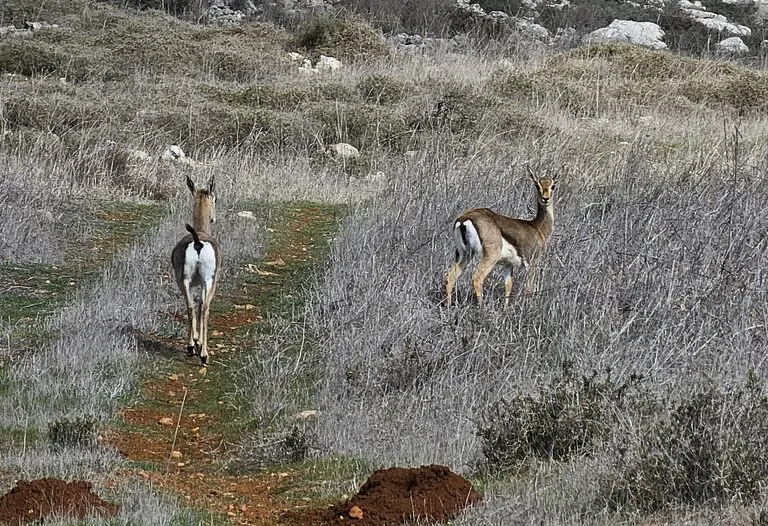
The Israeli gazelle (Gazella gazella) is a subspecies of the mountain gazelle and is regarded as one of the most prominent symbols of the Land of Israel—also referred to in the Bible as the “Land of the Gazelle.” It is the only large herbivore to have survived in Israel, though today it is classified as critically endangered. One of the regions where the gazelle still thrives is the Binyamin area, just south of Jerusalem. This morning (Sunday), extraordinary footage was shared online.
They’ve Learned Not to Be Afraid
“The gazelles here have simply learned not to be afraid,” wrote settlement activist Elisha Yered on his X (formerly Twitter) account. He says he can stop right next to them, “and they’ll just move a little to the side.”
According to Yered, the local Israel Nature and Parks Authority ranger reported that before the establishment of the Ramat Migron outpost, only a few gazelles remained on the ridge—those that the nearby Arab villagers hadn’t yet managed to hunt.
“Today there are close to 200 here, in large herds. Nature in the Land of Israel is regaining its strength—another result of Jewish control over the area.”
רמת מגרון, הבוקר
הצבאים כאן למדו פשוט לא לפחד, יכול לעצור לידם והם פשוט יזוזו קצת הצידה.לפי פקח הרט”ג האזורי, היו כאן על הרכס לפני הקמת הגבעה כמה פרטים בודדים – אלה שערביי הכפרים עוד לא הצליחו לצוד.
היום יש כאן קרוב ל200, בעדרים גדולים.הטבע הארצישראלי שב לאיתנו, עוד תוצאה… pic.twitter.com/iAxaB5RQkx
— אלישע ירד (@ElishaYered) June 1, 2025
A Population Peak Four Decades Ago
The Israeli gazelle was once widespread throughout the Mediterranean region of the Land of Israel, but the spread of agriculture, modernization, and the introduction of firearms in the late 19th century led to the collapse of many populations. Hunting became especially common because the gazelle is halal and seen in the region as a symbol of bravery. By the time the State of Israel was established, only a few populations remained. However, increased enforcement and predator poisoning in 1964 enabled a recovery.
In the 1980s, the gazelle population peaked, and the species became common throughout the northern part of the country—from the northern Negev to the Golan Heights. In the Golan, where gazelles had been wiped out before the Six-Day War by local residents and Syrian soldiers, the population was restored by transferring about 20 individuals from the Issachar Heights. At that time, high population densities were recorded in the Issachar Heights, Kedesh Naftali, and the southern Golan, eventually requiring regulated hunting to manage the numbers.
A Tenth of the Population Lives Near Route 443
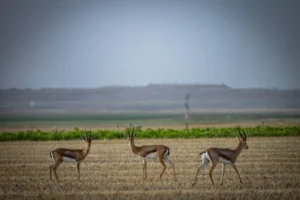
Around 10% of the global Israeli gazelle population currently lives in the area enclosed by Route 443, Route 6, Route 5, and the separation barrier, where they face significant pressure from development, habitat fragmentation, and constant disturbances.
A Steady Decline Since the 1980s
- Overpopulation of predators, leading to the collapse of the Golan population and damage in the Galilee
- Urban development reducing available habitat—such as in Jerusalem’s Gazelle Valley
- Fawns being picked up by hikers or attacked by stray dogs
As of December 2021, Israel’s gazelle population was estimated at around 4,300, up from just 3,000 in 2017. Most gazelles are now concentrated in the Golan Heights, the Galilee, and the Judean Hills.
Latest Population Counts:
2021 – 4,332
2020 – 4,137
2018 – 4,113
2017 – 3,000