
In addition to the complex security threats it faces, Israel is grappling with challenges to its social cohesion. There is a pressing need for initiatives that foster unity and bring people together. One of the most contentious issues is the issue of a state commission of inquiry to investigate what happened on October 7 and the various failings that allowed it to happen. The major disagreement involves the identity of the head of the commission and other members, since a state commission is headed by the President of the Supreme Court, who, as well as the Supreme Court itself, is viewed by some as highly controversial and political, and by others as the only trustworthy figures in the governmental system.
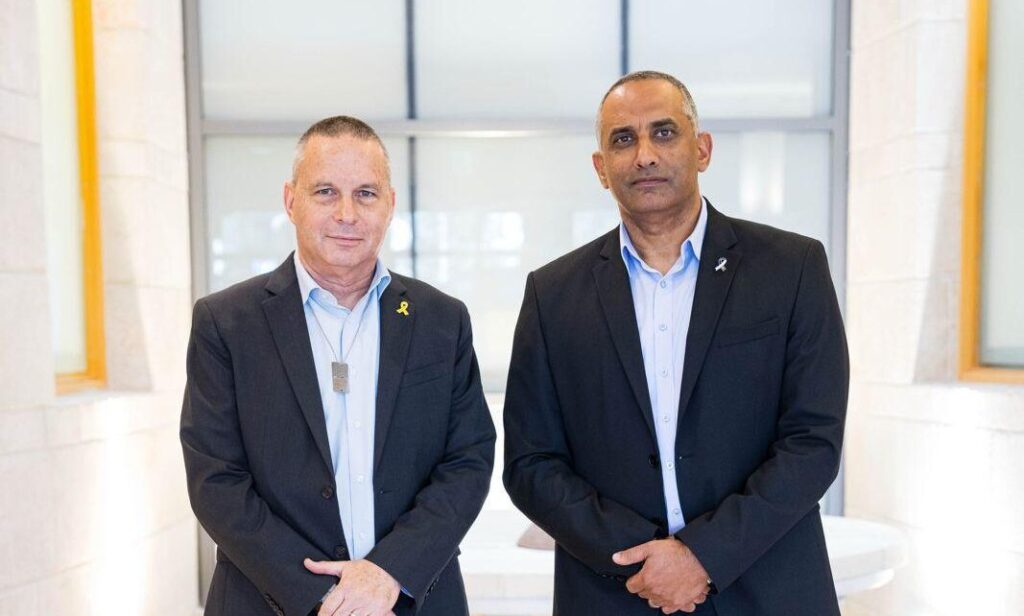
Brigadier General (ret.) Dedi Simchi and former Knesset Member Yizhar Shai have emerged as key figures in such efforts at unity and bridging differences. The two, who previously collaborated on a compromise framework for judicial reform, are now working on a consensus-driven approach regarding the commission of inquiry into the events of October 7. Their primary focus is fostering dialogue that promotes unity and understanding within Israeli society.
A Hero’s Last Stand
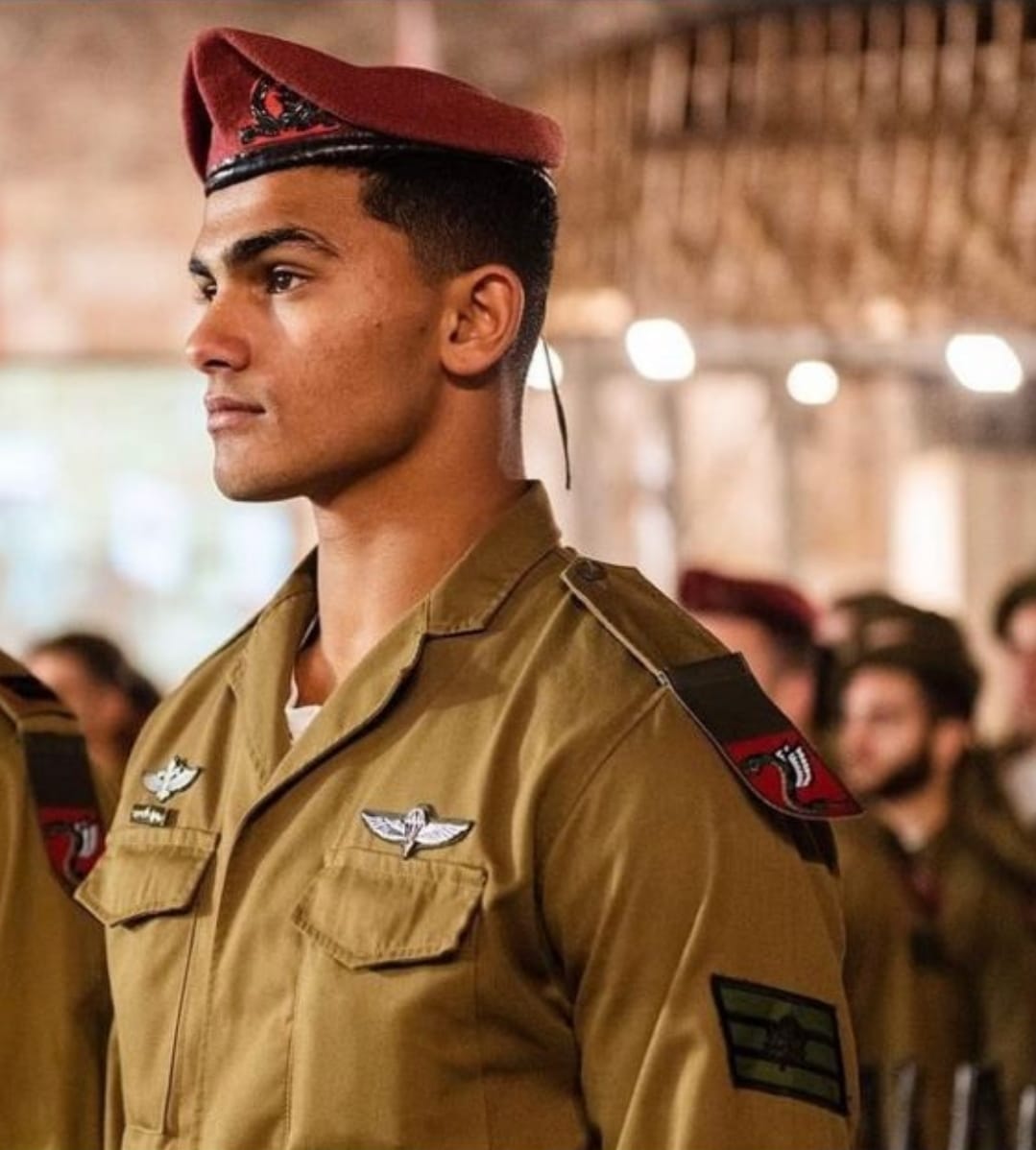
Before delving into societal issues, the discussion began on a deeply personal note. Both Simchi and Shai are bereaved fathers whose sons, Guy and Yaron, fought heroically and saved lives on October 7.
“Guy is our youngest son,” Simchi shares. “He was a soldier in the Paratroopers’ reconnaissance unit—a natural leader, charismatic, courageous, and full of life. On Friday, he went to a party. The next morning, when the rockets began falling, he took charge, gathering 30 young men and women and leading them to safety in protected rooms.”
But Guy did not enter the shelter himself. Unarmed, he stayed outside with a friend who had a weapon, determined to protect the others despite repeated pleas for him to come inside. “Five terrorists arrived. Guy charged at one of them with his bare hands, choked him, and killed him. His friend managed to shoot a second terrorist, but a third threw grenades, severely wounding Guy. Eventually, he was struck down by a terrorist’s bullet.”
Reflecting on his son’s bravery, Simchi adds, “Guy was an extraordinary young man, like so many sons and daughters of Israel. For them, defending this country is simply a given.”
Yaron Prevented Dozens of Terrorists from Entering the Kibbutz
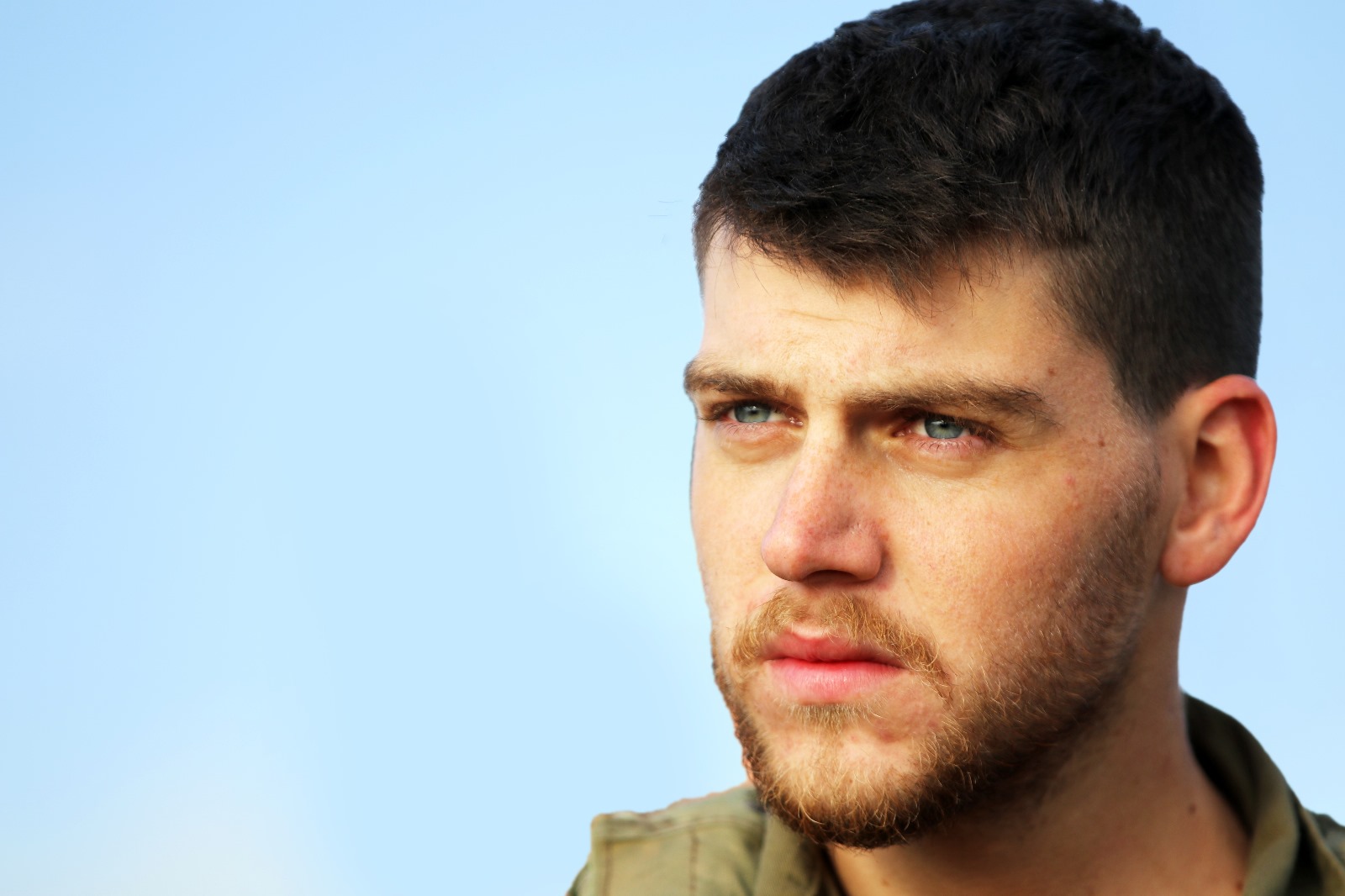
In the Shai family, Yaron was also the youngest son. “He was a strikingly handsome, charismatic young man, always ready to help others,” Shai recalls. Yaron volunteered for the Nahal Brigade and, on that fateful Saturday, was stationed at the brigade’s operations headquarters.
“They took up positions in Kerem Shalom,” Shai recounts. “Alongside two other heroic fighters—Captain Yoav Levinson and Omer Batito—Yaron helped prevent dozens of Nukhba terrorists from infiltrating the kibbutz.”
The three stood their ground, physically stopping the terrorists and, in doing so, preventing a potential massacre not just in one kibbutz but in others across the border area. Yaron also managed to activate the alert team at a nearby base, saving the lives of all the observers stationed there.
Tragically, Yaron was critically wounded in battle and arrived at the hospital with no pulse. “We lost a beloved son, a loyal friend, a talented young man who excelled in music, sports, and so much more.”
Changing the “Social Conception”
Israeli society today is full of divisions between different sectors and communities. How can these barriers be overcome? How can people truly begin to see and understand one another?
“The first step is open, honest, and calm dialogue,” says Simchi. “We shouldn’t scare people with talk of ‘the end of democracy’ or ‘the collapse of governance.’ Instead, we need to sit down and have real conversations.”
Simchi believes that the model he and Shai have developed is the right one. “We don’t agree on everything, but we share a fundamental common ground: the State of Israel must not be torn apart.”
According to him, meaningful compromise requires both sides to be willing to give a little—no one should expect to leave the table with everything they initially wanted. “If we can embrace that mindset, we can find common ground even on the most contentious issues.”
The Strength of Compromise
“I completely agree with Dedi,” Shai adds. “Judaism is built on study, debate, and discussions that generate new insights. For thousands of years, our ability to embrace differences through constructive dialogue has been one of our greatest strengths.”
However, Shai notes that in recent years, an unfortunate mindset has taken hold in Israeli society—one that equates compromise with weakness. “Many see it as a retreat, as surrendering their values. I hear this argument frequently from my own camp, the liberal camp.”
Shai strongly rejects this notion. “Compromise is not weakness; it is strength. Reaching agreements is a victory for principle—an acknowledgment that despite our differences, we share more in common than what divides us.”
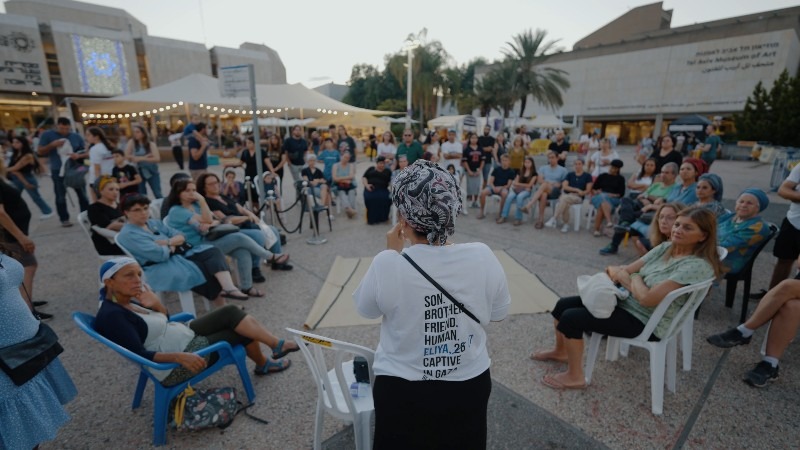
Shai hopes and prays that Israel after October 7 will be one where the dialogue will be conducted with the inclusion of the other side. “The striving for agreements is an aspiration for the victory of unity and the connection between us over everything else,” he concludes.
Agreement on the Principles
How does this approach translate into real-world solutions? For example, what does it mean for the commission of inquiry into the events of October 7?
“First, we recognized that both of us deeply respect the judicial system,” Simchi explains. “We agree that it must be independent, professional, and diverse. Once we established that foundation, we could move on to the details—whether the commission should have five members or seven, whether specific judges should be involved, and so on. When there’s agreement on core principles, everything else becomes easier to navigate.”
Establishing the Committee
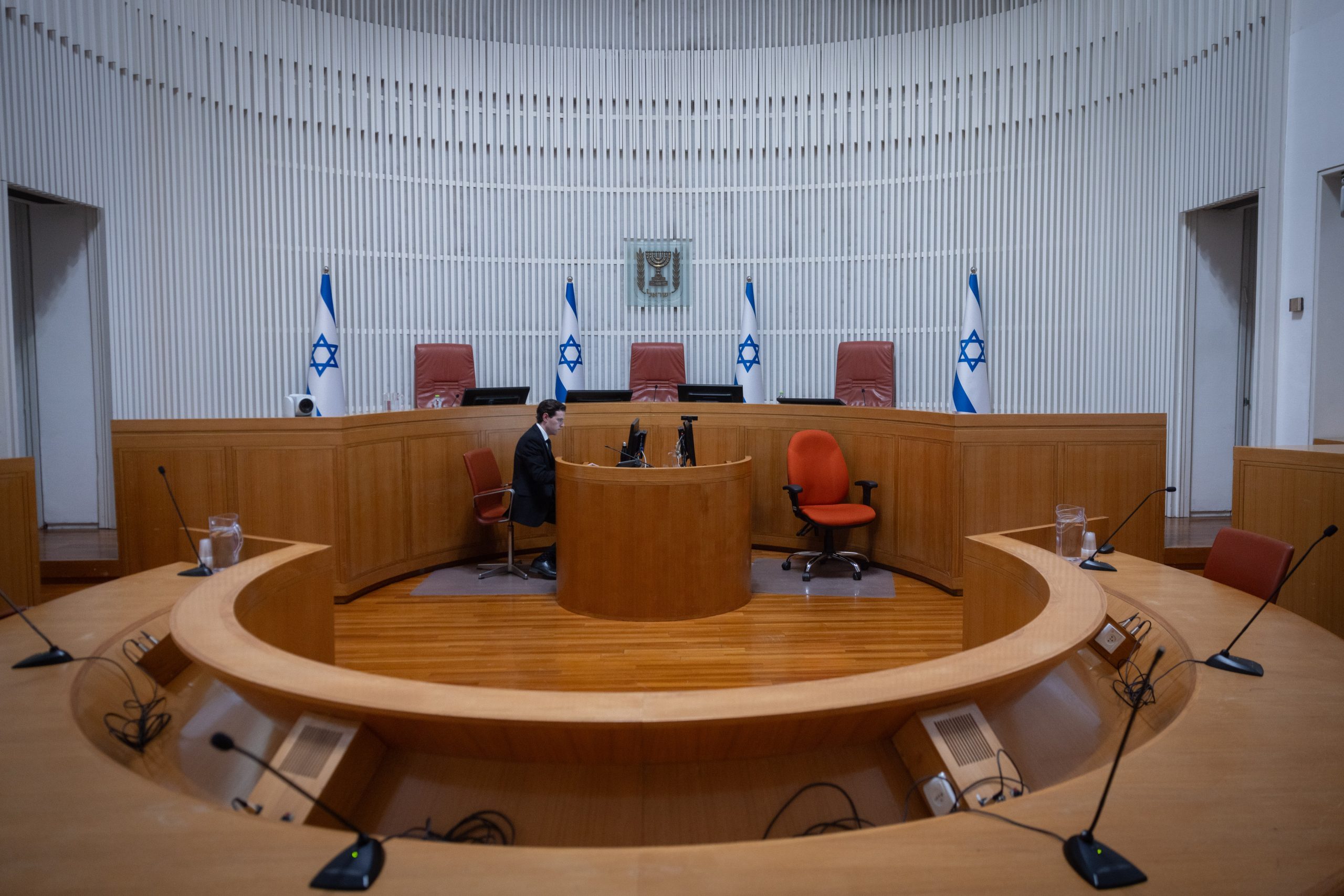
Shai echoes this sentiment. “The law states that a Supreme Court judge must head a commission of inquiry. Personally, I don’t necessarily agree with this requirement, but I acknowledge that many in Israeli society feel strongly about it.”
Understanding these concerns, Shai and Simchi sought a balanced solution—one that would address fears from both those who distrust the Supreme Court and those who insist on its involvement. “We’ve been working for months to develop a consensus-driven approach to the commission’s formation,” Shai reveals.
The Way to Find the Right Formula for the Commission of Inquiry
When looking at the points of contention, you can see a significant element of distrust in all of them. The feeling is that both sides, among the public and among public figures, have a significant lack of trust toward the other. How do we resolve such a situation?
“It all comes down to leadership,” Shai asserts. “True leaders set an example. They rise above divisions and unite people around shared goals.”
He points out that throughout history, weak leaders have used the tactic of ‘divide and rule’ to maintain power. “But we need a different model—one based on serving the people, not ruling over them. Unfortunately, too many of our leaders in recent decades have done the opposite, exacerbating divisions rather than healing them.”
According to Shai, the consequences of this division became glaringly clear before October 7. “Our enemies saw an Israeli society weakened by internal strife—right versus left, government versus opposition. This isn’t just a political problem; it’s a national security issue.”
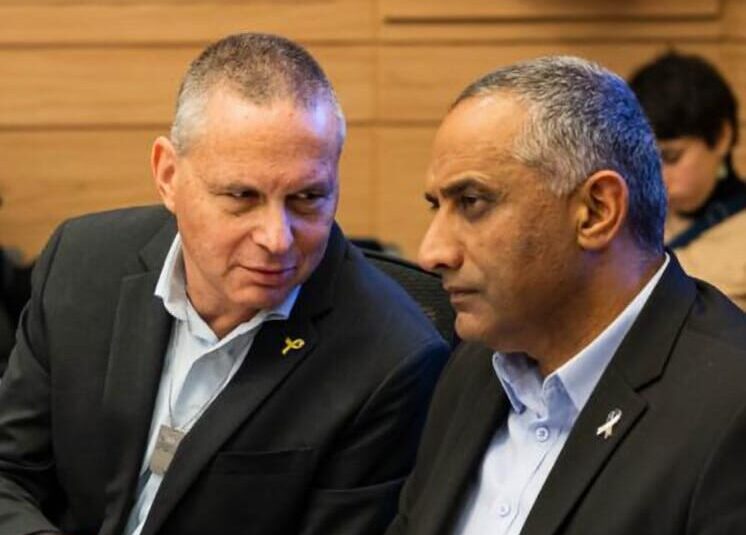
Shai turns to the public with a clear message: “We must demand better from our leaders. Leadership should be about uniting, not dividing.”
Simchi wholeheartedly agrees. “This applies to both the right and the left, to both the coalition and the opposition. We need leadership that prioritizes the nation above political gain.”
In these challenging times, he emphasizes, leaders must rise to the occasion. “Yes, the coalition holds power right now, but it should not wield it oppressively. At the same time, the opposition must avoid reactionary rhetoric that paints every policy as the ‘end of democracy.’ We are in mourning, we have hostages, and more battles may lie ahead. This is the moment for unity.”
Not Planning to Give Up
Is your direction for a solution already laid out? Is this the next step after the judicial compromise framework?
“If you mean are we ready to present an ordered position paper, then not yet,” Simchi answers, but immediately talks of progress on the matter: “We invested many hours of discussions with coalition and opposition members, with the president, government officials, and prominent figures in the judicial system in order to advance the process. I hope that we will eventually find the time to put our paper on the Knesset table. I can tell you that we recently met with many bereaved families. They all want one thing, an objective and reliable commission of inquiry.”
Simchi mentions that the initial connection between him and the former minister started precisely because of the attempt to formulate a framework for an inquiry committee by consensus. And they do not intend to give up on these two demands: a commission of inquiry and agreement.
We Must Demand True Leadership
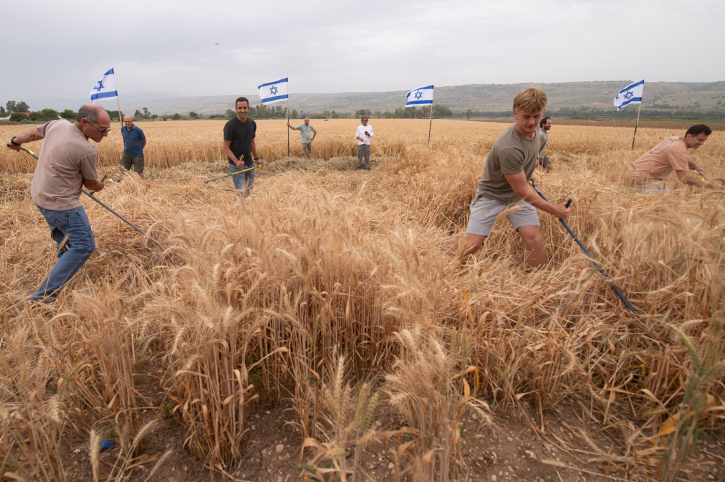
Shai turns to Israeli society with a clear message: “We must demand more from our leaders. Leadership should unite and connect, not divide and inflame.”
He expands on this, emphasizing the role of public officials: “A true leader serves the entire nation. Whether I voted for him or not, he is still my Prime Minister. The Minister of Justice is my minister. The President of the Supreme Court is my president. These leaders are meant to serve all of us. Elections may take place every four years, but once officials are in office, they must represent and work for the entire country—not just their base. Leadership should never be about ‘divide and rule.’”
Simchi fully agrees. “The key word here is leadership—true leadership,” he states. He stresses that this responsibility applies to both sides of the political spectrum. “We need leadership that rises above factionalism, from both the right and the left, from both the coalition and the opposition. It cannot be about one side screaming that every disagreement signals the ‘end of democracy,’ nor can it be about deliberately provoking the other side.”
Rising to the Occasion
In these critical times, Simchi stresses the need for leaders and citizens alike to rise to the historical moment. “Now is the time to act together, to recognize the significance of this moment and meet it with unity,” he urges.
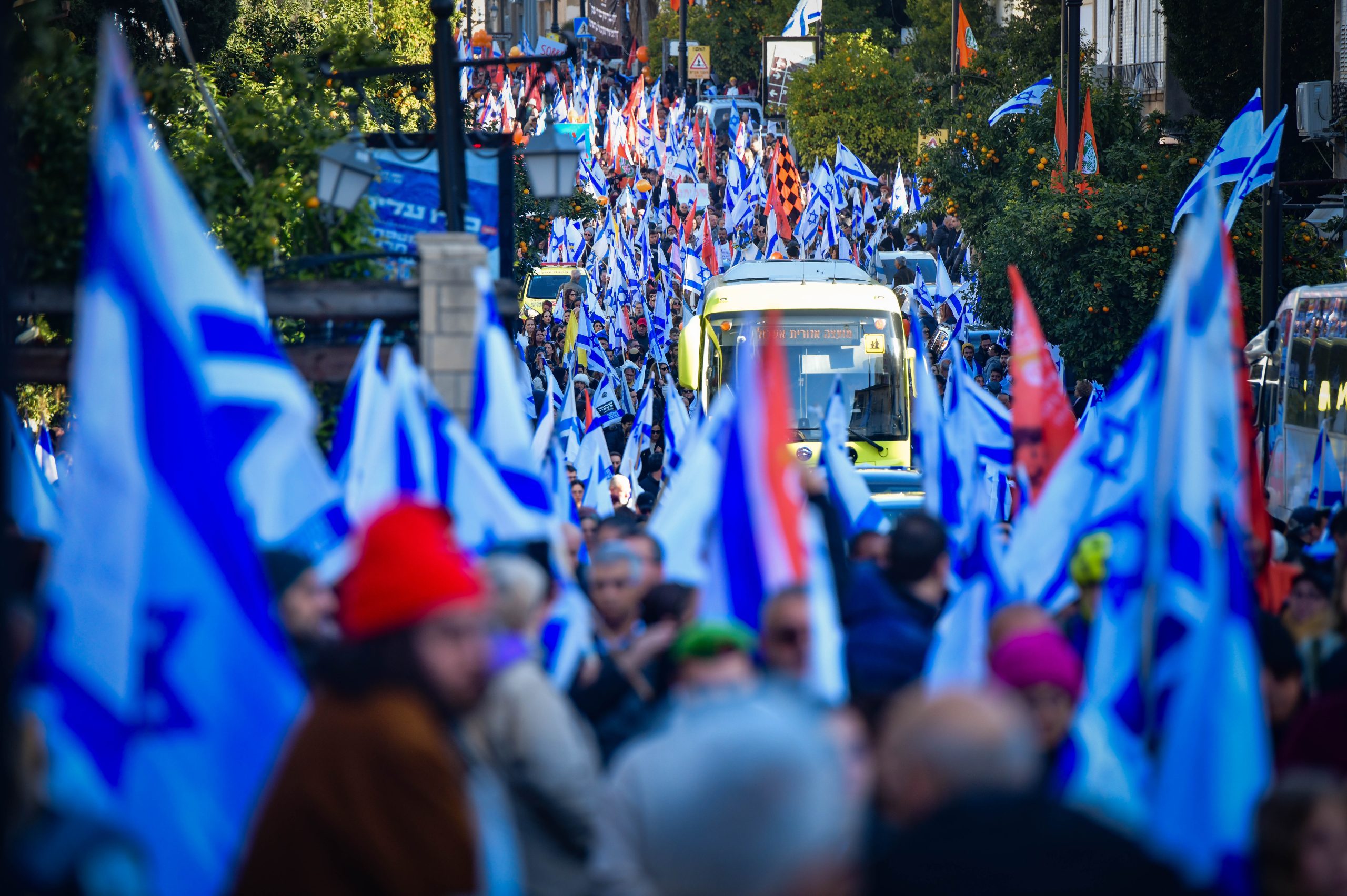
Shai concludes with a profound call to action. “The duty falls to all of us. And when I say all of us, I mean the right, the left—everyone. We must be worthy of the unimaginable sacrifice of our heroes.”
He emphasizes that this is not just about his own son, Guy, or Simchi’s son, Yaron, but about all the brave fighters who stood against unimaginable threats, preventing massacres and devastation. “It is also about the citizens who fought with their bare hands, refusing to surrender, and the families who continue to sacrifice as their loved ones stand on the front lines, facing danger every day.”
The path to honoring their sacrifice, Shai explains, is through unity. “It begins with connection—with standing together as a people. We must demand of ourselves to be the kind of society for which these heroes gave their lives. This is our responsibility, and we must rise to meet it.”