
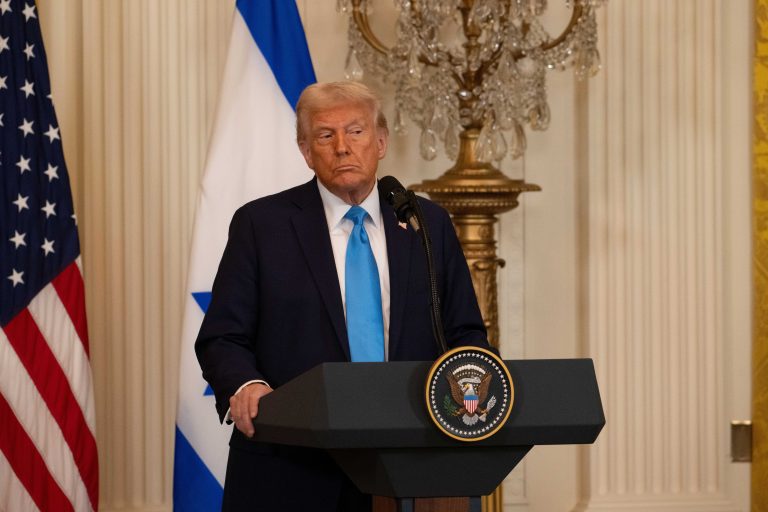
Ahead of the scheduled talks this Saturday in Oman between the United States and Iran, U.S. President Donald Trump addressed the possibility of military confrontation should Tehran reject a deal aimed at dismantling its nuclear program.
“If military action is necessary—it will take place,” Trump told reporters at the White House. He clarified that Israel would play a central role in such a scenario: “Obviously, Israel would be involved—it would lead it. But no one leads us—we act based on what is right for us.” He added, “I don’t ask for much, but one thing must never happen—Iran must not have a nuclear weapon.”
Four Days After the Netanyahu-Trump Meeting
Trump’s remarks came just four days after Israeli Prime Minister Benjamin Netanyahu concluded his visit to Washington. During the visit, Netanyahu and Trump discussed a range of critical issues, including Iran’s nuclear threat, the need to eliminate Hamas and secure the return of hostages, relations with Turkey, and Trump’s tariff policy.
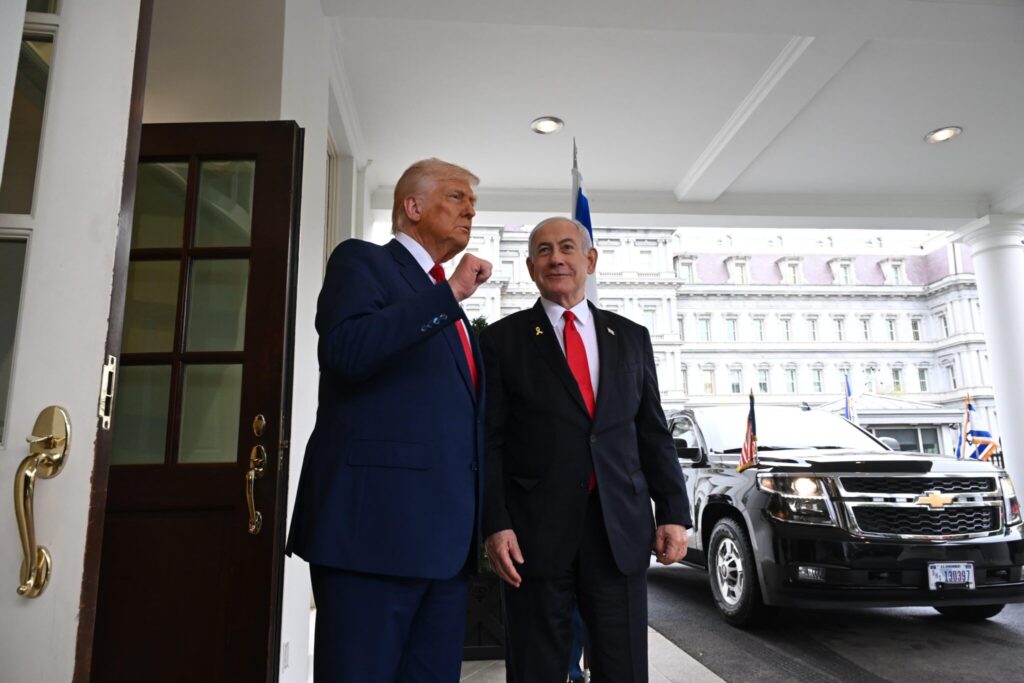
After the meeting, Netanyahu said that he had reached an understanding with the U.S. administration on the need to thwart the ayatollah regime’s nuclear ambitions. “First and foremost—Iran. We agree that Iran will not obtain nuclear weapons. This can be achieved through an agreement, but only if it’s a Libya-style deal: go in, blow up the facilities, dismantle all equipment, under American supervision and implementation. That’s good. The other option is if they just stall the talks, and then the alternative is military. Everyone understands that. We discussed it at length.”
Sudanese Envoy Visits Israel
Meanwhile, in a notable development involving an Iranian ally, a special envoy of Sudanese leader Abdel Fattah al-Burhan made a secret visit to Israel last week, according to the Sudanese newspaper Al-Rakoba. The purpose of the visit was to restart the normalization process between the two countries and to persuade Israel to support Burhan’s regime—despite its recent warming of ties with Iran.
According to the report, the envoy, Al-Sadiq Ismail, delivered a clear message from Burhan to Prime Minister Netanyahu: he is ready to finalize Sudan’s participation in the Abraham Accords and will accept any conditions Israel sets—in exchange for diplomatic and security backing.
Ismail emphasized that the rapprochement with Tehran was not a strategic shift, but rather a necessity driven by immense pressure on Sudan and the lack of military support from Israel: “We needed quality military assistance from any possible source to achieve victory—Israel didn’t provide us with weapons, so we were forced to turn to Iran.”
Efforts Toward Washington and Abu Dhabi
It was also reported that one of the main objectives of the visit was “to present al-Burhan to the new American administration and ease tensions with the United Arab Emirates.” Over the past year, Sudan has become increasingly isolated on the world stage, and restoring ties with its Western partners—particularly Israel—has become a top priority.
According to the Sudanese source, al-Burhan expressed frustration over Israel’s policy toward Sudan in recent years. He said the lack of military cooperation undermined his ability to defeat the Rapid Support Forces. Now, he is seeking to renew ties—in exchange for real support from Israel.
“An Opportunity and a Test – The Ball Is in America’s Court”
Iran, for its part, announced this week that indirect talks with the U.S. will take place this Saturday in Oman. In an official statement, Iranian Foreign Minister Abbas Araqchi said: “This is both an opportunity and a test—the ball is in the United States’ court.”
According to Iranian reports, Araqchi himself will represent Tehran in the talks, while President Trump’s special envoy, Steven Witkoff, will serve as the senior U.S. representative. The discussions are expected to focus on regional issues, with the nuclear question at the top of the agenda.