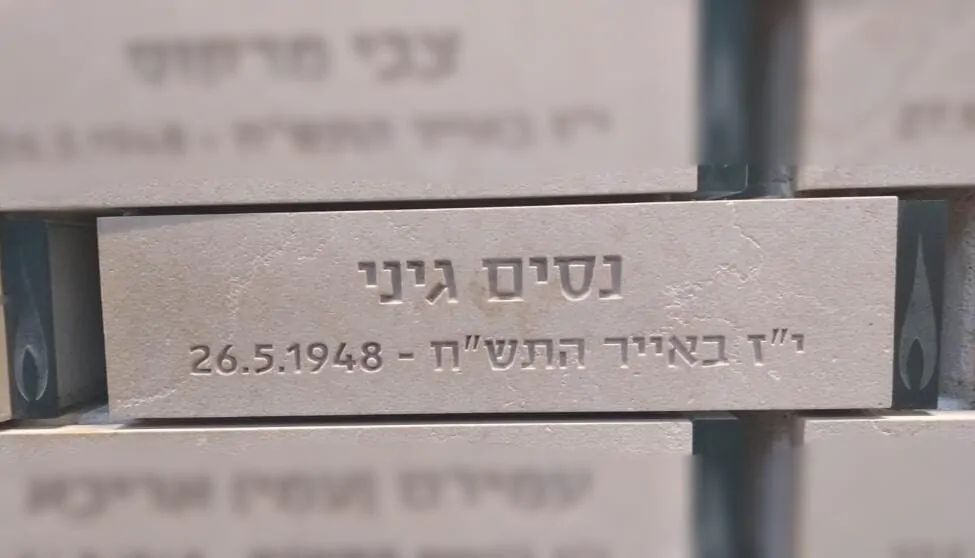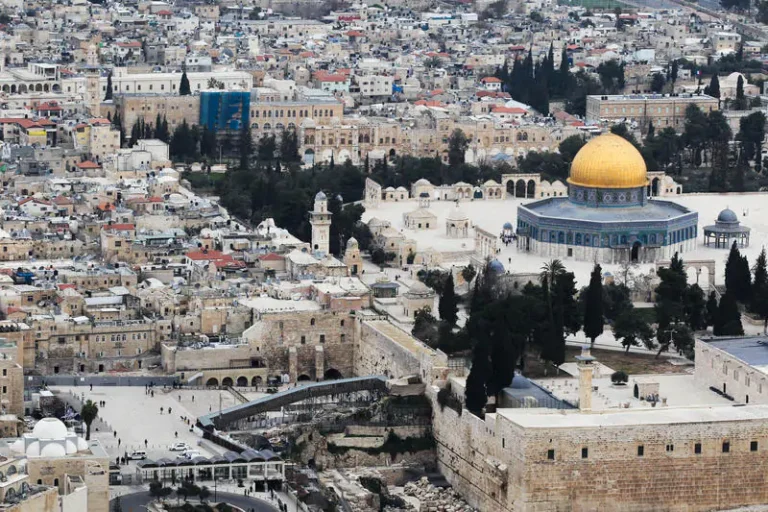

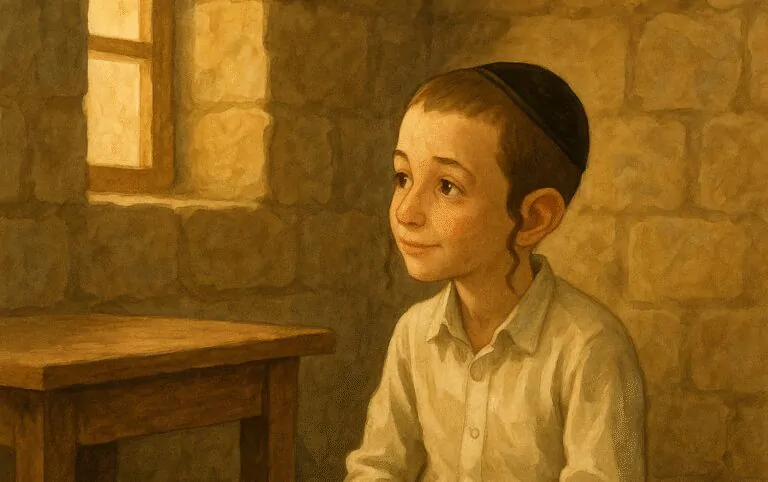
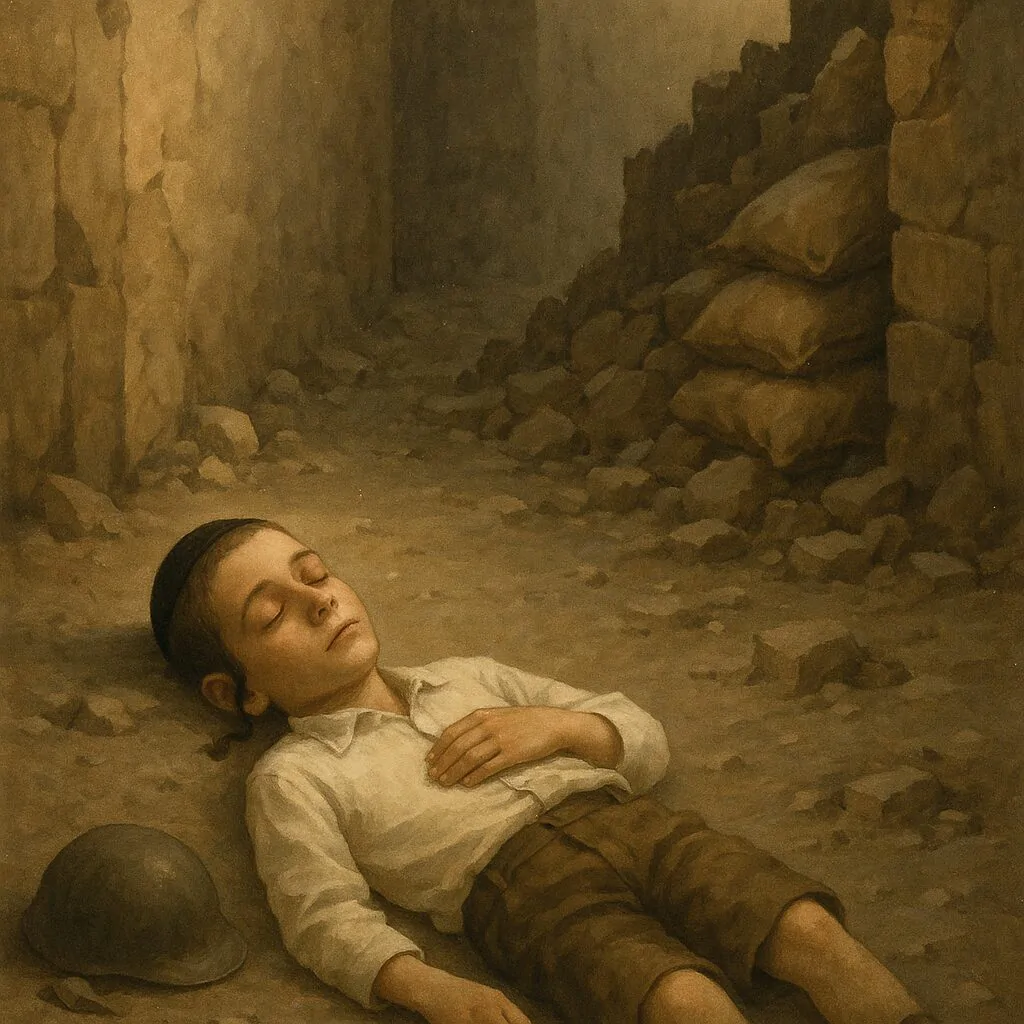
If there’s one story I feel deeply connected to and that moves me every year, it’s the story of ten-year-old Nissim Gini, the youngest of Israel’s fallen. For several years, I’ve been posting his story on my Facebook page each Memorial Day. Nissim was killed in the alleyways of the Jewish Quarter he so dearly loved. I based his story on what’s written on the Yizkor memorial site for Israel’s fallen. In recent years, as part of an effort to write a children’s book about him, I’ve added details from a conversation with his cousin—and some from my imagination. This year, I also created a few illustrations using AI.
Nissim’s Story:
“I was born on February 12, 1938 (18 Cheshvan 5699), in my parents’ home in the Old City of Jerusalem, where I lived my short life from beginning to end. A life full of joy and meaning.
My mother, Miriam, who came to Jerusalem from Morocco, did everything for me. My father, Yitzhak, who immigrated from Turkey following my grandfather—who had fallen in the Land of Israel during World War I—was a wonderful man. He worked in the Mahane Yehuda market.
Our life in the Quarter was very simple—and far from easy—but back then, we didn’t think about it. I suppose it’s hard for you to imagine living that way today. Part of the floor in our house was just packed earth, but the place was always spotless.
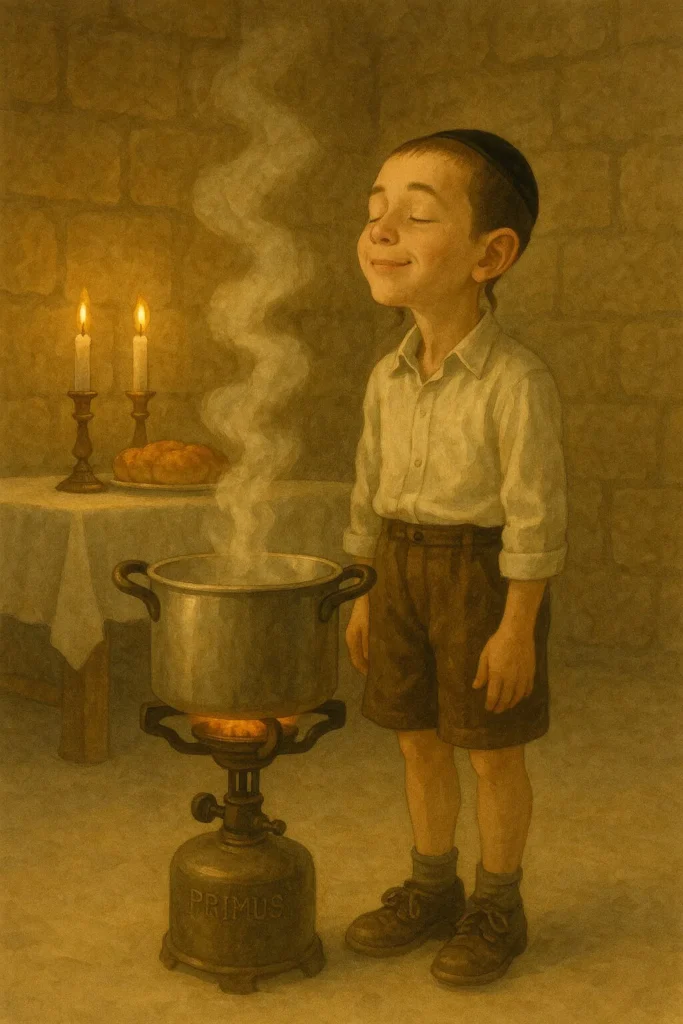
Even though my mother was blind, the Shabbat preparations and cooking were always finished early. We’d take our Shabbat baths in metal tubs on Friday morning—or even Thursday night. I guess that sounds strange to you—bathing in a tub like that?
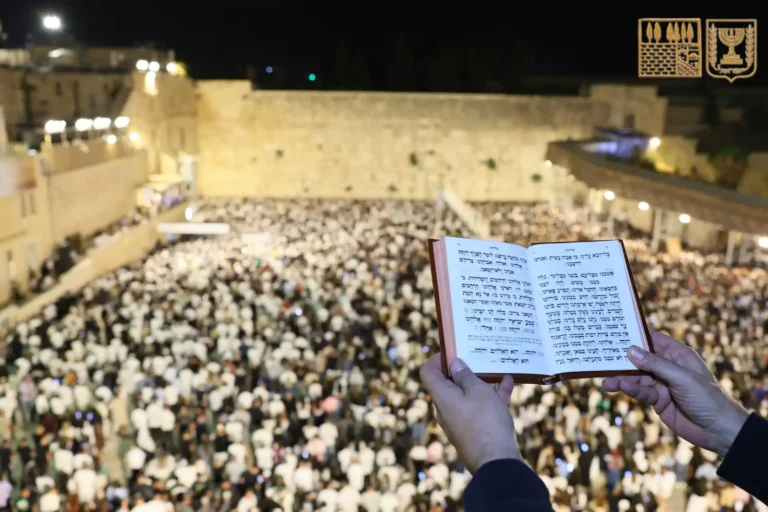
The tin bucket of lime was always prepared in advance, and before Shabbat, my father would whitewash the floors. I remember how he walked backward when he finished, so there wouldn’t be any footprints left in the kitchen. Just like I used to do at the Kotel after every prayer.
There’s one memory I’ll never forget—not even from up here: the smell of my mother’s Shabbat food mixed with the fresh scent of father’s whitewash. I miss that so much.
Life changed after the end of the British Mandate
Our relations with the Arabs were generally good. But things shifted after the British Mandate officially ended on November 29, 1947 (17 Kislev 5708). The atmosphere changed. Storeowners in the Quarter told their customers: “Buy what you need now—we’ve been ordered to close for three days. Stock up.”
Life became harder. From that point on, Jewish shopkeepers got goods from the New City. They brought in milk, eggs, cheese—the basics. Bread came from different bakeries in turn, and they distributed it as needed.
I went to school and played like any other child, until the War of Independence reached us. The siege on the Jewish Quarter—and on our home—disrupted everything. I stopped going to school. Things were boring at home, and I quickly asked my mother what I could do. Yes, even back then we kids got bored. Just before the siege began, my father had gone to work at the Mahane Yehuda bakery—and ended up stuck there. I was sad, but I didn’t let it bring me down.
After the State of Israel was established, on May 16, 1948 (7 Iyar 5708), the Arabs began their assault on our Quarter—my home. When the fighting started, I volunteered with my friends to help defend it and our Jerusalem. My sister, who was 14, and my 12-year-old brother also helped the fighters—each in their own way.
The Arabs blew up the Hurva Synagogue
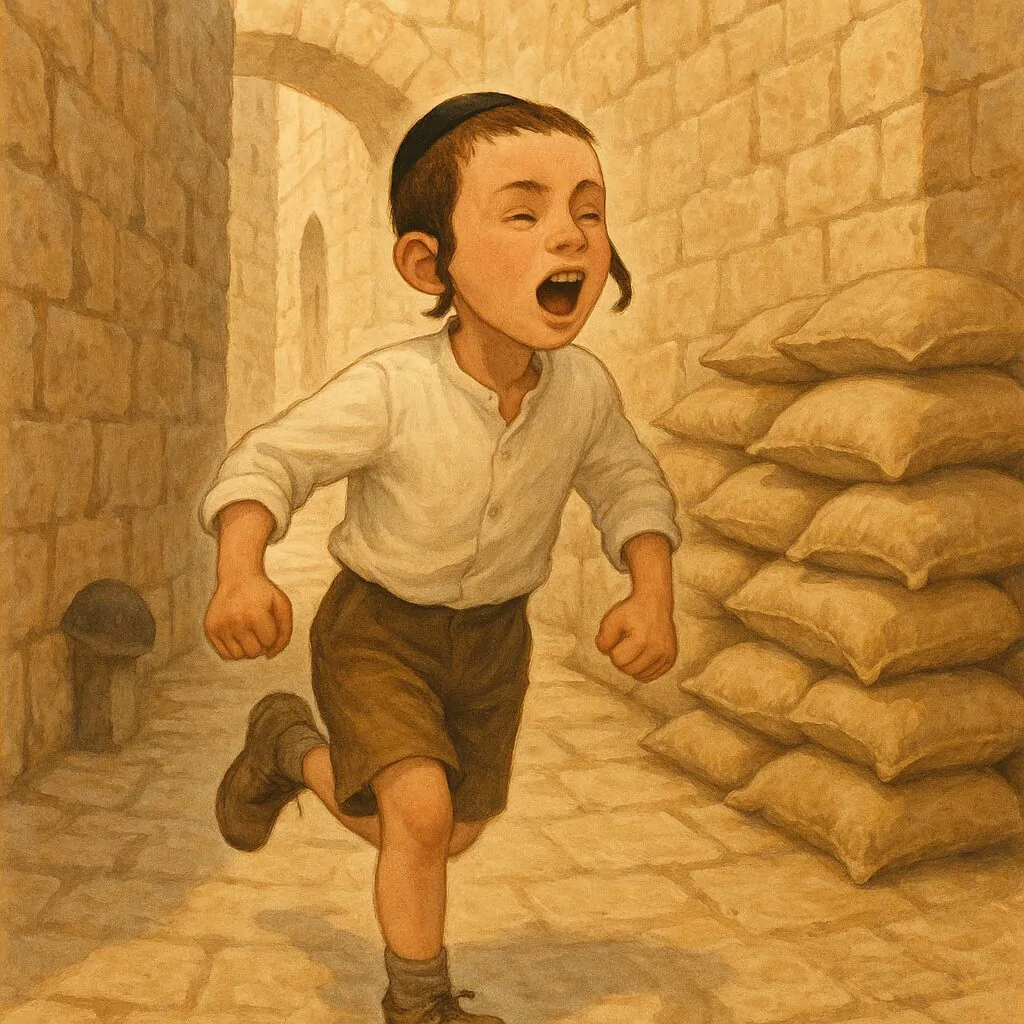
On Tuesday, May 25 (16 Iyar), the situation in the Jewish Quarter became desperate. That day, the Arabs captured the beautiful and ancient Hurva Synagogue—which you probably know in its restored version—and blew it up. I cried. Our defenders’ ammunition was nearly gone. I could smell our fallen. There was no way to bury them.
We didn’t have telephones or radios to communicate between the defensive positions in the Quarter’s narrow alleyways, and because I knew those alleys by heart, they told me—me!—that I would be the runner for the Quarter.
What does that mean, you ask? It meant carrying messages from one position to another. Believe me—it’s terrifying to run through gunfire and explosions. But I always remembered to believe in God, as my parents taught me. I believed in myself, too. I did what I had to do.
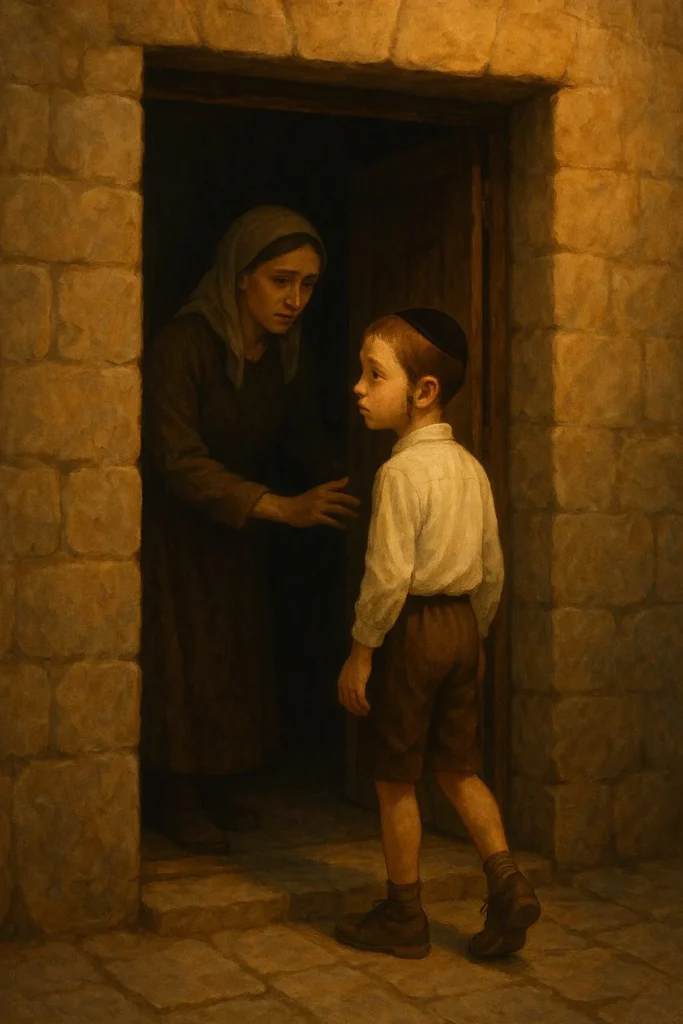
At midday, I returned home to eat. After lunch, I told my mother I was heading back to my post. But she said I shouldn’t leave. “It’s dangerous for children,” she said, and locked the door. I told her I couldn’t stay home while everyone else was fighting—and I left anyway.
They wouldn’t give me a gun
I asked the commander for a pistol, just in case an Arab came at me. He said there weren’t enough to go around. I think he thought I was too small.
I reached my post. Toward evening, I noticed something suspicious. I lifted my head to see what it was and immediately felt a sharp pain in my head and neck. I saw my blood. I was badly wounded. The pain was so intense that even at age ten, I wanted to die just to make it stop.
The next day, Wednesday, May 26 (17 Iyar), my Quarter—my beloved home—fell. I was one of the eight who died in Batei Mahaseh, before our defenders had a chance to bury us. My body was buried by a local Arab. After the Six-Day War, my remains were identified and transferred to the mass grave on the Mount of Olives in Jerusalem.
I lived long enough to hear my father—who miraculously returned to the Quarter—say Kaddish over me. His tears fell on my face. My mother—I never saw her cry. But I understand. She lost me when I was only ten. Today, I would have been 87 years old.
My death was not in vain
Despite all the disagreements and wars, the State of Israel is thriving, thank God.
My death gave you life. The deaths of 25,420 of Israel’s fallen were not in vain. My death was not in vain.
I am the youngest of Israel’s fallen.
Nissim Gini.”
Two days after Nissim’s death, the Jewish Quarter fell. Facing extreme hardship, the Quarter’s rabbis—Rabbi Ben Zion Mordechai Hazan and Rabbi Yisrael Ze’ev Mintzberg—approached Arab Legion commander Abdullah el-Tell under a white flag to request a ceasefire so the wounded could be evacuated. He demanded total surrender. Given the dire situation and lack of support, the Quarter’s leadership made the decision to capitulate.