
As an expert on Iran and a researcher at the INSS, Benny Sabeti offers a unique insight into how Purim is viewed in the very country where the story historically took place.
Sabeti: “Until Ahmadinejad’s era, neither the Iranian public nor the Iranian regime showed any interest in Purim, and certainly not in the story of the Book of Esther. Even Iranian Jews didn’t highlight the holiday, out of a sense of self-preservation – after all, it doesn’t sound good celebrating an event where the Jews harmed the Persians. It’s a sensitive topic for a country that, until the revolution, was antisemitic.”
Sabeti notes that it was the former Iranian President Ahmadinejad who began highlighting the story during his presidency.
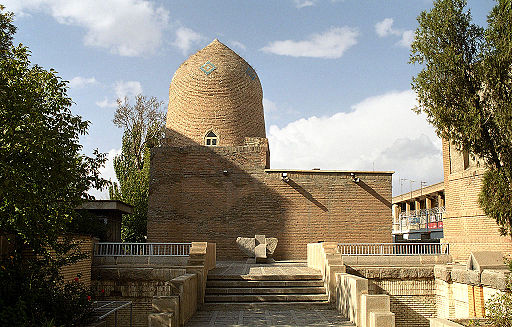
“He presented it as the first Iranian Holocaust, and part of a Holocaust denial. He said the Iranians are the victims of the Jewish people, exactly the opposite of the Book of Esther itself. After he described it this way, attacks began occurring at the tomb of Mordechai and Esther in the city of Hamadan in reaction. A handful of extremists went and protested there, throwing bottles, etc. Within the tomb’s vicinity, Purim became a frightening holiday.”
Controlling the Tomb and Encouraging Desecration
Sabeti: “The great irony in this matter is that the regime itself protects the tomb – while also encouraging extremists to protest and harm it. The regime nationalized the tomb area in the late 1980s. They both guard it, and concurrently send extremists to protest and cause harm to the place.”
Rega: Why do they both guard it and encourage protests against it?
Sabeti: “Because they want to show superiority and power to the Jews in Iran. Even the city where the tomb is located has been mostly abandoned by Jews. There may be only 10 Jews left, and they only remain there in order to guard the place.”
Sabeti emphasizes that today most of the Iranian public is no longer antisemitic toward Jews ( mostly due to the common negative sentiment towards their current anti-Israel authoritarian government). “Three years ago, the Israeli Foreign Ministry conducted a survey and found that about 50% of Iranians declared that they do not hate Jews. This is a country where antisemitism is the lowest.”
Rega: They say the tomb has a form of special powers and qualities. Is that true?
Sabeti: “Yes. Even the Iranians themselves believe the tomb has special properties. My father used to say that people came to pray there to be healed. He also told me that a clergyman came with an axe to destroy the tomb, and his hand dried up. There is also an issue with the synagogue inside the tomb complex. It’s a small synagogue where every Purim holiday, several hundred people would go to read the Megillah. Apparently there shouldn’t be enough room for everyone, but the Jews there claimed that the synagogue expanded on its own.”

Stories of the Tomb Complex, Before Aliyah
Sabeti had the opportunity to visit the tomb complex in person, when he was 14.
Sabeti: “Before we fled Iran to Israel, we went to pray at the tomb. Generally, anyone planning to escape Iran would travel there to receive a blessing and encouragement for the long journey ahead. It was a Friday, and they opened the complex especially for us. We entered, and it was very emotional. My father was very moved because he was born in the city of Hamadan, and it was not easy for him to know that this would be the last time he would see the place. He grew up there, and every Purim he would go to read the Megillah at the tomb. I don’t think there is any other holiday where you go to fulfill its mitzvah at a tomb site. It would be like having a Passover Seder night by the pyramids in Egypt.”
Rega: Did the story of the Megillah have an impact on Iranian Jews?
Sabeti: “Definitely. This whole story had a great impact on Jews in Iran. Iranian Jews very much believe in the whole concept of ‘V’nafochu’ (the reversal of fate). It’s why even when they are going through difficult times, the story of the Megillah acts as a kind of fuel that gives them light and hope for the future. The story gives them a lot of comfort.”
Rega: So the Jewish community there today still feel encouraged by the story of the Megillah of Esther?
Sabeti: “Yes, absolutely. They are especially looking for support these days, with the tension between Israel and Hezbollah. They are certainly seeking hope, to strengthen the belief that things will get better in the future.”