
Deepening Aerial Superiority: IDF Strikes Iranian Airfields and Fighter Jets
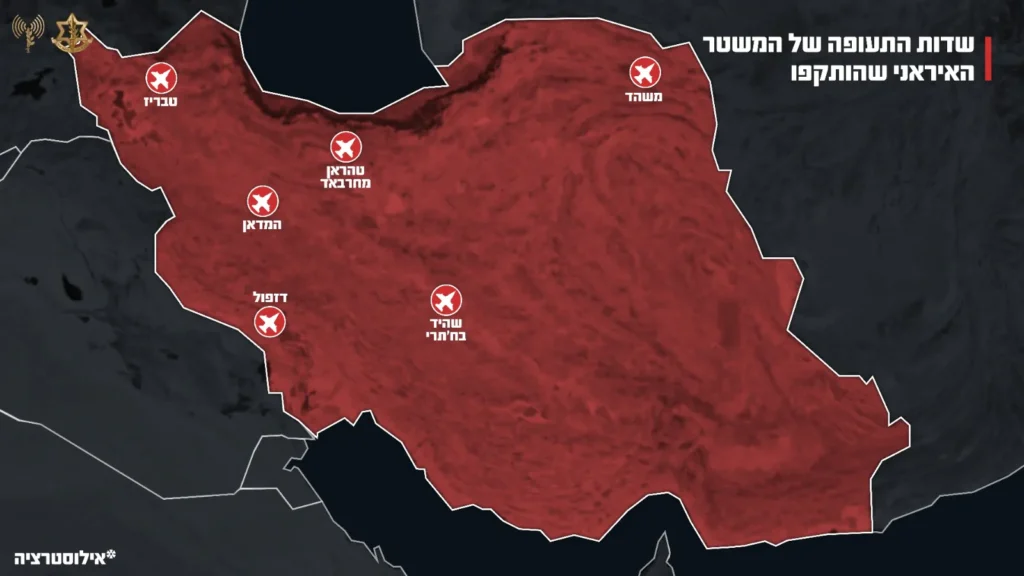
As part of the ongoing conflict with Tehran and Israel’s efforts to expand aerial control over Iranian skies, the IDF struck six Iranian regime airfields overnight (Sunday to Monday), located in the west, east, and center of the country.
Airfields struck marked by red planes:
Strikes by UAVs
The strikes were carried out using unmanned aerial vehicles, with the main objective of impairing the Iranian Air Force’s ability to operate against Israeli Air Force aircraft.
According to the IDF Spokesperson, the strikes destroyed 15 aircraft belonging to the Iranian military, including F-14 and F-5 fighter jets, AH-1 combat helicopters, and a refueling aircraft. All were designated for use in air defense systems and in readiness to intercept Israeli strikes on Iranian soil.
In addition, takeoff runways and underground hangars were attacked and blown up, with the aim of disrupting Iran’s routine aerial operations and preventing it from effectively deploying its forces. The strikes were directed to neutralize the ability to take off from these airfields—a tactical move granting Israel a significant aerial advantage.
IDF STRIKE 2,000KM AWAY: An IRGC surface-to-surface missile engine production site in Shahroud, Iran was struck.
The site was struck for its planetary mixers and critical machinery used in the production of engines for missiles launched by the Iranian regime toward Israel.… pic.twitter.com/GucJSdDtuv
— Israel Defense Forces (@IDF) June 22, 2025
The IDF emphasized that the operation was intended to thwart Iranian attempts to attack or defend against future Israeli Air Force sorties.
“Damaged or Destroyed”: Satellite Images Reveal Results of the Strike on Fordow
A nuclear industry expert: “It appears the enrichment halls were destroyed”
U.S. President Donald Trump shared overnight (Sunday to Monday) on the social network Truth Social that “monumental damage” was caused to Iran’s nuclear sites. Trump noted that the term “obliteration” is the most accurate descriptor of what occurred at the sites.
“The biggest damage took place far below ground level,” Trump wrote, referring to the hits on Iranian uranium enrichment facilities.
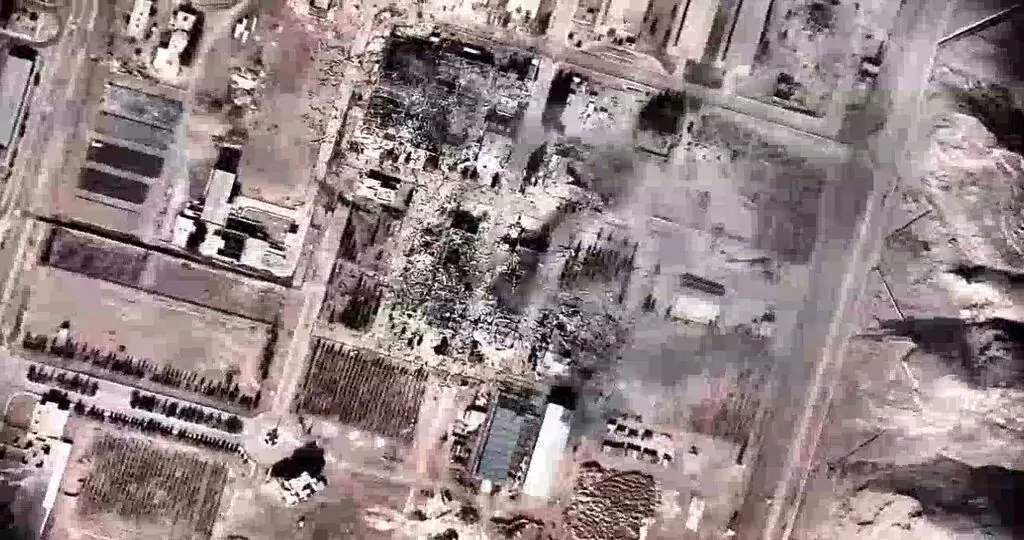
Six penetration points
David Albright, a former senior official at the Atomic Energy Agency and an expert in the nuclear industry, also addressed the damage to the facilities. Albright stated that he possesses high-resolution satellite images showing the underground facility in Fordow, one of the central sites in Iran’s nuclear project.
In the images, six penetration holes can be seen, resulting from hits by GBU-57 bunker-buster bombs, which struck the rock-embedded structure.
Albright added that the penetration holes are located near the ventilation shaft of the underground compound, allowing easier access for the bunker-buster bombs to enter the halls where the centrifuges used for uranium enrichment are located. He assesses that it is highly likely the enrichment halls were severely damaged or completely destroyed in the strike.
Albright noted visible signs of destruction on the side of the mountain, caused by powerful explosions. He also observed that the Iranians had filled the facility’s entrances with soil, apparently in preparation for a possible additional strike.
Interceptions in Israel
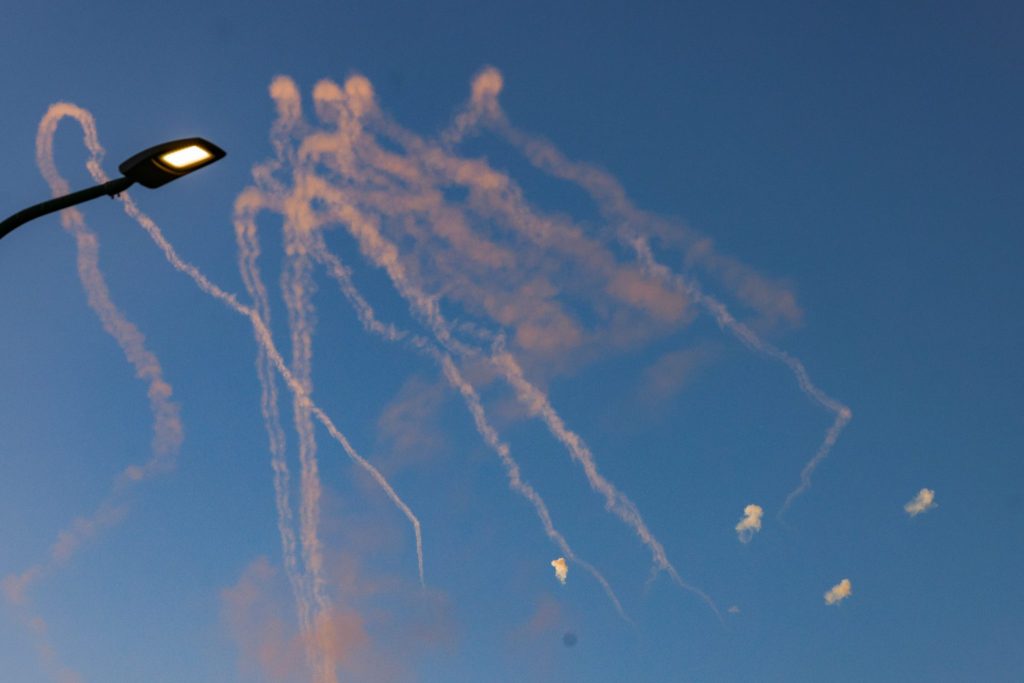
Overnight (Sunday to Monday), missile launches from Iran toward Israeli territory were detected. According to an IDF Spokesperson statement, the Air Force acted to intercept the threat. Minutes later, alerts were activated in several regions due to the launch of a single missile from Iran, which was successfully intercepted.
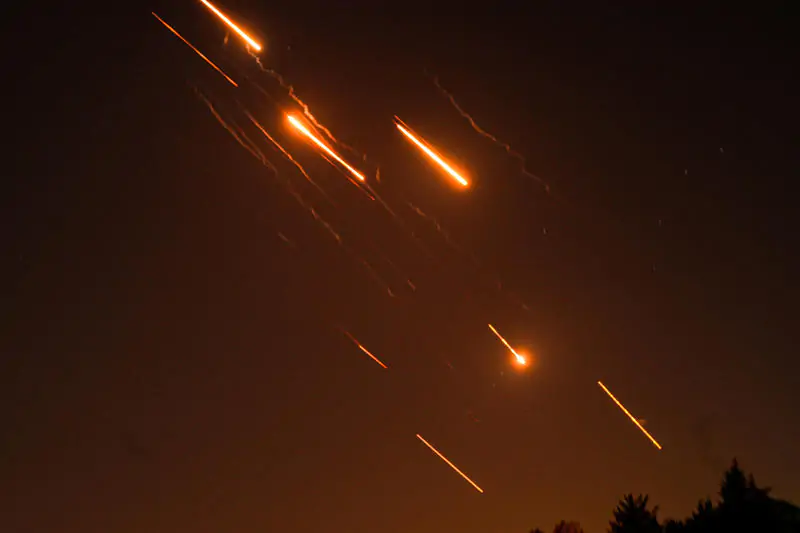
The Air Force also intercepted an unmanned aerial vehicle in the Eilat area that was hovering nearby but had not yet crossed into Israeli territory. In accordance with policy, no alerts were activated.
More projectiles were launched from Iran twice again this morning.