This Independence Day, we wanted to hear what life really looks like—not from the stages or official speeches, but from inside the homes, the doubts, the silences. Four women opened their hearts and shared their most vulnerable moments of the past year: a wedding overshadowed by war, a birth following tragedy, physical and emotional recovery amid recurring reserve duty, and motherhood that lives between calls from the front and prayers at home. Maayan, Roni, Michal, Hila, and Rivka don’t just talk about resilience—they embody it.
Maayan Goodman
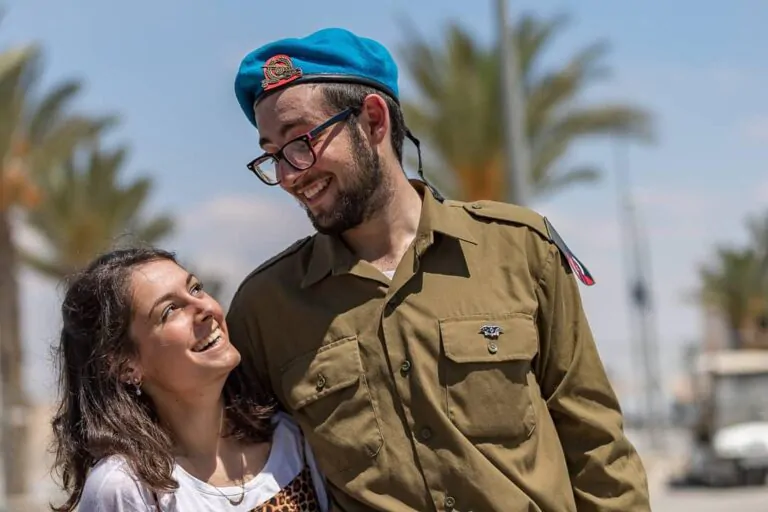
When Maayan Goodman married Kedem just days after the war broke out, she knew the road ahead wouldn’t be easy. Between the longing and the fear, she chose to build a life with him—anchored in faith, love, and inner strength.
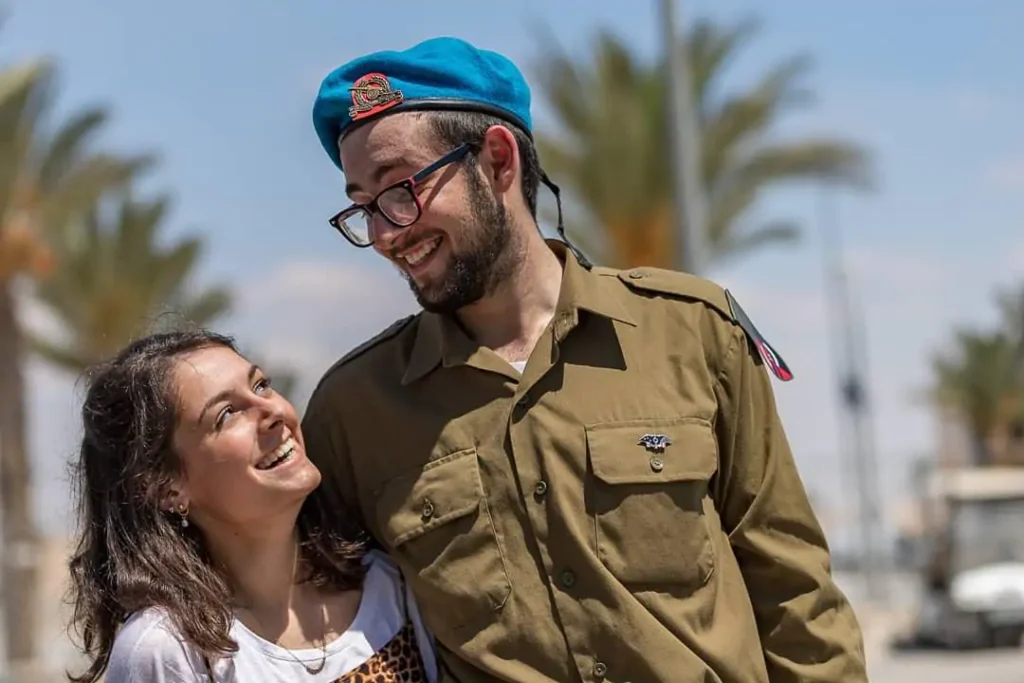
“Kedem and I got married a few days after the war began. We had planned a wedding in a hall with all our family and friends, but because of the restrictions, we moved it to a small synagogue. It wasn’t what we dreamed of, but at that moment, all we wanted was to be together. Then came weeks of uncertainty—every day we waited for the emergency call-up. When it finally came and he left for reserve duty in the artillery, anxiety never left me. The longing was difficult, and the nights became too quiet.”
“We have no other country, and there’s no one else I’d want to walk this path with”
During the war, Kedem’s brother was injured after jumping from a second-story building where a bomb had been planted.
“When I heard that his brother was wounded in Gaza, the fear only intensified. And yet, despite everything, I look at him with pride. He’s not just my husband—he’s also our protector. I still believe, just like then, that we have no other country, and there’s no one else I’d want to walk this path with.”
Roni Prince
Roni Prince also found herself in the middle of the storm. When the war erupted, she was in Jerusalem, while her partner Tuvia drove south. Out of grief, Roni and Tuvia made a powerful choice—to embrace life, even when their heart was breaking.
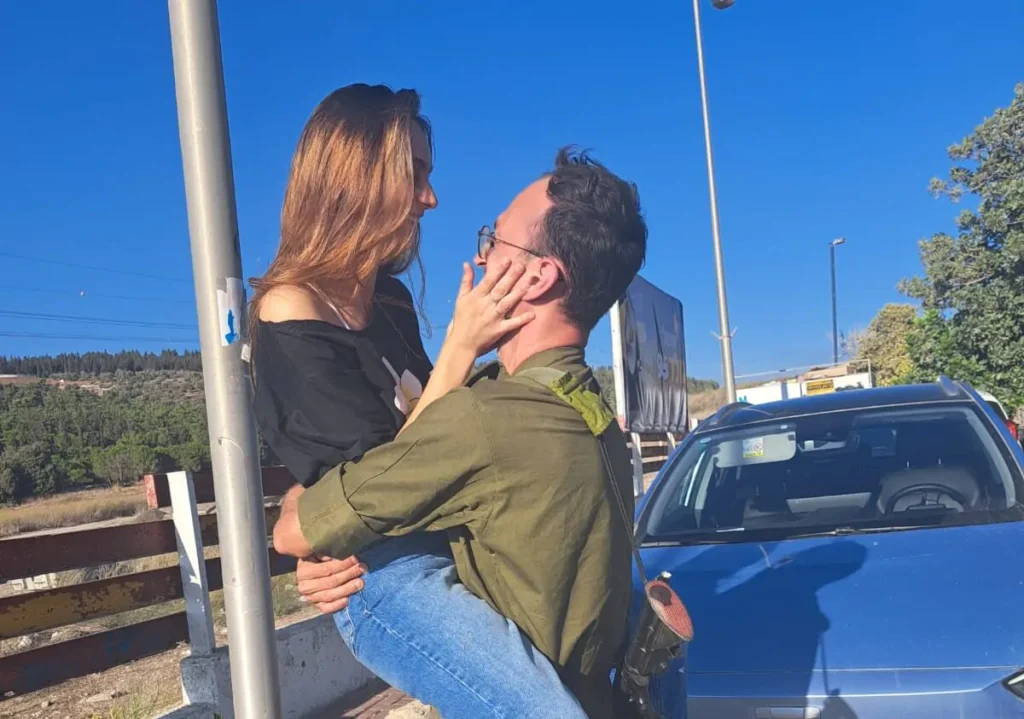
Roni was in Jerusalem on October 7. She passed through a synagogue and heard that eleven communities had been overrun by Hamas. Meanwhile, her partner Tuvia commandeered a company vehicle and drove south.
“I stayed in Jerusalem for two and a half weeks with just my Shabbat clothes,” she recalls.
Choosing life through the pain
Their next meeting came under tragic circumstances.
“We saw each other again at the funeral of Tifi (Tiferet Lapidot), our friend who was murdered at the Nova festival. It was also our fifth anniversary. Everything shifted. Everything was shaken.”
From that pain, Roni and Tuvia made an extraordinary decision:
“We realized we were meant to bring more life into the world. I got pregnant a few months later—and of course, there was another round of fighting during the pregnancy. Despite all the chaos, it was a moving time. The pregnancy brought comfort to the people around us—and to us.”
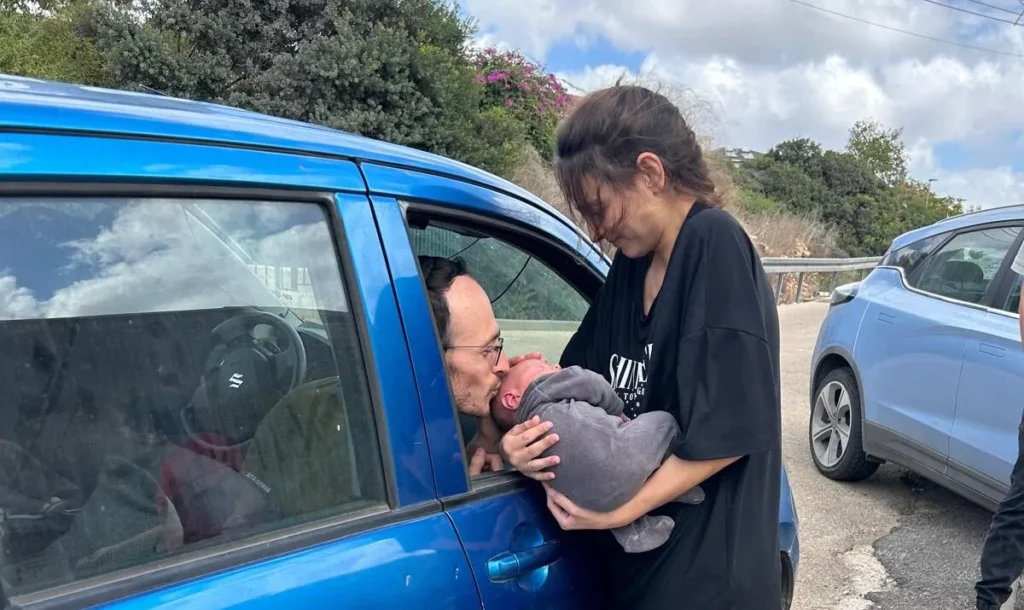
On the 16th of Elul 5784 (19th of September 2025), their son Nitai-Arbel was born.
“The north was burning during those days, and we chose to name him after [Jewish sage] Nittai of Arbela, who said, ‘Do not despair in the face of adversity,'” Roni shared.
“We knew it would be harder to live with the feeling that we hadn’t done our part”
“Before the birth, we asked ourselves what we’d do if another call-up came. And we both knew—whatever happens, Tuvia would go. And he did—twelve days after the birth, he left for another 45-day round. It was hard. But we realized it would be even harder to live with the feeling that we hadn’t done our part.”
Hila Spitzer
Hila Spitzer, mother of Gefen and Shaked from Modi’in, wrote about the sense of mission and the challenges of life on the home front. Her husband Yair served this past year in the Alexandroni Brigade.
“Being a reservist’s wife means everything, absolutely everything, falls on you—the wife. The kids, their activities, the house, the rides, the car, the groceries, the bills, and the paperwork.
It means worrying about your husband on top of worrying about your children. Waiting for his phone call. Hearing that he’s okay.
It means eating dinner at the very end of the day when you’re already exhausted, once the house is tidy and the dishes are clean.
Being a reservist’s wife means waking up in the morning, facing each day with a smile and with courage—no less than your husband. Knowing that he is doing something meaningful and significant for the people of Israel and for future generations.”
Michal Schweitzer
After two difficult years of treatments and a bone marrow transplant, Michal Schweitzer had only just started to breathe again—when the war broke out. While her husband Aviad was repeatedly called to the reserves, she fought a different kind of battle at home: recovery, anxiety, and an unshakable belief that life is stronger than anything.
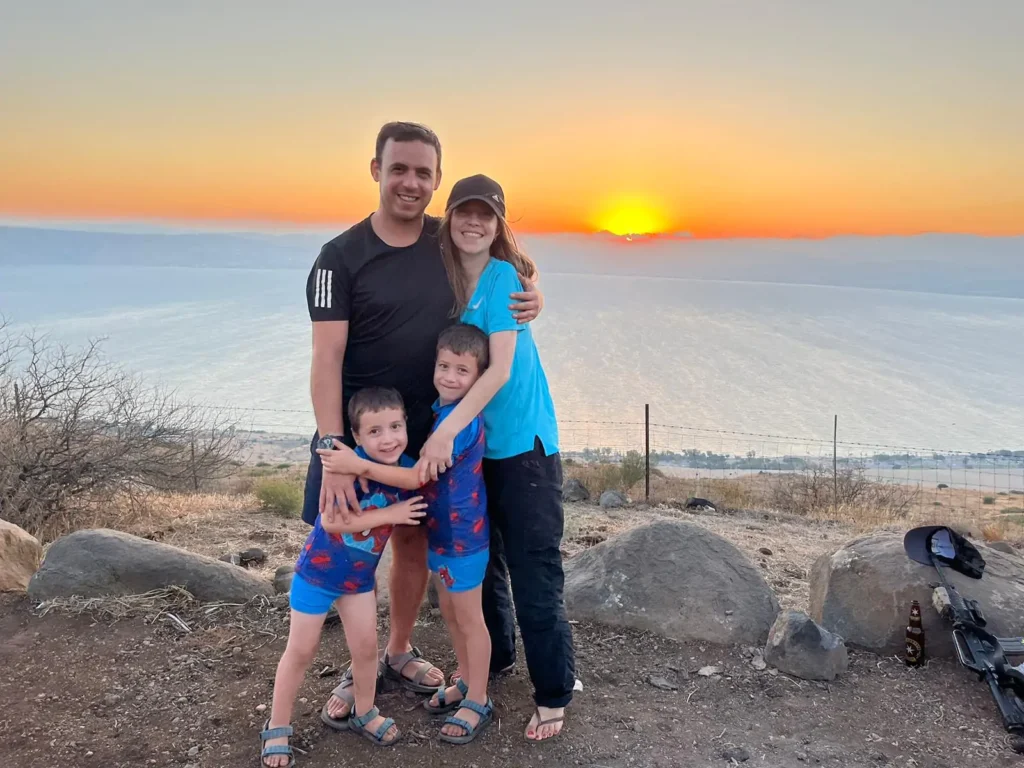
After nearly two years battling cancer, just as life for Michal and Aviad began returning to normal, the war began.
“On October 7, my husband Aviad, a company commander in the Alexandroni Brigade’s engineering battalion, was called up and sent to defend the northern border. I had only just come home after two years of treatments and a bone marrow transplant. We had a short stretch of routine, and then October 7 hit,” Michal said.
During the first round of fighting, Michal had to care for their children alone while still recovering.
“It was incredibly hard. The first round lasted four months. I lived with my in-laws—I wasn’t capable of managing on my own yet. Then Aviad came back, and I began rebuilding my strength again.”
Later, Aviad was called to fight in Gaza and Lebanon.
“He entered Lebanon. I was at a medical checkup, not feeling well, and he was unreachable. It was overwhelming. I was terrified for him. That was the scariest round for me. And physically, it was very difficult too,” she said.
“We can’t live and not be part of this fight”
Aviad is due to return to reserve duty again in two weeks. Despite her complex medical history, Michal supports his service:
“I could tell him, ‘You’re not going.’ I have a complicated health situation, and our kids didn’t have their mother for two years—and now, suddenly, where’s Dad? I have every right in the world to say he shouldn’t go. But for us, that’s just not an option.”
“We can’t live and not be part of this fight. Yes, it’s a burden—but it’s also a tremendous privilege. We are proud to be part of the victory and the redemption. And I feel like our children are growing up not just talking about values—but living them. They feel it. They know their father is doing something important. So, God willing, we pray for better days, for full redemption, and for the defeat of all our enemies.”
Rivka Ferber
Rivka Ferber, mother of eight, was also left to cope alone when her husband Yossi was called to serve. Facing deep fear and uncertainty, she chose to cling to faith, prayer, and love for the land.
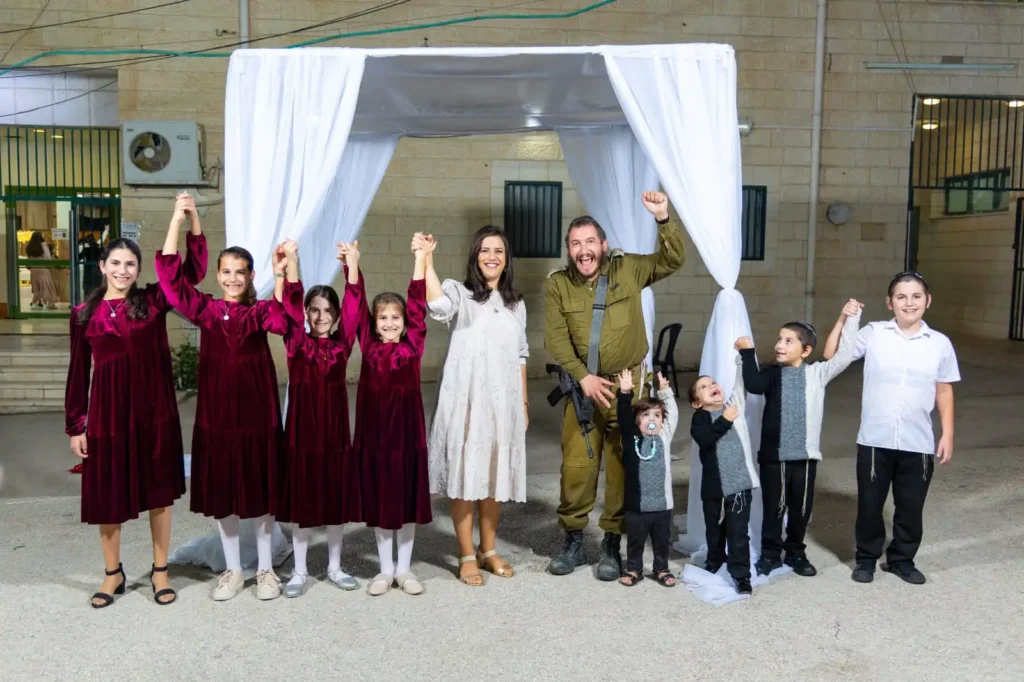
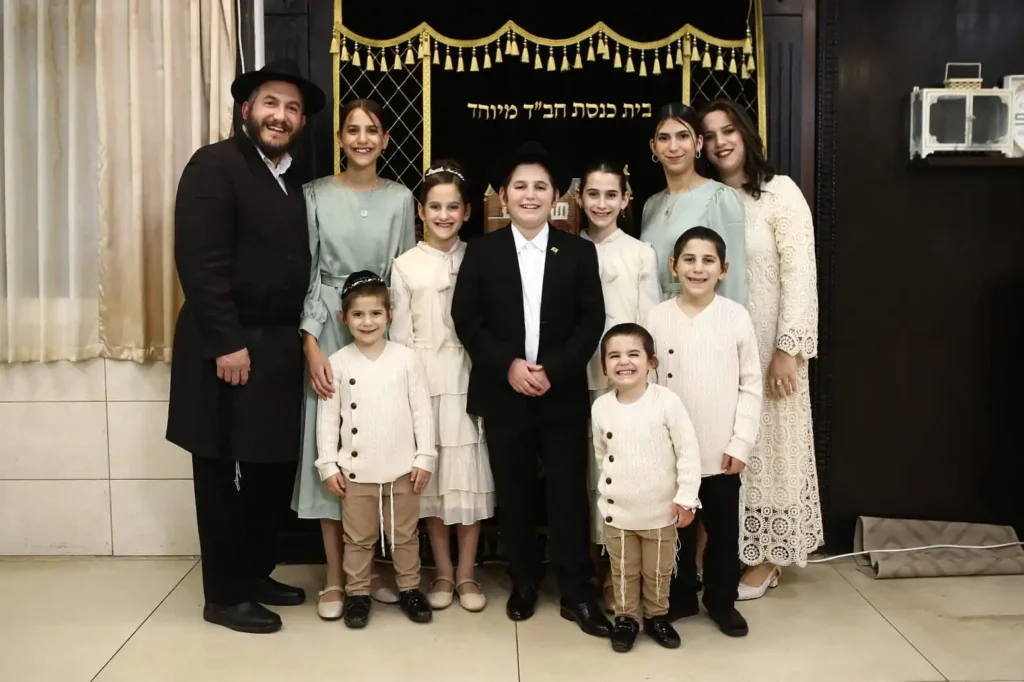
Rivka and Yossi Ferber have eight children—the youngest is three, the oldest sixteen. The family usually spends holidays volunteering on army bases with soldiers. On Simchat Torah, they were in the town of Korazim near Safed, where they heard about the massacre in the south.
“That morning, Yossi woke me and said there was an attack on southern communities. Slowly, I understood the scale of what was happening. Yossi, who normally serves in the north, started calling people and mobilizing them. At 10:30, he told me: ‘I need to go.’ I was left alone with eight children, in complete uncertainty,” Rivka said.
The devastating news
“The initial feeling was immense fear and uncertainty—not just for Yossi at the front, but also for my grandmother, who lived in Kibbutz Kfar Aza. At first, I tried to deny what was happening. Eight kids at home, no communication, no clarity. The kids were stressed, and so was I. We tried to hold on to the joy of the holiday, and our prayers—which suddenly meant so much.” Two days later, Rivka received the tragic news that her grandmother had been murdered.
The hardest challenge
Soon fighting erupted in Lebanon as well.
“I felt that while Yossi was fighting a physical war—on Mount Dov, Mount Hermon, and then in Lebanon—I was fighting a different war: the battle for our spirit. My work was to accept fear, recognize that it’s legitimate, hold space for myself and the children, and insist on thinking positively. For me, for the kids, and for the soldiers. Honestly, that was the hardest challenge.”
Strengthening the spirit
“We have a true right to this land, and it’s our responsibility to protect it—both physically and spiritually. When my husband goes out to fight, I tell the kids: ‘Let’s fight too—with our prayers to God.’ That’s our job—not to hold weapons, but to hold faith, to strengthen the spirit. I feel that so deeply—whether it’s with the hostages, the soldiers, or my husband—when we strengthen ourselves spiritually, they are strengthened in the field.”