
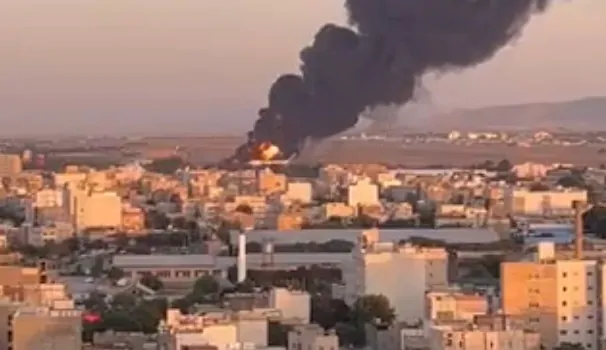
As Operation Rising Lion (Am Ka’Lavi) began on June 13, heavy airstrikes targeted the homes of several of Iran’s top nuclear scientists, killing nine individuals who had spent decades developing Tehran’s atomic program. According to sources cited in the Wall Street Journal, the assassinations were executed nearly simultaneously to prevent the targets from escaping.
Eleven days later, just hours before a ceasefire took effect, another scientist — Seyed Sedighi Saber — was killed in a strike in northern Iran, according to both Israeli and Iranian media reports.
Operation Narnia
The mission was reportedly so sophisticated that its planners nicknamed it “Operation Narnia,” after the fantasy series by C.S. Lewis. The assassinations marked the culmination of a 15-year effort to dismantle one of Iran’s most sensitive assets: its elite team of nuclear experts, active at least through 2003.

Major Blow to Iran
While Israel and the U.S. assess the extent of damage to Iran’s nuclear sites, Prime Minister Benjamin Netanyahu declared that the hits “pushed Iran’s nuclear program back by years.”
Former officials and experts emphasize that the strikes dealt a severe blow to Iran’s ability to accelerate its bomb program. By the time the ceasefire took effect on Wednesday, at least 11 scientists had been killed — most with hands-on experience in warhead components like explosives systems and neutron initiators critical to triggering a nuclear chain reaction.
Strategic Impact
“It’s one thing to lose this expertise gradually over time, especially if you’re not actively building a bomb. You can replace them,” said Eric Brewer, Director for Counterproliferation at the U.S. National Security Council. “But if you’re in the middle of trying to build one — or considering it in the near term — the impact is much more serious.”
Iran maintains it has never sought nuclear weapons and claims its program is strictly for peaceful purposes. However, the UN nuclear watchdog has confirmed the existence of a military nuclear project — Project AMAD — which operated until 2003. According to Israeli and Western sources, that work has since continued intermittently, mainly via simulations and computer modeling.
Drone Strike and SPND HQ Hit in Tehran
One week after the June 13 strikes, Israel reportedly used a drone to eliminate another scientist hiding in what was believed to be a safe house in Tehran. His identity has not been released. Israel also announced it struck the headquarters of the SPND organization in Tehran — the successor to Project AMAD.
Funerals and National Mourning
On Saturday, mass funerals were held for the slain scientists and other high-ranking Iranian officials. According to Iranian media, some of the coffins carried family members. Fars News reported that at least 22 relatives of the scientists were also killed. Israel did not comment on whether family members were deliberately targeted.
Israel stated that its actions prevented Iran from crossing the nuclear weapons threshold.
Key Targets
Fereydoon Abbasi-Davani, former head of Iran’s Atomic Energy Organization, was a primary target. According to David Albright, President of the Institute for Science and International Security, Abbasi-Davani was one of the original founders of Iran’s nuclear weapons project and served as a senior advisor to Project AMAD. He specialized in developing neutron initiators — components that trigger the bomb’s chain reaction. Abbasi-Davani survived an assassination attempt in 2010, the same day another nuclear scientist was killed. He recently told Iranian TV: “If they tell me to build a bomb — I’ll build it.”
Another scientist, Mohammad Mahdi Taranchi, led a unit under Mohsen Fakhrizadeh focused on explosives development — a key element in nuclear detonation systems. The U.S. Treasury lists Taranchi as a professor at Shahid Beheshti University in Tehran, a known hub for nuclear research.
Seyed Sedighi Saber, head of the Shahid Karimi group, was among the last to be killed. The group oversaw explosives-related projects for the SPND. While the IDF declined to confirm the identity, the U.S. Treasury noted Saber’s role in research relevant to nuclear payload development.
All three — Abbasi-Davani, Taranchi, and Saber – were on the U.S. sanctions list, along with other scientists and Shahid Beheshti University.