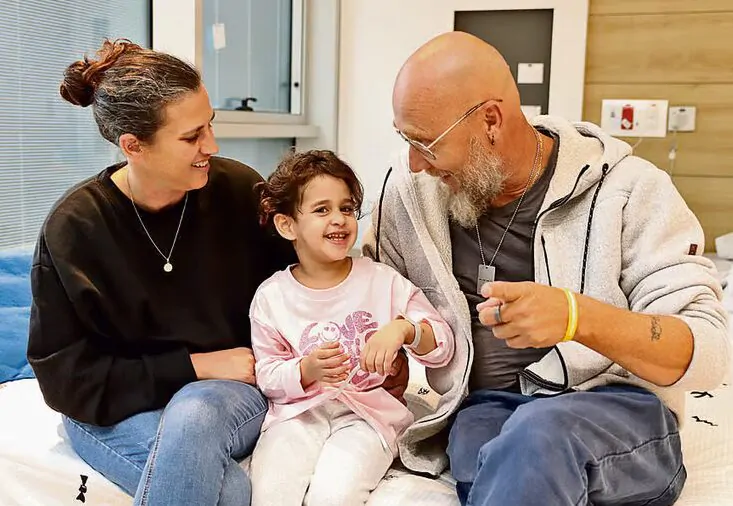

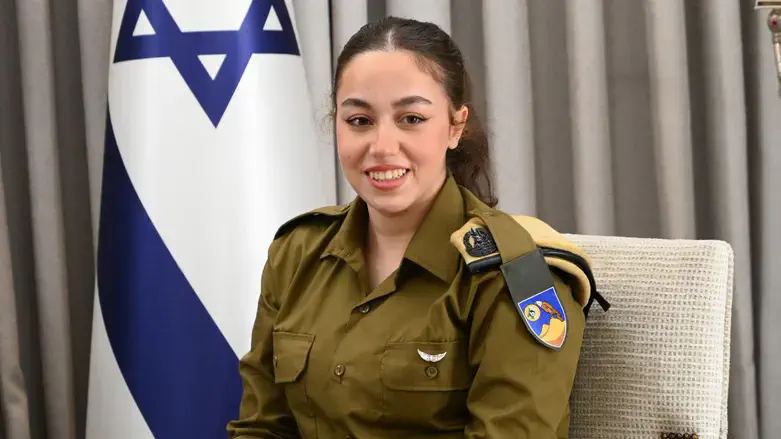
In a recent interview, Ori Megidish, the first rescued hostage, shared her moments of struggle during captivity and the signs that helped her hold onto faith. Ori served as a reconnaissance soldier at the Nahal Oz outpost on the Gaza border. She was abducted to Gaza during the battle at the outpost on October 7, along with other female soldiers who were later separated from her. She was held away from them, by members of Hamas’s elite Nukhba force.
Send Me a Butterfly
“I always thought I would get out of this,” she said Wednesday to Ilana Dayan on the TV program Uvda (Fact). “I had this belief that God was beside me, that He was watching over me and was going to get me out of there.”
Ori described asking God for signs that she would return: “I asked for proof that God was with me. I would literally ask for signs using the booming sounds outside. I’d ask a question and say, ‘If I’m going to get out of here, let there be a boom’—and then there was a boom.”
“There were all kinds of signs,” she added. “One day I was sitting and asked God to send me a butterfly. Some kind of sign in the shape of a butterfly. And really—like, how would I even see a butterfly in Gaza? Then one of the captors opened a drawer. He was just looking for some kind of distraction, something for me to do, I don’t even know. He pulled out a few random toys—and then he took out a colorful butterfly toy.”
I Started Smiling Like an Idiot
“I started smiling like an idiot. I had stitches on my face and I was smiling, and he didn’t understand what was going on with me. I just felt that God was with me.”
I Know It’s Not My Fault
Alongside these moments of faith, Megidish also shared the difficult parts of captivity. She described the overwhelming fear during IDF airstrikes in Gaza, the violence, and the sexual harassment she endured.
“As the days passed, the boss—well, I could just see in his eyes that he looked at me differently, not like a normal person,” she recounted. “He started getting close and touching me when I didn’t want him to. I told him: ‘I don’t want this, stay away from me.’ Sometimes I’d just be sitting on the couch, and he’d pass by and give me a slap on the behind or touch me in places he shouldn’t. I was injured in the chest too, and he’d ask about the injury and try to use it as an excuse to look or touch. And I didn’t know… I was with him, and he was supposedly the one protecting me in that place, and I couldn’t resist him, no matter how much I needed to.”
“When I got out, I didn’t even think about it at first. Only after a few months did I realize and accept that this was sexual harassment, and I experienced it, and it’s not shameful that I went through it. I know it’s not my fault, and there wasn’t anything I could’ve done to stop it. But still, you always have those ‘what ifs’… ‘What if I had done this, or that?’ And only God knows what would’ve happened if we’d stayed in that apartment longer.”
Pain Beyond Words
On her third Shabbat (Saturday) in Gaza, Ori was injured during an airstrike. She described the horrifying treatment she received in the hospital where she was taken. “The ceiling collapsed on us, and the whole house was on fire. One of the captors died right then, and I didn’t even realize I was injured.” She would later discover that she had a skull fracture. Now the only surviving captor, “the boss,” fled the apartment with her.
Ori and “the boss” arrived at a nearby hospital. “And I started losing balance, the room was spinning. One of the doctors spoke to me in English and said they were going to stitch up my head and face,” she recalled. “They started cleaning the area around my mouth and didn’t numb it. The pain was indescribable. I’ve never felt such pain in my life. I tried to grab onto something, but there was nothing. They pushed my hands away, told me to shut up, told me not to scream.”
Return to the Army and Lighting the Torch
In February 2024, Megidish returned—at her request—to army service. On Israel’s 76th Independence Day, she lit a torch at the official state ceremony.