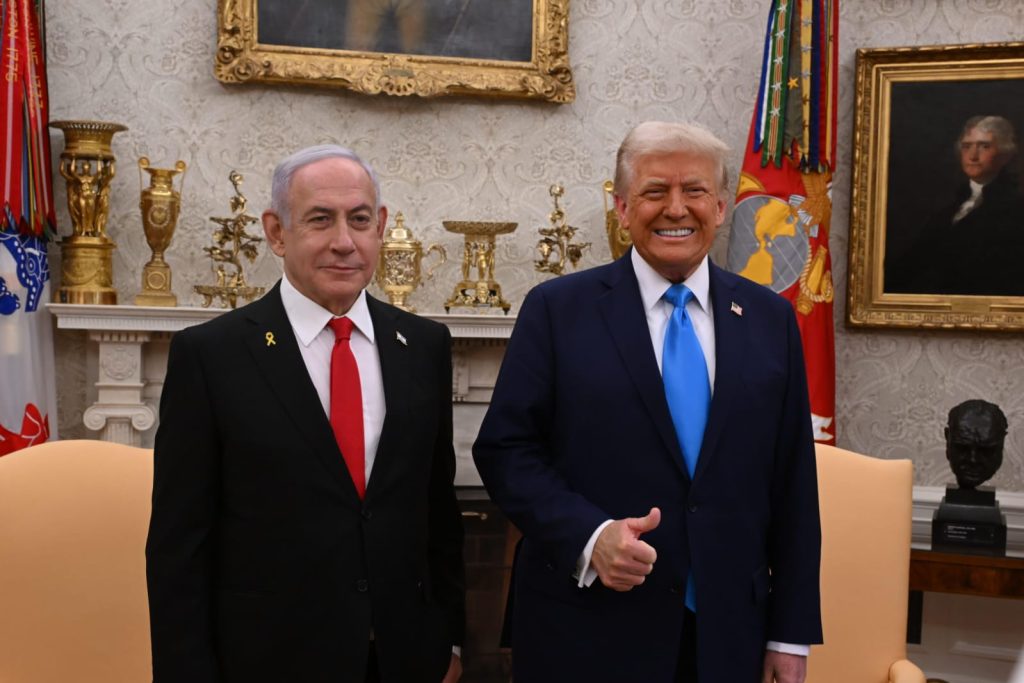
In light of the Trump-Zelenskyy storm at the White House, it appears that U.S. President Donald Trump is turning his back on Ukraine and getting closer to Russia, in stark contrast to the policy of his predecessor, President Biden. The survey from the Israeli Democracy Institute reveals intriguing data today (Monday) regarding Israeli trust in Trump’s support in light of this policy shift.
What is the likelihood that President Trump would turn his back on Israel if, in his view, its policies do not align with American interests?
Out of 605 respondents, approximately half of the public believes that the likelihood of Trump turning his back on Israel if it does not align with American interests is quite low or very low. However, a significant percentage of Israelis, around 40%, are worried that under certain circumstances, Trump might indeed turn his back on Israel.
עוד באותו הנושא
- Israel Strengthens Global Alliances Amid Regional and International Challenges
- Beyond the Conventional: Haredi Soldiers and Wives of Warriors Stand with the IDF
- Hostages No More: IDF Returns Two Fallen Heroes from Gaza in Daring Operation
- Freed Hostage Turns Her Pain Into Strength at the UN Security Council
Support from the Right, Less from the Left
When looking at the breakdown by political factions, it appears that the assessments from the left and right are reversed: On the left, over half believe there is quite a high to very high chance of Trump turning his back, while about a third think the chance is quite low or very low. In contrast, on the right, more than half believe that the likelihood of Trump abandoning Israel is quite low or very low, while about a third think that the likelihood is quite high or very high.
Those identifying with the center faction are divided on the issue.
Distribution of Opinions by Factions and Sectors:
A lack of consensus also exists between the Arab and Jewish sectors regarding Trump’s unwavering support, with a higher percentage of Jews believing there is a high likelihood of American abandonment compared to Arabs (41% vs. 30%, respectively).
Watch the Charged Meeting of the Presidents:
The question examined in the survey appeared in the Israeli Public Voice Index for February 2025, conducted by the Witrob Institute for Public Opinion and Policy in the Israeli Democracy Institute. The survey, conducted online and by phone (including groups generally not adequately represented online) between February 25-28, 2025. 605 men and women were interviewed in Hebrew and 154 in Arabic, representing a national sample of the entire adult population in Israel; aged 18 and older. The maximum sampling error for the entire sample is ±3.56% at a confidence level of 95%. The fieldwork was conducted by Shiluv I²R Institute.