
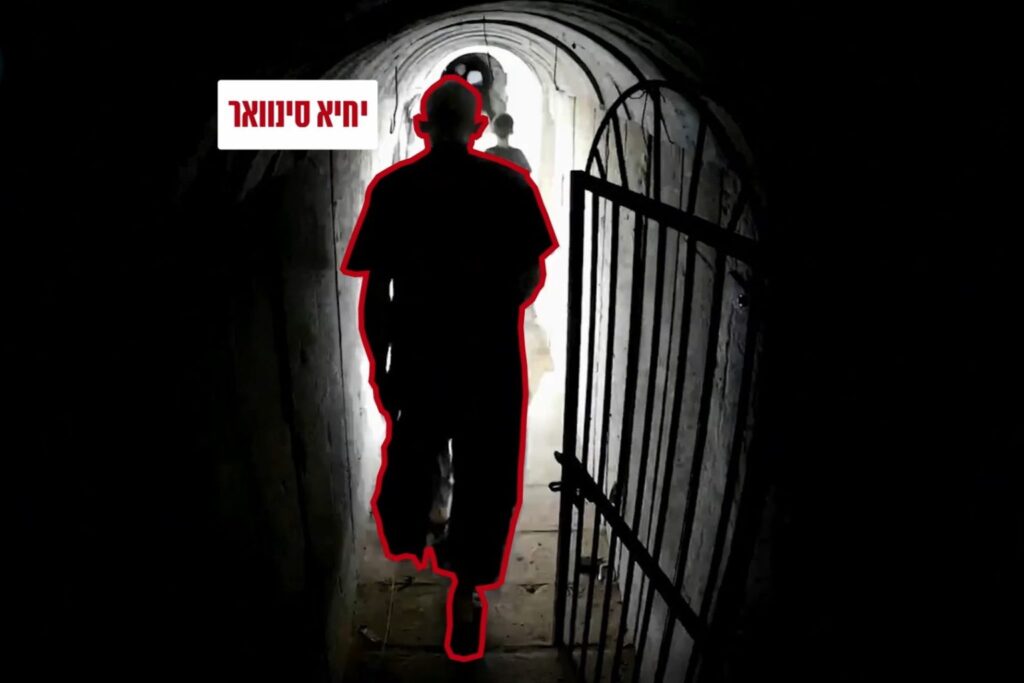
In an article published this morning (Monday) on the Israel Hayom website, new details were revealed about the IDF’s hunting down of Yahya Sinwar, the architect of the October 7th massacre and Hamas’s chief executioner. The prolonged pursuit included several brave operations in the Gaza Strip and provided the IDF with significant insights into the necessary intelligence map for the region.
For ten months, the Shin Bet, Aman, and the IDF conducted an intelligence and operational manhunt for Yahya Sinwar, with a clear political demand to eliminate him. Sinwar initially hid in Khan Yunis, where he stayed with senior Hamas officials in an underground compound. Under the command of Brigadier General Dan Goldfus, Division 98 began a rapid maneuver toward the heart of the city – but due to a lack of intelligence and resources, Sinwar managed to escape.
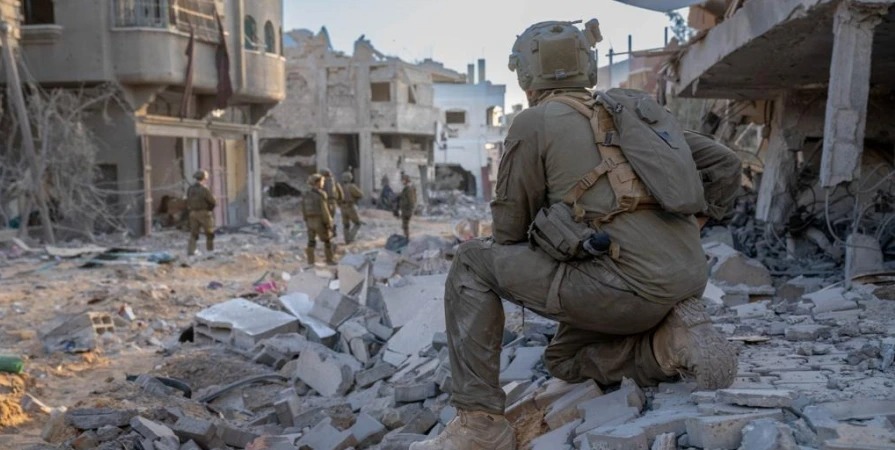
Later, IDF forces attempted to close in on him from all sides, and at one point even got close to the house where he was hiding — yet missed him by minutes. In the spring of 2024, Sinwar moved to Rafah, where Division 162 destroyed the tunnel network he relied on and forced him to surface. In October, fighters from Battalion 450 of the Bislama Division identified him and finally brought the long pursuit to an end.
Closing in on the Target
From the very onset of the current war in Gaza, the Israeli political-security cabinet designated the elimination of Hamas leaders — chiefly Yahya Sinwar — as one of the primary objectives of the ground operation in the Gaza Strip. The intelligence mission was naturally assigned to the Shin Bet. “The assassination domain has always been in their hands,” explains a security source. The Shin Bet had been closely monitoring Hamas leadership, and tackled the task with determination and a desire for revenge for the humiliation suffered by Sinwar and his men on October 7th. “The Shin Bet put a lot of resources into tracking down Sinwar and other senior figures,” says a source involved in the manhunt.
Putting Together the Intelligence
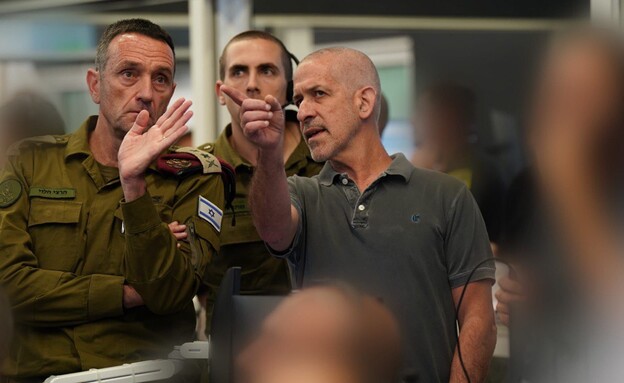
At the beginning of the war the Shin Bet’s Operations Division set up a dedicated command center, where intelligence flowed in from various bodies; the Shin Bet’s Southern Division, Aman, Southern Command, and more. The command center analysts, who had primarily worked with technological intelligence in the past, began receiving transcripts from interrogations of captured terrorists on the ground alongside a variety of documents that contained clues about Sinwar’s location, which was referred to in the command center as “The Big One.” Additional information came from the minutes of Hamas leadership meetings that took place during the fighting. “Everything was cross-referenced in the Shin Bet’s special command center,” says the security source.
During the war the Shin Bet’s command center accumulated a wealth of information, but in its early days it was only able to generally estimate Sinwar’s location in Khan Yunis. His choice to hide there was not accidental; it was his hometown, where he had lived for years, and where he felt safer and more protected than anywhere else. In retrospect, it was revealed that on the night of October 7th, Sinwar descended into the tunnels beneath his house with his family and remained close to that location for months. It is believed that Sinwar chose to stay in Khan Yunis even when the danger increased. Based on his early assessments and perhaps also on past experience, he may have believed that the IDF would be hesitant to launch a ground operation there.
Other Senior Figures Alongside Sinwar
Deep in the tunnels beneath Khan Yunis with his wife and children, Sinwar also hid with other senior figures, including the head of Hamas’s military wing Mohammad Deif. According to estimates, Deif arrived in the area from Gaza after October 7th. They were later joined by Rafi Salama, commander of the Khan Yunis Brigade. Along with Sinwar’s brother Mohammad who was with them for a time, the three became the smallest and most wanted group, disappearing into the endless maze of tunnels beneath the city.
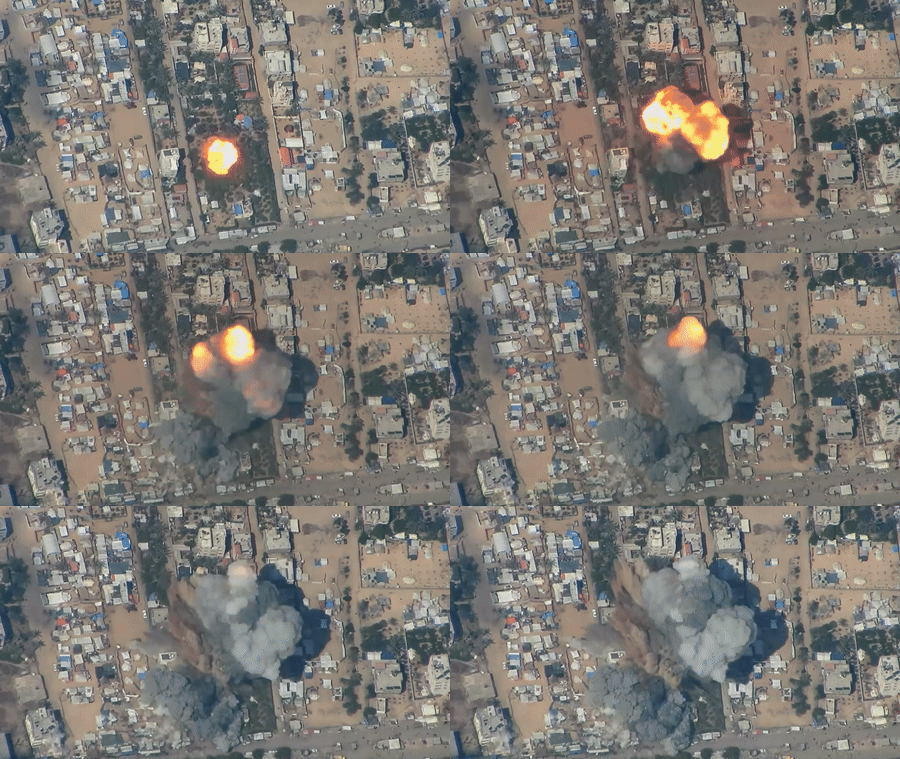
Despite their isolation, Hamas leadership continued to manage the fighting against the IDF and negotiations for the release of the hostages, maintaining strict secrecy and compartmentalization. Sinwar avoided using electronic means of communication as much as possible, instead sending messages through trusted couriers.
Despite Reports, Sinwar Did Not Keep Israeli Hostages Nearby
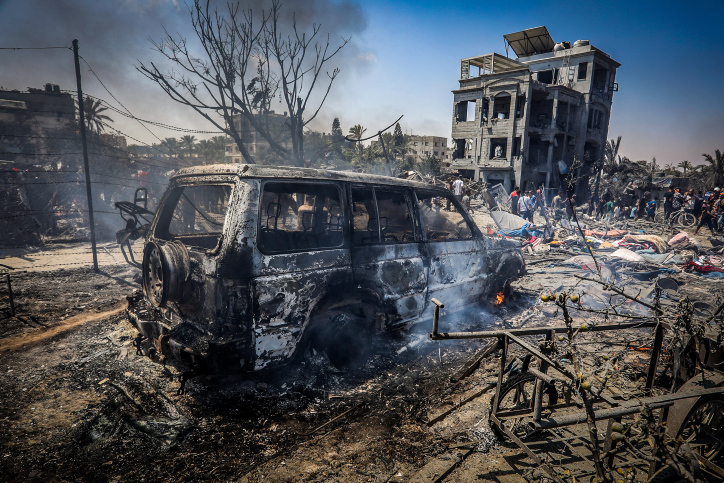
Seclusion also extended to the Israeli hostages. Contrary to some reports, Israeli intelligence has no definitive evidence that Sinwar kept hostages near him throughout the fighting. While one released hostage Yocheved Lipshitz mentioned meeting Sinwar in the tunnels, an official in the IDF Hostage Division emphasized that “throughout the war, no intelligence was gathered regarding the location of the Hamas leader or other senior officials based on information from hostages.” According to estimates, Sinwar chose not to stay near the hostages, fearing that his location would be exposed.
The Shin Bet had hoped to send forces into Khan Yunis during the early stages of the ground operation. Although intelligence pointed to the city as Sinwar and his men’s hiding place, and despite the political-security cabinet stressing the importance of targeting Hamas leadership, the IDF chose to begin the maneuver in the northern Gaza Strip. As a result, the direct pursuit of Sinwar was delayed and they had to wait.
Capture of Khan Yunis
In November 2023, Division 98 received the dramatic mission: the capture of Khan Yunis. The division was led by Brigadier General Dan Goldfus, who has since been promoted to General. When he issued the orders to his officers, he made it clear that, in his view, it was a focused mission—the elimination of Hamas leadership hiding in the city. Accordingly, the division’s operational plan was developed.
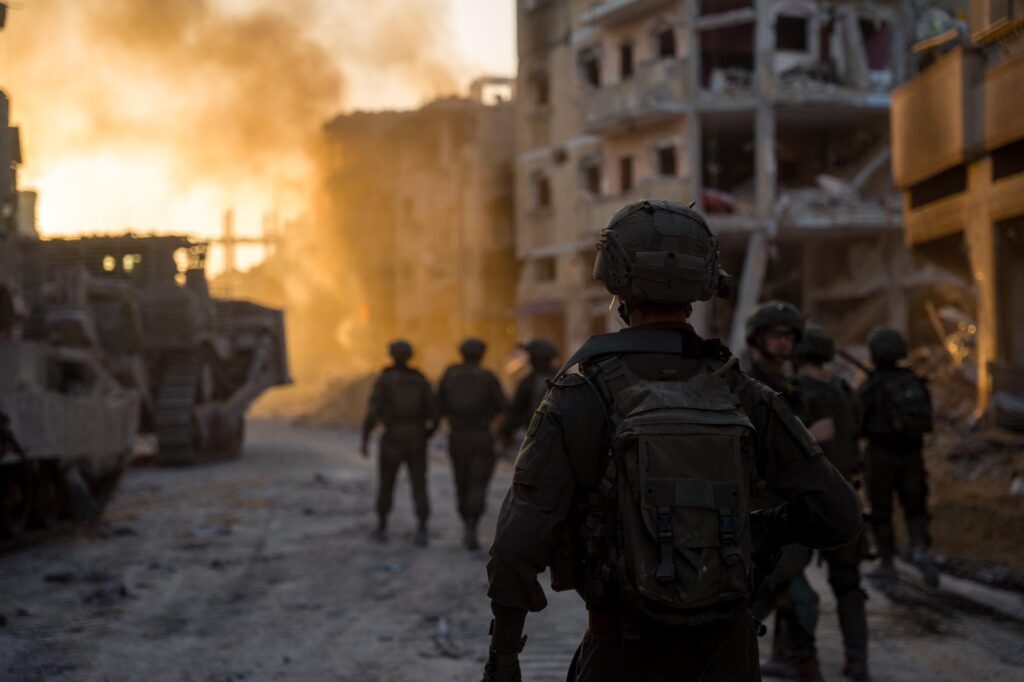
In previous operations in the northern Gaza Strip, forces operated from the periphery toward the city centers, giving terrorists time to escape. This time, Division 98 chose to change direction. The seven brigades under its command were instructed to move quickly to the heart of Khan Yunis, with the goal of exploiting the element of surprise. The forces were tasked with swiftly entering the city’s underground network, seizing tunnel entrances, and blocking escape routes. The goal was clear: to surprise Hamas senior officials in their stronghold, capture them underground, and then begin hunting them down one by one.
However, these plans clashed with a deep intelligence gap. For years, Khan Yunis had not been at the top of the IDF’s priority list, and as a result the research into the tunnel network beneath it was incomplete and sparse. When the forces reached the ground, it became clear that the information they had on the underground area was very limited. In practice, the IDF had almost no idea what it was going to face in the soil of Khan Yunis, which buildings were connected to the tunnels, where senior Hamas officials were hiding, and what escape routes existed.
Completion of the Mission Required Additional Forces
Despite the lack of intelligence and the feeling that completing the mission required additional forces, Division 98 did not hesitate to try. Despite the gaps and risks, the division commanders chose to push forward and carry out the operation. The forces entered the heart of Khan Yunis armed with only partial information, relying on operational initiative, boldness, and updated intelligence support. As they operated in a complex and unfamiliar area, they tried to create a real-time picture; identifying openings, breaking walls, recognizing patterns, and most importantly – finding any lead that could lead to the ultimate target, Yahya Sinwar.
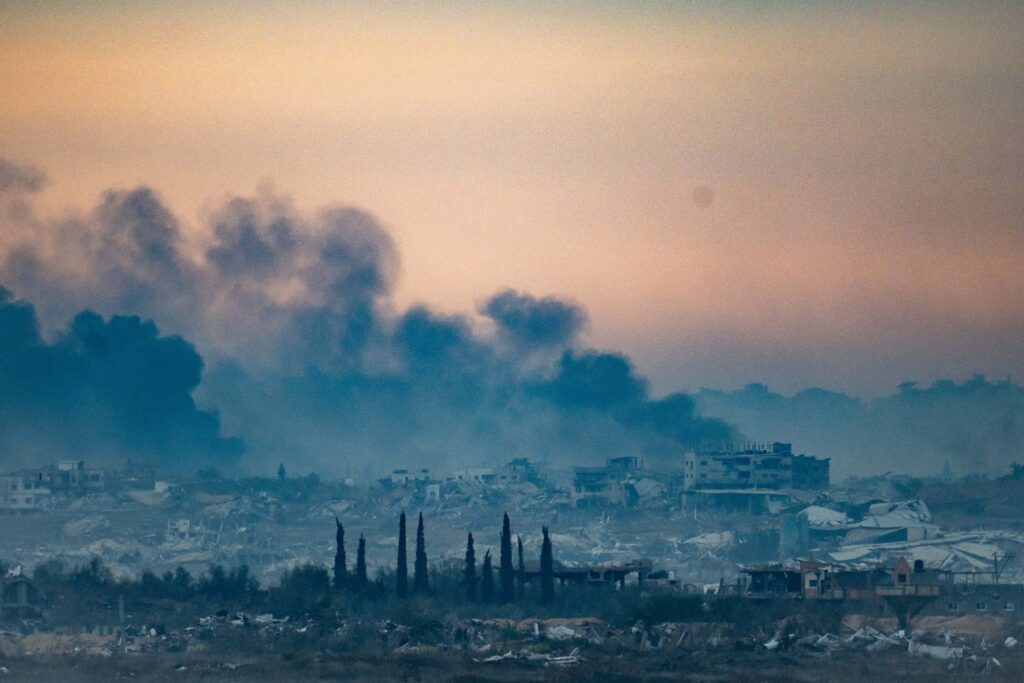
Despite the pressure, the IDF began the maneuver exclusively in the northern Gaza Strip. It was only after the first hostage agreement on December 1st 2023 that Division 98, under the command of Brigadier General (now General) Dan Goldfus, received the order to enter Khan Yunis. The ultimate target: the elimination of senior Hamas officials.
To the IDF’s surprise, Hamas did not open fire underground. The fighters had an advantage with night-vision equipment, while the terrorists relied on flashlights and fled, detonating the tunnels behind them with blast doors and allowing them to escape again and again.
The Murder of the Six Hostages
The murder of the six hostages Hirsh Goldberg-Polin, Eden Yerushalmi, Uri Danino, Almog Sarusi, Carmel Gat, and Alex Lobenov in the tunnel shocked the country, but provided a rare lead. Forensic evidence indicated that Sinwar had been in the compound shortly before. The complex December manhunt was described as a “blind underground chase”. IDF Fighters spent days in the tunnels, sometimes just above senior Hamas officials and separated by only a few meters of earth.
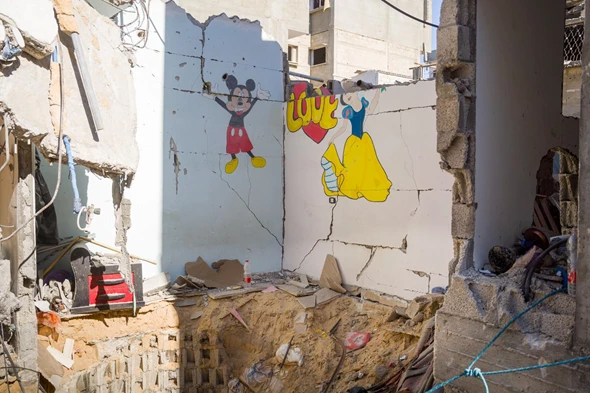
By January 2024, after a month of fruitless pursuit, Division 98 decided to change tactics. Seventeen pits were marked and “arms” of forces were sent to block all escape routes, known as the “octopus method.” Young intelligence officers contributed critical ideas in an approach that had been unconventional until October 7th.
And then, it happened. The Israeli force entered a seemingly innocent house above one of the pits that had not been located, and therefore left without discovering what was happening beneath it. In retrospect, it was revealed that Sinwar, Deif, and Salama had been hiding right there. “If we had found this pit, it would have been the end of their story,” said a source to Israel Hayom.
At that time, another force from the division managed to locate the pit from the opposite direction from within the tunnel. However, it was too late. In the time between the departure of the force above ground and the arrival of the force beneath, the three senior Hamas officials escaped disguised as women, leaving behind documents, a fortune of dollars, and “coffee that was still hot,” as Brigade Commander Goldfus described it.
Yahya Sinwar was ultimately killed in October 2024 after a prolonged and intense pursuit by IDF forces. Following months of intelligence work, multiple failed attempts to capture him, several close calls and months of evading capture, he was finally tracked down and eliminated by IDF forces, marking a significant blow to Hamas leadership.