

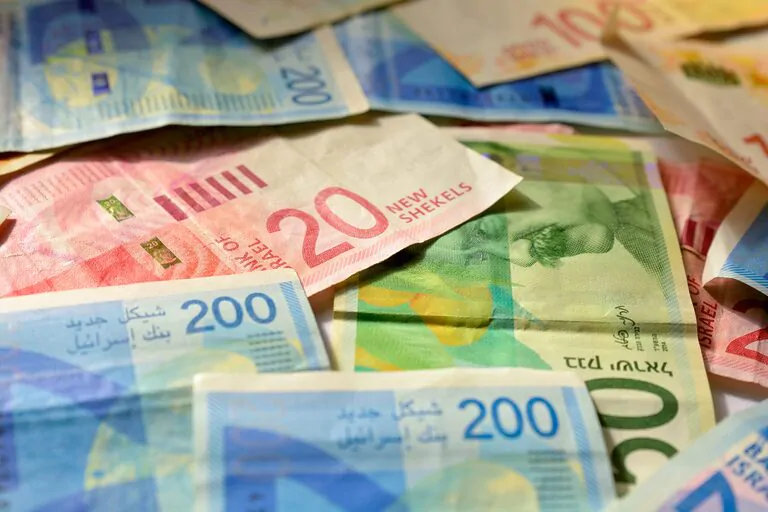
Israel collected 44.8 billion shekels in May – a nearly 20% jump since the beginning of 2025. The cumulative deficit has narrowed, though it still exceeds 100 billion shekels.
41.6 Billion Shekels from Taxes
State tax revenues continue to rise. In May 2025, Israel collected 41.6 billion shekels in taxes, out of a total of 44.8 billion shekels in overall revenue. This represents a cumulative increase of approximately 19.5% compared to the same period last year, according to official data from the Ministry of Finance and the Israel Tax Authority.
This notable growth is due in part to a 22.1% increase in direct taxes since the start of the year, especially in real estate taxes. Purchase tax and capital gains tax collections soared by 34%. VAT revenue also rose by 7% in real terms compared to May 2024. In addition, purchase tax on vehicle imports climbed by 11%, driven by an increase in both the number of vehicles and the value of imports.

Deficit Shrinking, But Still High
Alongside the strong revenue figures, the Ministry of Finance’s May budget estimate presents a more complex picture: the cumulative deficit over the past 12 months stands at 5.0% of GDP – more than 103 billion shekels. This marks a slight improvement compared to April (5.1%), but it is still above the 2025 deficit target of 4.9%.
Government spending in May totaled 53.4 billion shekels. As of early June, the cumulative deficit since the beginning of the year stood at 15.9 billion shekels – a significant drop from the same period last year, when the deficit reached 48.2 billion shekels.
Overall government expenditure grew by 1.1%, defying earlier forecasts that projected a 1.6% decrease. This indicates a mild across-the-board deviation from the budget plan – primarily in administrative and social sectors. By contrast, the expected cuts to the defense budget were only partially implemented.
The Ministry of Finance noted that the increase in revenues and the moderation of defense expenditures – primarily due to lower military spending – are helping to improve the fiscal balance. However, the ministry emphasizes that caution will be necessary going forward.