
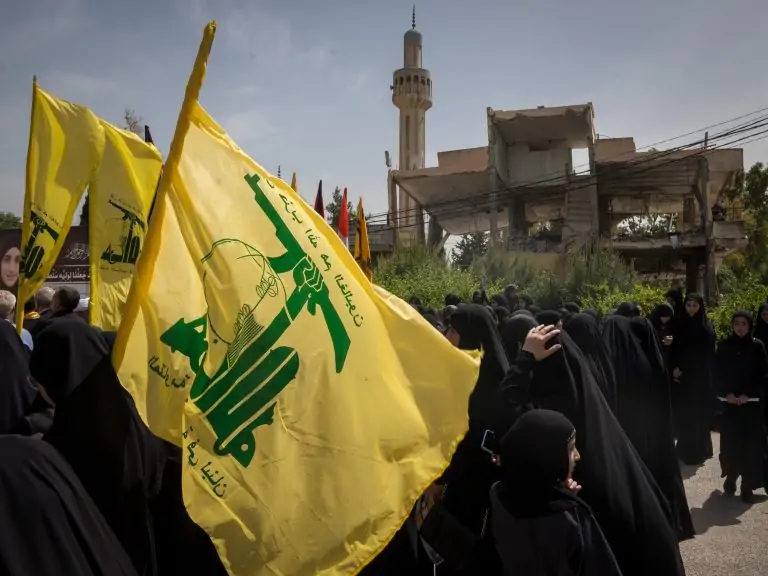
Since the 1980s, the terrorist organization Hezbollah has maintained a significant presence in South America, particularly in the area known as the “Tri-Border Region” — where Brazil, Paraguay, and Argentina meet. This zone, marked by porous borders, weak law enforcement, and large Lebanese-Shiite communities, has become a hotspot for the group’s illicit financial activities. Hezbollah exploits these conditions to fund its operations through smuggling, money laundering, counterfeiting, drug trafficking, and collaborations with local cartels.
“Rewards for Justice”
On Monday, the U.S. State Department announced a reward of up to $10 million for information that helps disrupt Hezbollah’s financial networks in the Tri-Border Region between Argentina, Brazil, and Paraguay. The initiative, part of the “Rewards for Justice” program, is aimed at identifying and cutting off the group’s revenue sources — including merchants, financial institutions, shell companies, and various forms of criminal enterprise.
According to the announcement, Hezbollah has been operating in the region since the 1980s, taking advantage of the open borders and minimal oversight to build logistical and financial infrastructure. These networks generate significant income for the group through illegal means such as smuggling, narcotics trafficking, counterfeit goods, and more.
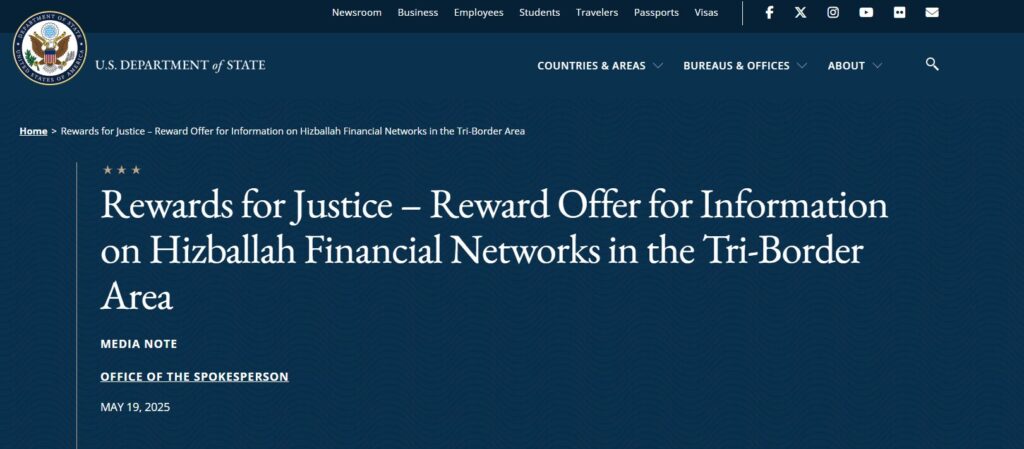
The reward will be granted for information exposing:
- Sources of Hezbollah’s income in the Tri-Border Region
- Financial actors involved with the organization
- Institutions, companies, or banks cooperating with Hezbollah
- Any information that could lead to dismantling the group’s financial infrastructure in the area
A Continued Effort
The American effort to combat Hezbollah in South America is a key part of the U.S. global strategy to curb terror financing. For years, the U.S. has worked to expose the financial infrastructure that supports Hezbollah on the continent.
In 2018, the U.S. Treasury Department imposed sanctions on Jawad Nur-al-Din and Hussam Harb — Lebanese businessmen operating in South America — who were identified as part of Hezbollah’s money laundering network. The two ran businesses in the gold industry, mainly in Brazil and Colombia, which were used to launder tens of millions of dollars for the organization.