
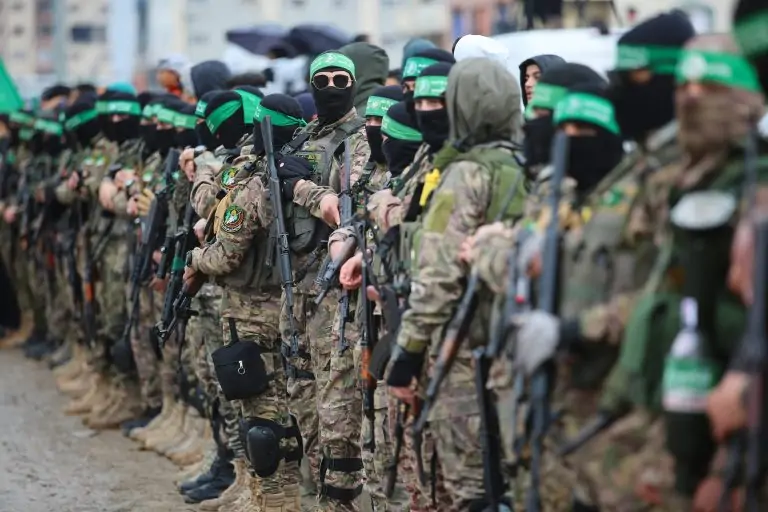
Hamas’s leadership is now focused solely on survival. With the targeted killings of senior figures from both its political and military wings, combined with mounting international pressure and the collapse of its governing infrastructure in the Gaza Strip, the terrorist organization is a shell of what it once was. The political bureau, once comprising dozens of members, has dwindled to just eight. Some are in hiding, fearing for their lives; others have escaped abroad. The military wing is faring no better—as Israel advances into Gaza under Operation “Gideon’s Chariots,” they are left with a leadership vacuum.
The Hamas Political Bureau in 2025
Following the elimination of Yahya Sinwar in October 2024, Hamas’s political leadership transitioned to a shared model involving four key figures: Khalil al-Hayya, Nizar Awadallah, Mahmoud al-Zahar, and Fathi Hammad. These men are the last remaining political leaders actively managing the organization.
Khalil al-Hayya, born in 1960, served as Yahya Sinwar’s deputy in Gaza and headed Hamas’s media office. Elected to the Palestinian Legislative Council in 2006, he now resides in Qatar. Al-Hayya is regarded as relatively moderate and has, over the years, expressed openness to a long-term ceasefire with Israel.
Nizar Awadallah, born in 1957, is a founding member of Hamas and part of its political bureau. He holds a degree in civil engineering from Ain Shams University in Cairo. Unlike al-Hayya, he is known for supporting “armed resistance” against Israel. After narrowly defeating Sinwar in the 2021 internal elections, a revote was held at Sinwar’s insistence—this time resulting in Sinwar’s victory. Awadallah subsequently left Gaza and now lives abroad, like al-Hayya.
Mahmoud al-Zahar, born in 1945, is a longtime member of the political bureau and served as foreign minister of the Palestinian Authority from 2006 to 2007. He is seen as a hardliner and remains steadfast in his hostility toward Israel and the West.
Fathi Hammad, born in 1961, is a senior Hamas official who served as Minister of the Interior from 2009 to 2014. Like al-Zahar, he is known for extreme rhetoric, including calls for violence against Jews and open admissions of using women and children as human shields. In a 2008 speech on Al-Aqsa TV, Hammad declared: “The Palestinian people have turned death into an industry—women, children, and the elderly have become human shields to challenge the Zionist bombing machine. We desire death just as you desire life.”
The Assassination of Senior Political Figures
Hamas’s political wing has suffered dozens of assassinations throughout the war, but a few high-profile eliminations have particularly shaken the organization.
Ismail Haniyeh, born in 1962, led Hamas’s political bureau from 2017 until his death. A prominent and influential figure, Haniyeh was assassinated on July 31, 2024, in Tehran while staying at a guesthouse belonging to Iran’s Islamic Revolutionary Guard Corps. Israel never officially took responsibility, but hinted at involvement.
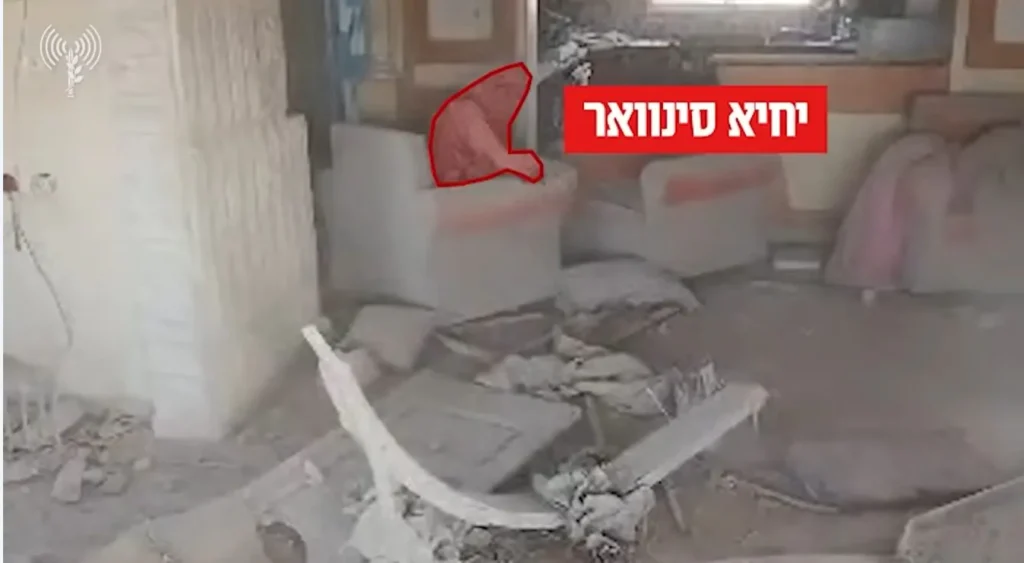
Yahya Sinwar, born in 1962, led Hamas in the Gaza Strip from 2017 and was one of the founders of its military wing, and the chief architect of the October 7 massacre. He spent years in Israeli prison before being released in the Gilad Shalit deal. Sinwar was killed on October 16, 2024, during a battle in Rafah, after being identified by IDF forces as a suspect and shot on the spot.
Rawhi Mushtaha, born in 1959, was a political bureau member and co-founder of the military wing. A close associate of Sinwar and considered his likely successor, Mushtaha was also released in the Shalit exchange. He was killed in an airstrike on an underground complex in Gaza City on July 23, 2024.
Saleh al-Arouri, born in 1966, was deputy head of the political bureau and leader of Hamas’s operations abroad. He oversaw funding and planning of terror attacks, especially in Judea and Samaria. He was assassinated in a targeted strike in Beirut on January 2, 2024.
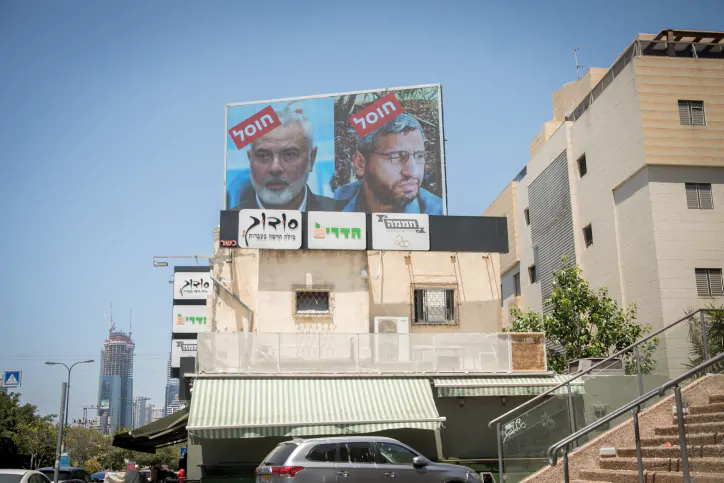
The Hamas Military Wing in 2025
The condition of Hamas’s military wing is dire, to say the least. Israel has relentlessly pursued all its operatives—junior and senior alike—and is dismantling the very foundation of its armed forces. While a few political leaders have survived, the military command structure has nearly ceased to exist.
Of Hamas’s senior commanders and military leadership, only two remain.
“Abu Obeida,” born in 1985, is the public face of Hamas’s propaganda. He has served as spokesperson for the Izz ad-Din al-Qassam Brigades since the 2006 kidnapping of Gilad Shalit. His identity and face have always been concealed, but Israel identifies him as Hudhayfa Samir Abdallah al-Kahlout.
Izz ad-Din al-Haddad, known as “Abu Suhaib,” is a member of Hamas’s military council and commander of the Gaza Brigade. He is currently the only surviving combat commander. Nearly all those who directed the war and the October 7 massacre have been eliminated. Al-Haddad is seen as the successor to Muhammad Sinwar.
The Assassination of Senior Military Leaders
Several of the most significant eliminations include:
Mohammed Deif, born in 1965 in the Khan Younis refugee camp, led Hamas’s military wing for over two decades. He was one of the planners of the October 7 massacre and commanded the military forces at the war’s outset. He was killed in an Israeli airstrike on western Khan Younis on July 13, 2024.
Marwan Issa, born in 1965 in the al-Bureij refugee camp, was Deif’s deputy and a central figure in orchestrating terror attacks, including the Shalit kidnapping. He was killed in an airstrike on the Nuseirat refugee camp on March 11, 2024.
Muhammad Sinwar, brother of Yahya Sinwar, served as commander of the southern Gaza brigade and later took over after Yahya’s death. Israel attempted to assassinate him in a strike on the European Hospital last week.
Ahmed Randour, commander of the northern Gaza brigade, was killed in an IDF airstrike during the Swords of Iron war.
Ayman Nofal, born in 1974 in al-Bureij, was commander of the central brigade and head of Hamas’s military intelligence. He was killed in an airstrike on October 17, 2023.
Rafi Salama, commander of the Khan Younis brigade and close associate of Mohammed Deif, was involved in planning the October 7 massacre. He was killed alongside Deif in the July 13, 2024 airstrike on western Khan Younis.
Muhammad Shabana, commander of the Rafah brigade, was eliminated in an Israeli airstrike during Operation Swords of Iron war.
Izz ad-Din al-Haddad, commander of the Gaza Brigade, was also reportedly killed in an airstrike during Operation Swords of Iron war.
Summary
Hamas today is a mere shadow of its former self—battered, weakened, and in a constant state of survival. Many of its top and most experienced leaders, including founding members, have been eliminated. The terror organization’s leadership and operational knowledge have suffered devastating blows.
What remains is an unorganized guerrilla force, with most of its fighters untrained and sent into battle out of despair rather than strategy. This is the same Hamas that once fired unprecedented rocket barrages at Israeli towns and carried out the horrific October 7 massacre—but now it is only a fraction of that threat. There is still a long road ahead, but the trend is clear: Hamas is crumbling, and Israel is on the right path to victory.