

“Maybe the door will open”: Music as a lifeline
A rare and moving moment aired on Wednesday morning on Galgalatz radio station, as freed hostages Daniella Gilboa and Karina Ariev appeared live on the program “Medina Baderech” with Hadar Marx. It was their first studio interview since being released from Hamas captivity, and they spoke candidly about the torment they faced — and the role music played in helping them survive.
One of the most emotional moments came when Daniela performed “Maybe the Door Will Open“, a song she wrote during captivity together with fellow soldiers Aviv Hajaj, Yam Glass, and Shirel Mor, of blessed memory — butchered by terrorists. Originally recorded by Eden Ben Zaken as part of Galatz and Galgalatz’s memorial project “Seven Songs in October“, the song expresses a desperate longing for a knock at the door, for light, for salvation.
Daniella and Karina shared that they occasionally managed to hear Israeli radio while in captivity. Specific songs, interviews with their families, and even faint transmissions heard “through the walls,” as one of them recalled, became lifelines. “They gave us air,” she said.
Watch their performance:
Both 20 years old, Daniela and Karina were abducted from the Nahal Oz military post on October 7 and held in Gaza. Since their release in a hostage deal, they have become widely admired public figures, using their voices to share their experience, confront the trauma, and inspire others.
This is not the first time Daniella has used music as a form of healing. Soon after her release, she moved listeners when she sang Shalom Aleichem — a sacred Sabbath song — in Arabic. She explained that during captivity, she and her fellow hostages wanted to preserve the sanctity of Shabbat. Fearing they would be overheard if they sang in Hebrew, they taught themselves to sing the familiar prayer in Arabic.
“A voice for those still in hell”: Chilling testimony in the Knesset
At a hearing of the The Subcommittee for Foreign Policy and Public Diplomacy, freed hostage Ilana Gritzewsky bravely gave wrenching testimony about the abuse she endured in Hamas captivity.
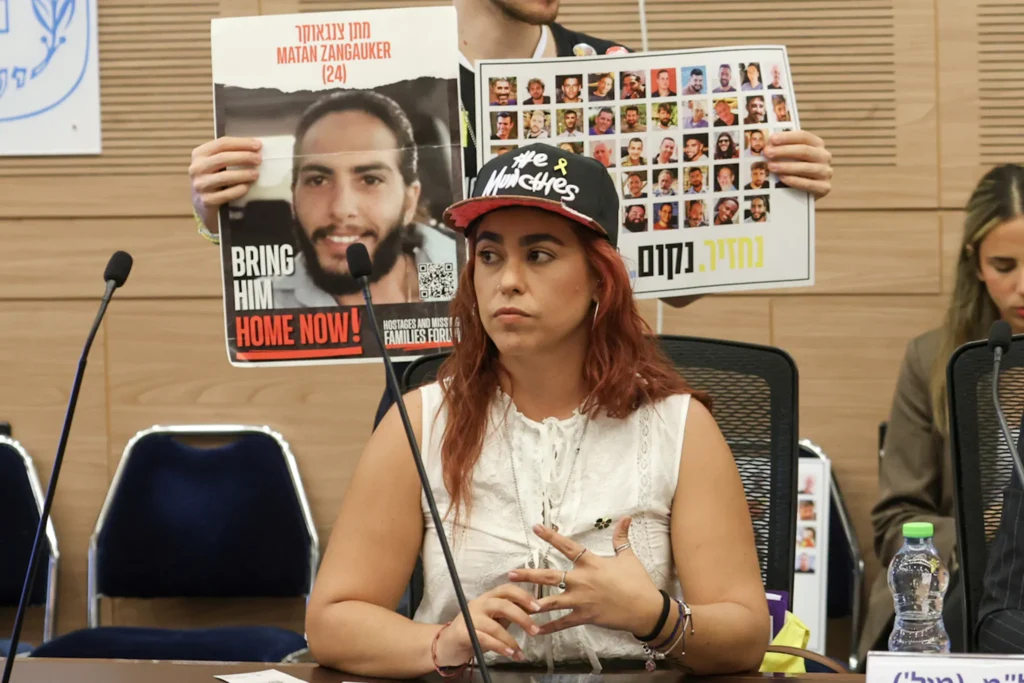
“I am a woman who was kidnapped, survived, and came back to be the voice for those still in hell, for those murdered who no longer have a voice, and for those too afraid to speak,” she said. “I will not be silent. I am one of those whose story now exists in graphs and headlines — but for me it is carved in my body.”
Ilana recalled arriving in Israel 16 years ago as a young girl, driven by Zionism and a deep love for this country. “We were promised that if you fall, someone will lift you up. If you are taken, someone will bring you back,” she said. “But it’s been 647 days, and no one has brought back my Matan or the others still there.”
Her voice trembled as she described the 55 days of captivity: “Hell without words. Pain without end. Humiliation without bottom. Fear that burns from within. My body was assaulted, but my soul was crushed. I remember the gun to my head. Their laughter as they dragged me by the hair. Dirty hands stealing everything I was. I became property. A captive they could touch and undress whenever they pleased.”
Breaking international silence
Ilana’s fearless and raw testimony served also to address a recently released report detailing Hamas’s use of sexual violence as a weapon of war. Professor Ruth Halperin-Kaddari, head of the Rackman Center and one of the report’s authors, said its goal was to shatter the international silence and denial.
“The October 7 atrocities are a test case for how the world confronts sexual violence used in war,” she said. “This is not unique to Hamas. These crimes are public acts meant to terrorize entire communities. That visibility must serve as evidence.”
Attorney and former chief military prosecutor Col. (res.) Sharon Zagagi-Pinhas warned that few victims have been able to testify due to trauma or because they were murdered. “If we treat this as ordinary sexual violence, we will fail to convict. We must recognize that these crimes were committed publicly, to harm and humiliate a community.”
Retired District Court Judge Nava Ben-Or emphasized the uniqueness of these crimes. “We thought we knew everything about sexual violence — but we realized we knew nothing. These atrocities are part of a system aimed at dehumanizing and destroying an entire population.”
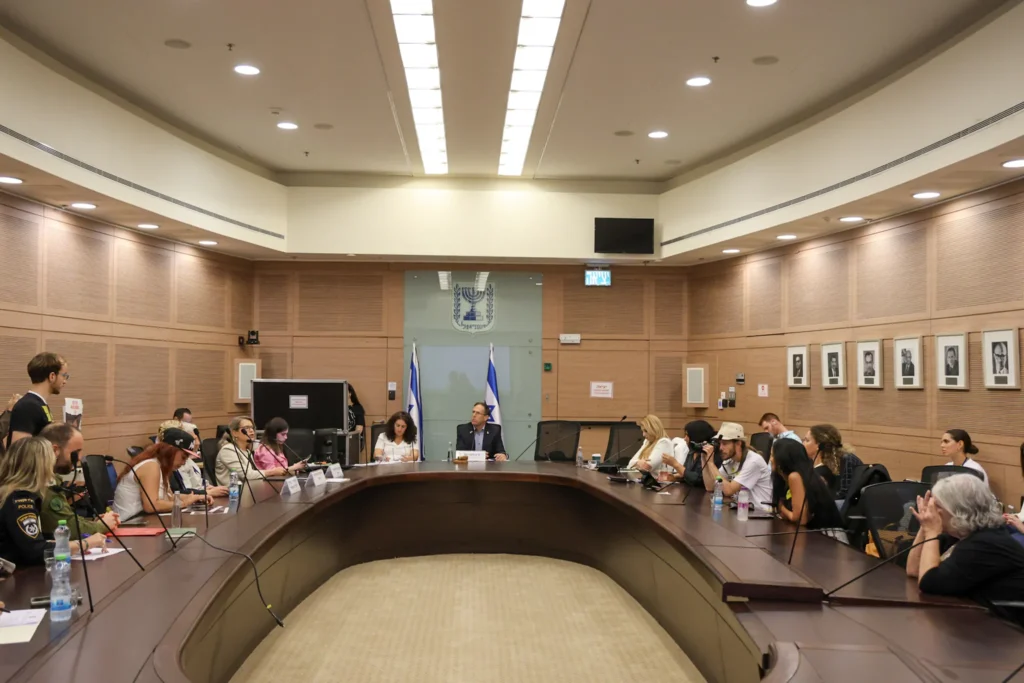
The committee is expected to urge the UN Secretary-General to add Hamas to the “blacklist” and called on Israeli government bodies to apply the report’s findings toward securing convictions.
Love prevails: Freed hostages Sasha and Sapir get engaged
Amid the pain and the struggle, one couple’s announcement offered a spark of hope. Freed hostages Sasha Troufanov and Sapir Cohen, who were kidnapped from Kibbutz Nir Oz and later released in separate deals, have announced their engagement.
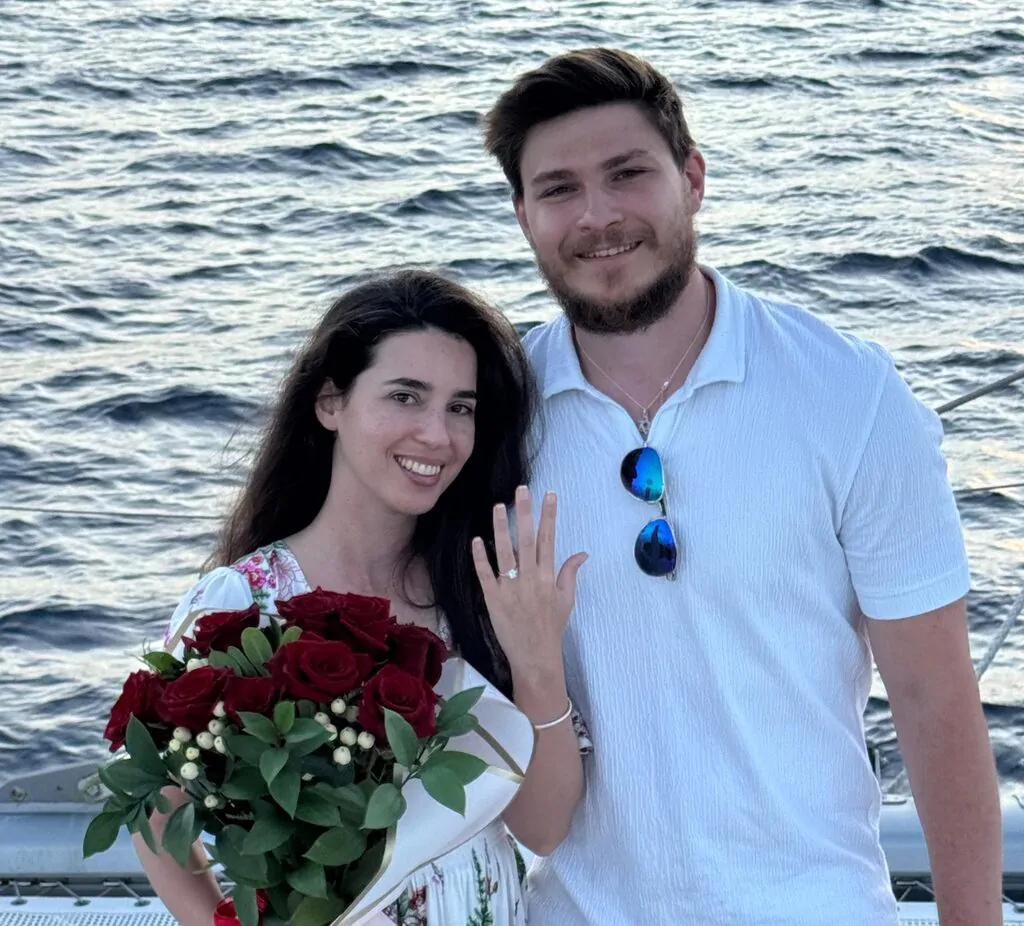
The couple were dating before the war and were taken from their home on the morning of October 7. Sapir was released after 55 days in the first hostage deal, while Sasha remained in captivity nearly a year, transferred between locations in Gaza. Upon his return, the couple reunited — and today, they begin a new chapter.
From darkness to light
Since Sapir’s release, she and her family worked tirelessly to keep Sasha’s name in the public eye. “Sasha Troufanov” became a symbol, a name spoken at protests and in interviews, a constant presence in the campaign to bring him home. Their engagement announcement sparked an outpouring of joy online. “Love’s victory over terror,” read one comment.
Their story — of love interrupted and renewed — is a testament to human resilience. Their families offered a reminder: “The journey is still long. There are still hostages to bring home. Today, we choose a small moment of joy within the pain.”
And to Sasha and Sapir: congratulations, health, and may love always prevail.