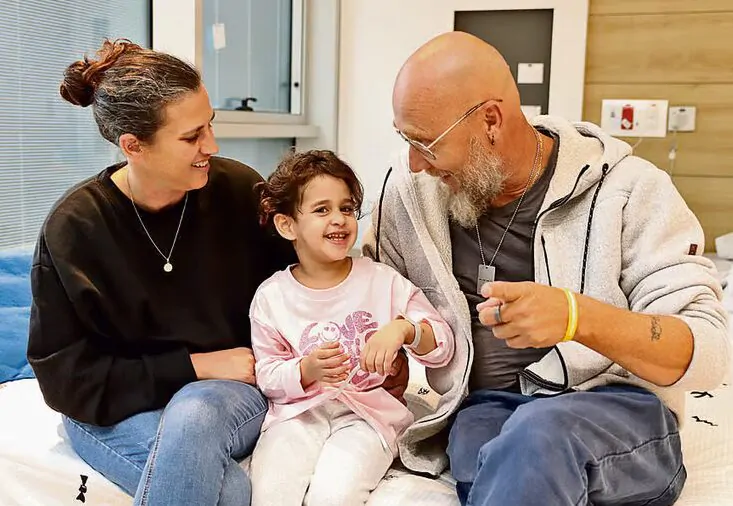
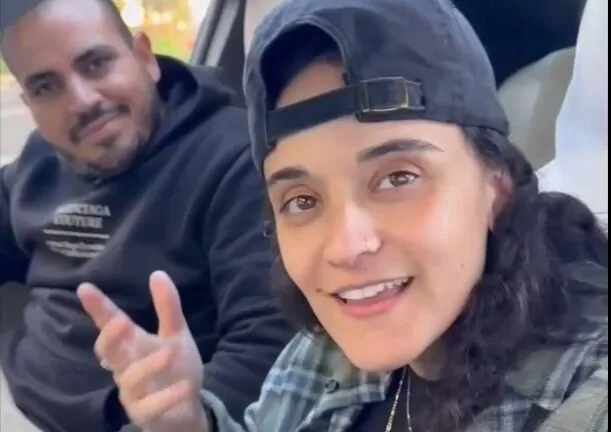
The story of Emily Damari, a survivor of captivity who returned after more than a year in Hamas hands, was revealed for the first time this evening (Saturday) in Yigal Mosko’s documentary aired on Channel 12 News. A powerful and honest testimony from a young Israeli woman who endured the darkness—and stood tall throughout it all.
Emily spoke about everything: the moment she was abducted from the kibbutz, those first terrifying seconds of absolute fear, and the instinct to fight—not only for her life, but for her mental resilience. In the unbearable conditions of captivity, she discovered strength within herself that even she hadn’t known was there.
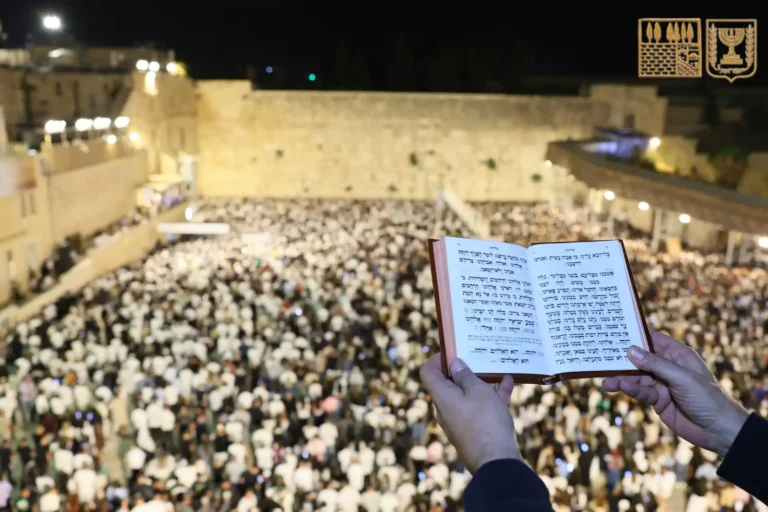
Emily Damari recites the Blessing of Thanksgiving at the Western Wall:
עוד באותו הנושא
- Selichot Season Opens with Spiritual Power and Unifying Prayer at the Western Wall
- With Hope and Resilience, Hostage Survivors Embrace Life After Captivity
- Israel Strengthens Global Alliances Amid Regional and International Challenges
- Beyond the Conventional: Haredi Soldiers and Wives of Warriors Stand with the IDF
When Emily Damari recited the Gomel blessing:
At the center of Emily’s testimony was the extraordinary bond she formed with Romi Gonen—her fellow hostage, who was with her for the entire year and two months. The two became one unit, each a source of comfort for the other. The longing for Gali and Ziv Berman, who were kidnapped with her and have not yet returned, was present throughout the interview. Her pain was open and raw—but not despairing. “They’re still there,” she said, her voice heavy with sorrow.
On the morning of the attack, Emily sensed something wasn’t right. She messaged Gali to come over. When the terrorists entered, she managed to whisper “Shema Yisrael” before being shot in the hand. Her dog, Chucha, was shot immediately after. The terrorists dragged her, Gali, and Ziv outside—and forced them into her car. When she regained consciousness, she found herself in a home with children and a local family. There, she encountered Hagar Brodetz and Avigail Idan. After a few hours, she was taken to Shifa Hospital, where she underwent surgery. A Hamas doctor sedated her and later told her she had lost two fingers. Her response: “Fine—I’m a hostage in Gaza, what could be worse?”
“If I’m here—no one lays a hand on us”
In one of the most dramatic moments of her account, Emily described an incident in which one of the captors pushed another hostage. Despite having just lost fingers in an improvised operation, she didn’t hesitate: she confronted him, shoved him back, shouted that she would reveal their location, and demanded they be moved to a different house. “Will I die? Then I won’t be in captivity. Thank you very much,” she told herself. “But as long as I’m here—no one lays a hand on us.”
Hamas nicknamed her “Shuja’iya”—meaning hero—and later, “John Cena.” She says she never stopped asking questions about their lives, how they dig tunnels, how much they earn—until they started calling her “Foduli,” curious. Even choosing what to wear for her release became symbolic. When they gave her a red hoodie, she refused. “I’m not walking out in front of the whole world in red. How would that look?” Because even broken—she was still Emily, and she was still in control.
When Emily Damari received an extraordinary gift:
“God wanted it to be this way”
Just recently, she underwent another surgery at Sheba Medical Center to remove a fragment that had remained in her body since the morning of October 7. “I want to keep it as a souvenir,” she told the doctor. That’s Emily—someone who remembers every detail, even what wasn’t said. She knew that her father, who suffers from Alzheimer’s, hadn’t truly understood that she was in captivity—“and God wanted it that way, so he wouldn’t have to experience it.”
Reactions on social media were quick to appear—and rightly so. Emily, in every sentence, touched countless hearts—not just as a victim, but as a model of a young woman with her back straight, eyes wide open, and a spirit that bows to no one. Some called her “a rare breed,” others simply wrote, “champion.” Many shared that they watched the interview in awe, unable to process the calm with which she recounted things most wouldn’t survive.
“I’ll only feel like I’ve come back when they all return”
“You’re a superhero,” people wrote. “A queen,” “crazy strong,” “extraordinary.” And almost everyone who watched felt the same thing: that there’s something indescribable in Emily Damari’s ability to turn the darkest place into a clear, courageous voice—demanding just one thing: until the friends she left behind come home, she herself cannot truly return.