
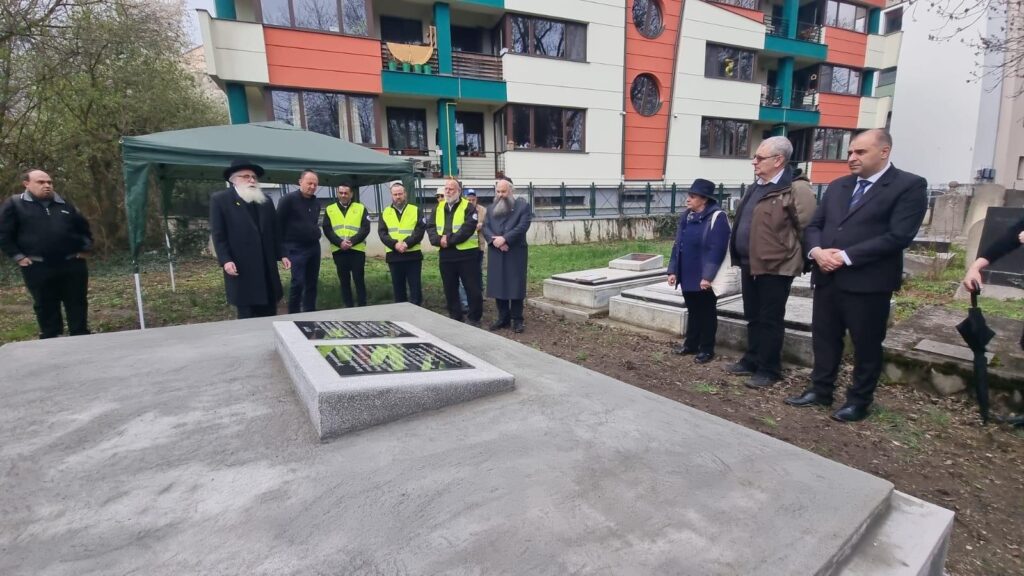
In a moving ceremony held Monday at the Old Jewish Cemetery in Cluj-Napoca, Romania, a memorial stone was unveiled over a mass grave containing Jewish remains that were recently uncovered at a construction site in the city.
The site, which once served as a Jewish cemetery, had been expropriated by authorities, and the remains had lain buried and forgotten—until their recent discovery.
Here lie the bones of the city’s Jews
The bones and skeletal remains were found during excavation work. In a sensitive and complex operation, ZAKA volunteers, in collaboration with its International Division, spent several days collecting the remains with care, aided by dozens of local workers. The remains were then reburied in accordance with Jewish tradition. Zaka is an Israeli volunteer organization that specializes in disaster response and the respectful recovery and burial of human remains.
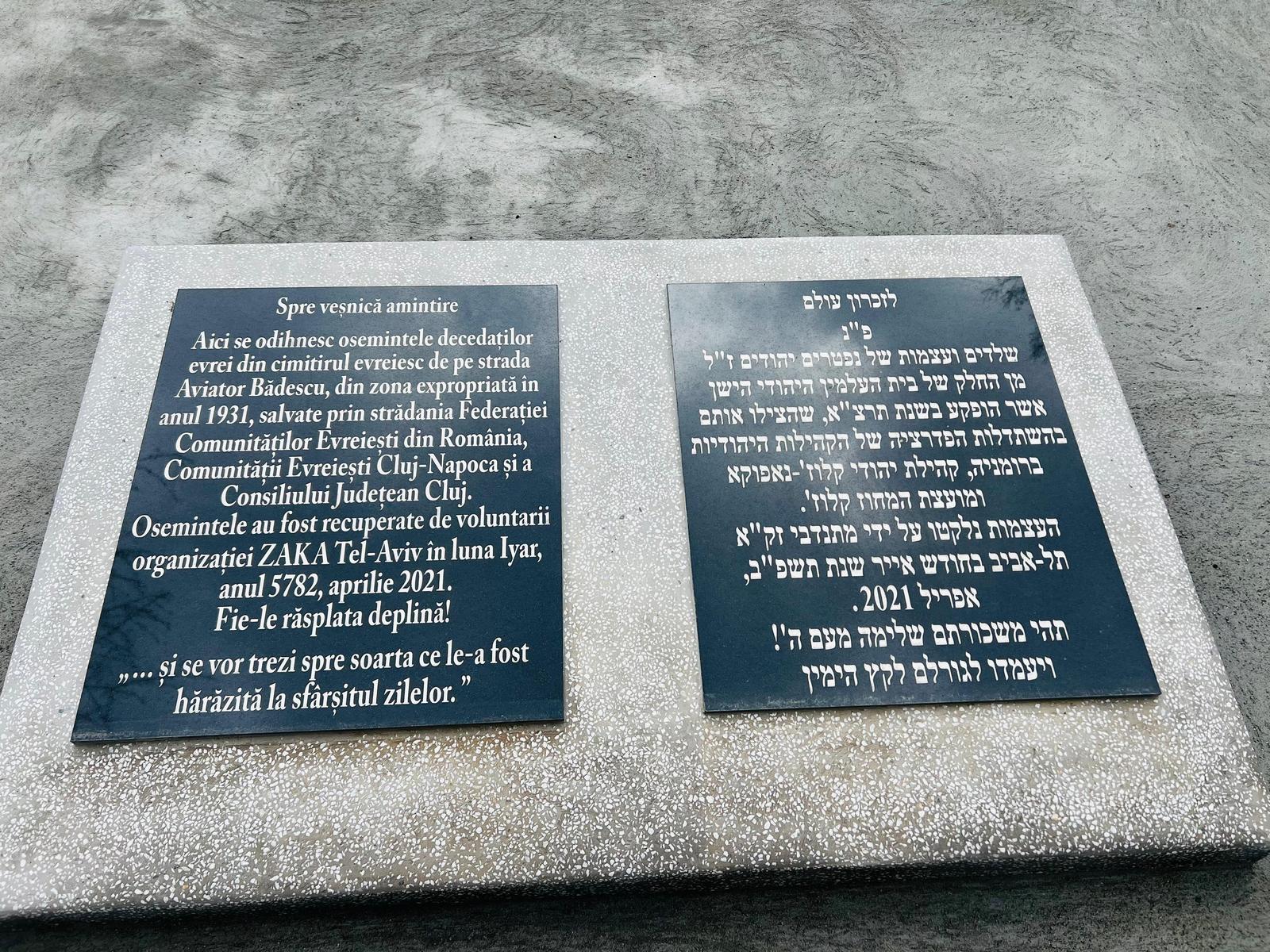
The newly placed headstone reads:
“Here lie the bones of the Jews of Cluj-Napoca who were buried in the ancient cemetery and rescued by ZAKA volunteers. May their reward be complete from G-d.”
Dignity in Death: A Global Message
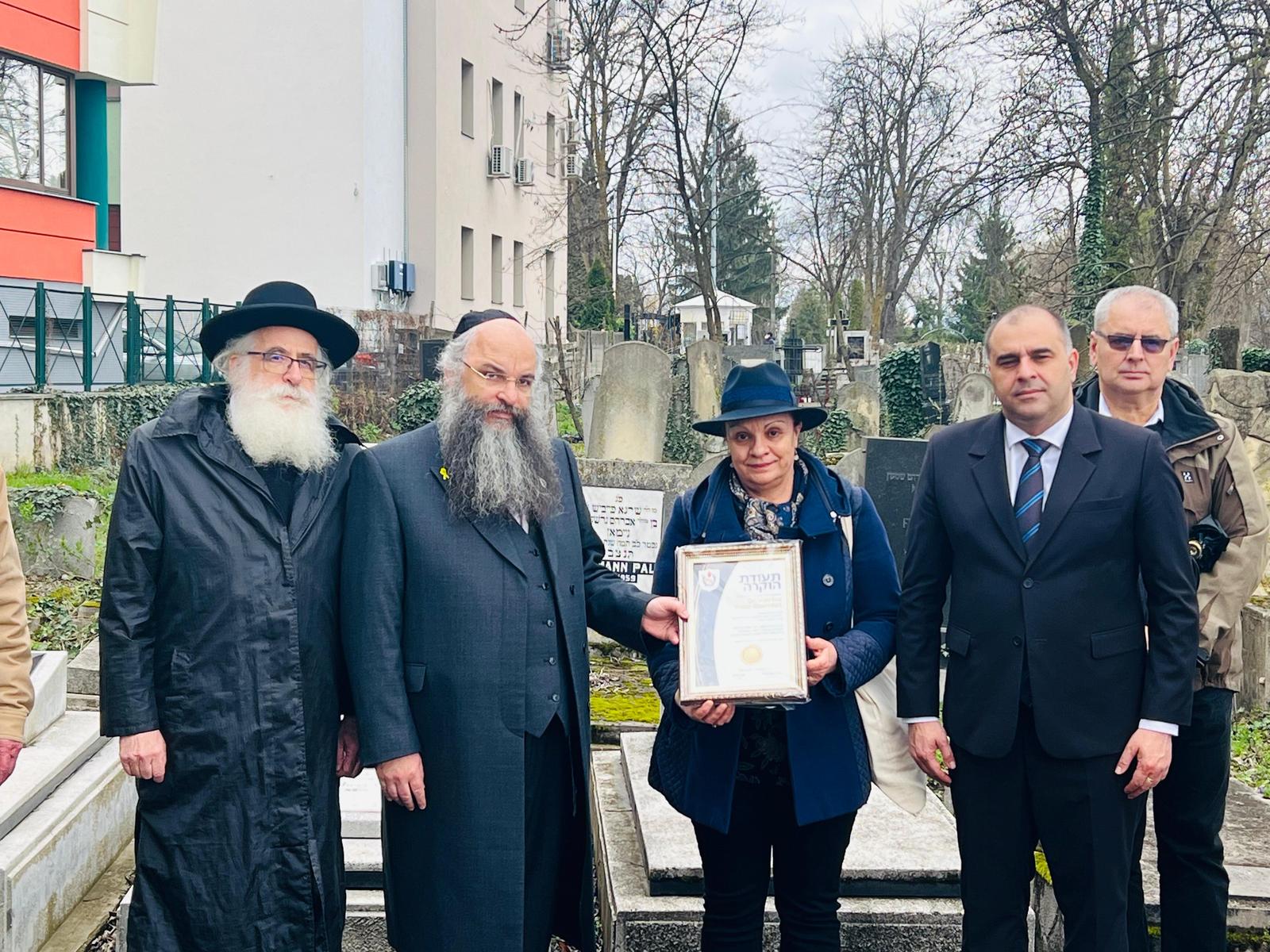
The ceremony was attended by Chief Rabbi of Romania Raphael Schaffer, Jewish community leader Dorel Orensztajn, Deputy Mayor of Cluj-Napoca, ZAKA Director-General Tzvi Hasid, the ZAKA team involved in the effort, senior archaeologists, and members of the local Jewish community.
Rabbi Schaffer thanked the Romanian Jewish Federation and ZAKA volunteers, saying: “After the horrors of Simchat Torah [October 7], the world saw the incredible dedication of ZAKA volunteers to honoring the dead.”
Preserving Jewish Burial Sites
ZAKA’s Director-General, Tzvi Hasid, called for continued efforts to preserve Jewish gravesites across Cluj-Napoca, noting that roads and buildings had been constructed over other Jewish burial grounds in the area.
At the ceremony’s close, after the Kaddish prayer, a certificate of appreciation was awarded to the lead archaeologist who guided the process. The event concluded with a collective singing of “Ani Ma’amin” (“I Believe”), the traditional Jewish song expressing unwavering faith in the coming of the Messiah.