
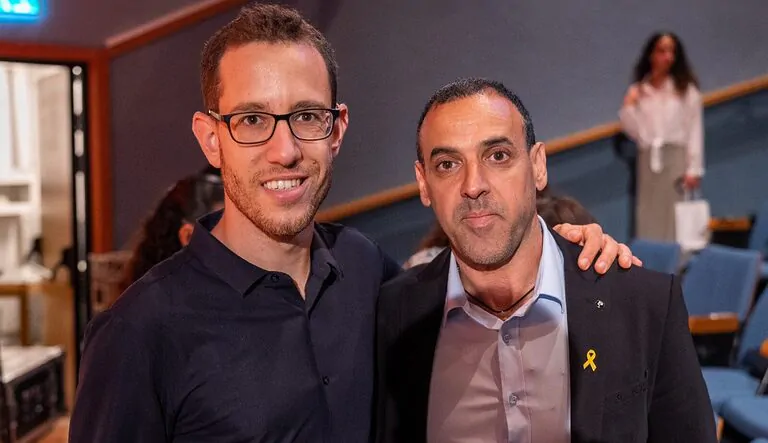
Over the past week, Akiva Lem joined Eli Sharabi for a series of interviews with various media outlets, coinciding with the launch of Eli’s book, Kidnapped—more on that soon. In a special conversation with RegaNEWS, Akiva describes the profound experience and the inspiration drawn from Eli’s unbelievable journey.
A Choice to Live
“It was a very emotional and complex experience. When I think of Eli, I see someone who went through one of the hardest days of his life, and then chose not only to survive, but to share his story with the world,” says Akiva. “It’s not just a story of survival, but of choosing life—moment by moment, step by step. Every conversation with him was deeply powerful for me.”
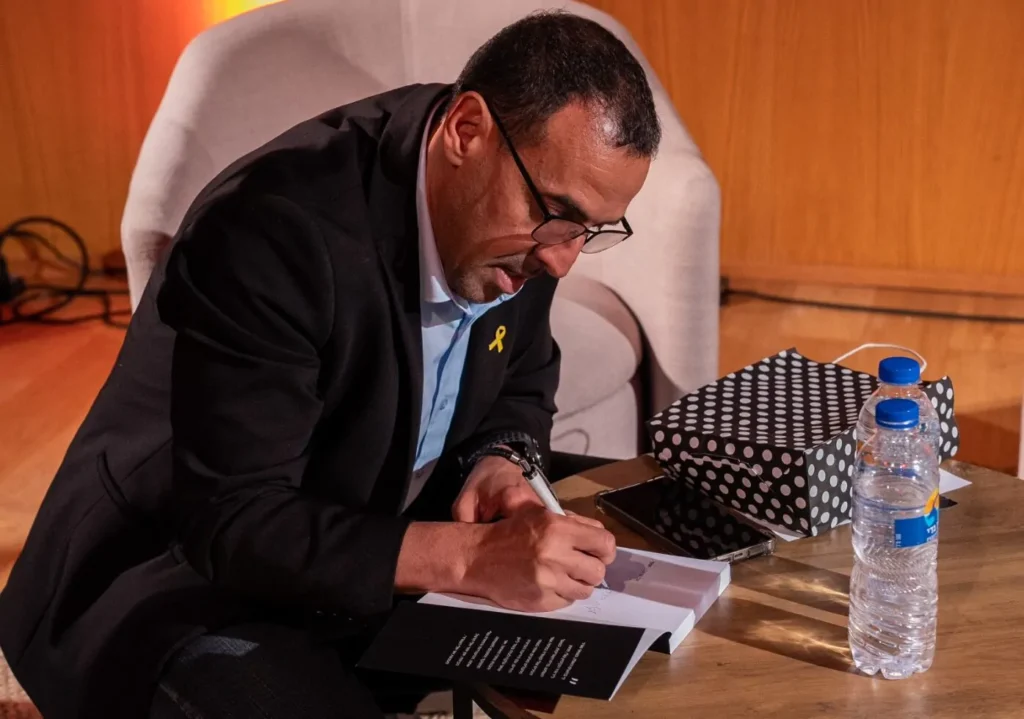
An Open Book
Akiva emphasizes what was evident in every interview: Eli refuses to give in to pain. “Every interviewer who spoke with him, every conversation—no matter how difficult—he kept saying, ‘I’m like an open book.’ And that’s exactly what he is. He hides nothing—not the pain, and not the strength that came from it.”
The Modern-Day Job
“As I dove into his story, I couldn’t help but think of Job—a man who suffered greatly without placing blame, who refused to give up despite everything. Eli, too, spent 491 days in captivity without knowing what had happened to his family. He held onto hope that his brother and his wife were alive, but ultimately had to face the most devastating truth: his wife and daughters had been murdered. And still, he didn’t let that destroy him,” says Akiva. “That’s what makes him a modern-day Job. He endured the suffering and emerged from it with courage and hope.”
The Day of the Abduction
At the heart of Eli’s story, Akiva notes, is his decision not to fight back—not out of fear, but from the understanding that it wouldn’t lead to anything good. When he realized that resisting would put his entire family at risk, he chose to be kidnapped rather than resist. That choice didn’t come from weakness, but from wisdom and a conscious commitment to life.
Throughout his captivity, Eli continued, again and again, to choose life over surrendering to despair. Every decision—whether large or small—was part of a continuous effort to hold on and survive.
Choosing Life
Akiva shares that the greatest insight he gained from his time with Eli was the simplicity of life. “Eli doesn’t make a big deal of the pain and suffering,” he says. “He simply chooses life—even when he has every reason not to. What his story teaches us is that any one of us can choose life, even when it feels like there’s no reason to keep going. It’s not easy, it’s not simple, but Eli shows how each of us can find the strength to go on.”
From Kidnapped
On October 7, 2023, Eli Sharabi was kidnapped from his home in Kibbutz Be’eri, beginning one of the most harrowing days of his life.
“In those moments, as I’m dragged near the kibbutz fence, under the blazing sun, the smell of burning all around me, a bandana over my eyes, two terrorists pulling me by both arms, with the clear awareness that I’m being taken to Gaza—while Lianne and the girls are left behind—I focus on a single mission: to survive and return home.
The old Eli is gone. From now on, I am Eli the survivor.”
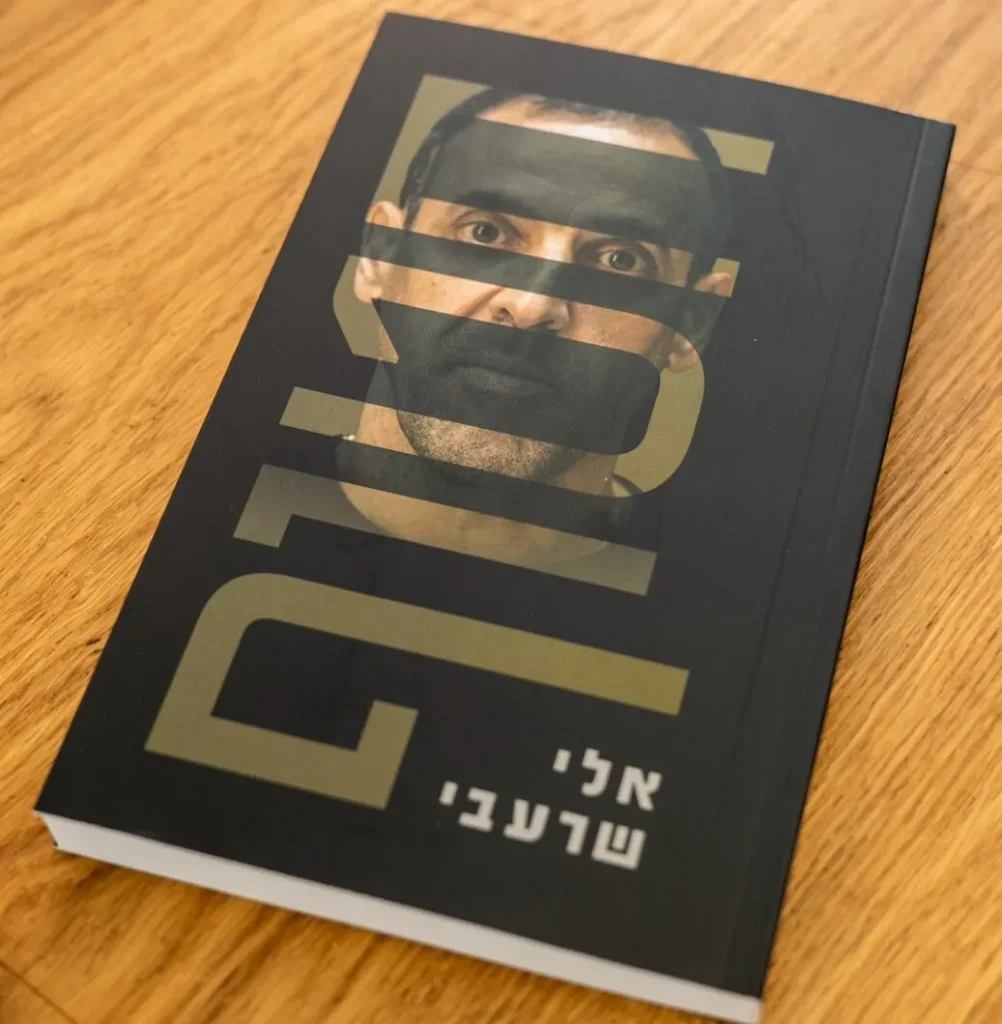
Eli endured 491 days of torment in Hamas captivity—days filled with hunger, loneliness, and immense pain. His book recounts the full story, revealing the inner and physical battles he fought, and the courage it took to keep going, even when the circumstances seemed unbearable.
“This is a story about the human spirit, about the inner strength that continues to choose life,” he says, highlighting the friendship and camaraderie he shared with other hostages, as well as the optimism that emerged from the darkness. His story does not merely express pain and suffering, but the ability to find light even in the most unimaginable conditions.