
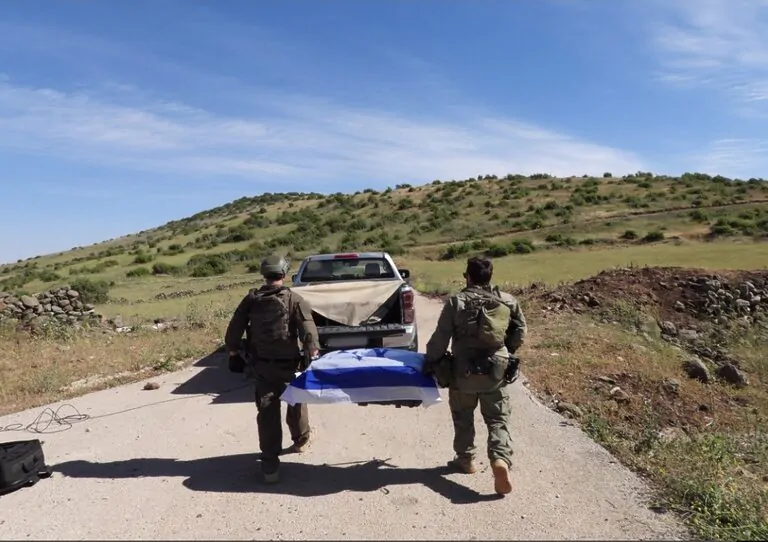
In a sensitive and years-long operation that involved risking lives, the body of Staff Sergeant Zvi Feldman was returned to Israel – 43 years after he fell in the Battle of Sultan Yacoub during the First Lebanon War.
The operation, led by the Mossad and the IDF, involved cooperation between various intelligence agencies and culminated in the confirmed identification of Feldman through DNA testing and physical evidence recovered from the field, including his military coveralls.
תיעוד מהשבת גופתו של רס”ל צבי פלדמן ז”ל לישראל במבצע חשאי בלב סוריה (צילום: דובר צה”ל) pic.twitter.com/iGTNhf24gG
— דסק רגע (@deskrega) May 11, 2025
An Operation Under Fire
The operation to recover Feldman’s remains was built on precise intelligence that surfaced in recent months, apparently due to shifts on the ground in Syria. During one of the extraction attempts, fire was opened on the Mossad team—apparently by Syrian guards posted at the site. It is unclear whether they knew who was buried there, but they had orders to prevent any approach. Despite the danger, the mission proceeded cautiously and step by step, until evidence was uncovered that enabled identification.
A Moment of Emotion – and Meticulous Attention to Detail
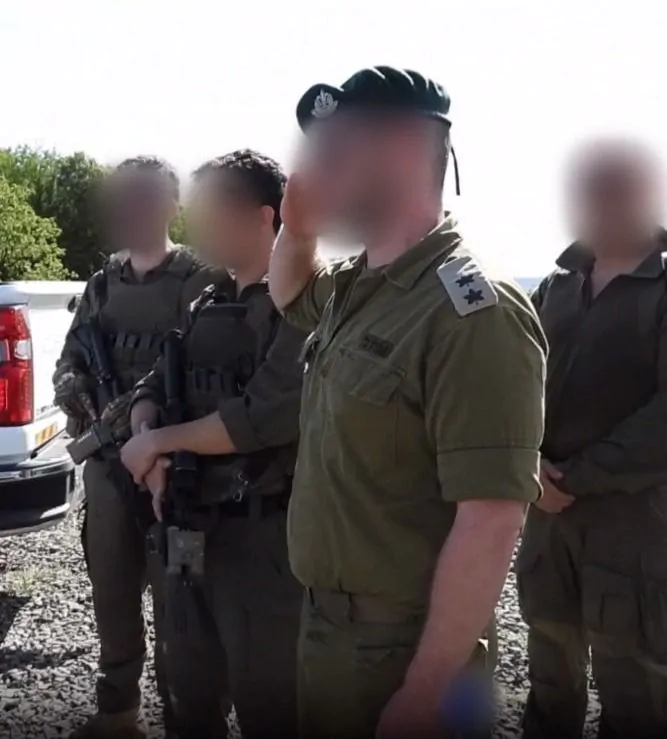
The breakthrough came when Feldman’s armored corps coveralls were found at the site—evidence that led to final confirmation of his identity. Those present when the news arrived described a moment of profound emotion, especially in the operations center established for the mission, where IDF Intelligence and Mossad personnel worked side by side.
Once the body was identified at the IDF Rabbinate’s Genomic Identification Center, Feldman’s family was informed personally by the IDF, with Prime Minister Netanyahu present. The official statement noted that the operation “was made possible thanks to precise intelligence, operational deception, and bravery.”
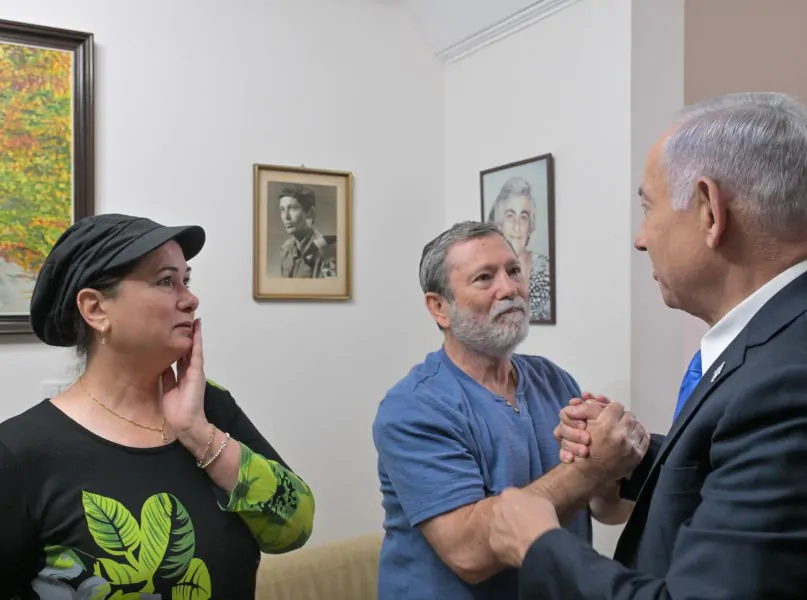
“We Always Believed He Would Come Home”
Zvi’s sister, Anat Feldman, said emotionally: “We always believed our brother would return. This is a joyful day, and I thank the Creator of the Universe. I hope all families will be able to bring their loved ones home.”
His former commander, Hezi Shai—who was captured in the same battle and later released in the Jibril Deal—said that Feldman’s return marks the closing of a personal circle, but reminded the public that others are still missing: “Most important—there are still hostages and fallen soldiers. The hope is that something will change.”
The Historic Battle – and the One Still Missing
Feldman fought alongside Zechariah Baumel and Yehuda Katz—three of the most well-known missing soldiers from the Battle of Sultan Yacoub. Baumel’s remains were returned to Israel in 2019. Yehuda Katz remains the last unaccounted-for soldier from that battle. According to the IDF and the Mossad, the Katz family has been updated on the development, and the search for their loved one continues.
A Commitment with No Expiration Date
The IDF emphasizes that the work of the Missing Persons Unit continues even in routine times—not only during wartime. The effort surrounding Feldman intensified after October 7, in parallel with the work of the Hostage and Missing Persons Headquarters. The team involved in locating him included combat soldiers and intelligence officers who retraced developments in the Syrian arena, sometimes under direct threat, in order to advance what once seemed impossible.
Staff Sergeant Zvi Feldman was laid to rest at the military cemetery in Holon. The nation bid him farewell in a full military ceremony, alongside a solemn promise: to continue the mission until all our sons are brought home.