
Nisan is the first month of the Hebrew year in terms of the festival cycle and is traditionally associated with renewal, redemption, and national rebirth. It is during this month that Jews celebrate Pesach (Passover), marking the Exodus from Egypt and the birth of the Jewish nation.
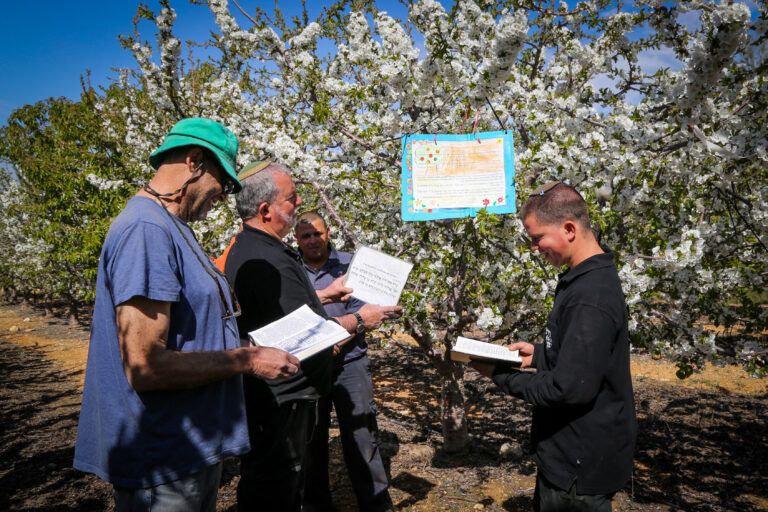
Fittingly, Nisan also brings with it one of the most beloved seasonal blessings in Jewish tradition—Birkat Ha’Ilanot, the blessing recited upon seeing fruit trees in blossom. It is customary in Israel and in Jewish communities around the world to say this blessing outdoors near two blooming fruit trees.
The Blessing:
Baruch Atah Hashem Elokeinu Melech Ha’olam, shelo chisar ba’olamo klum, uvara vo beriyot tovot ve’ilanot tovot lehanot bahem bnei adam.
Translation:
Blessed are You, Lord our God, King of the Universe, who has made nothing lacking in His world, and created in it good creatures and good trees for the benefit of mankind.
Jewish Law Guidelines for Birkat Ha’Ilanot
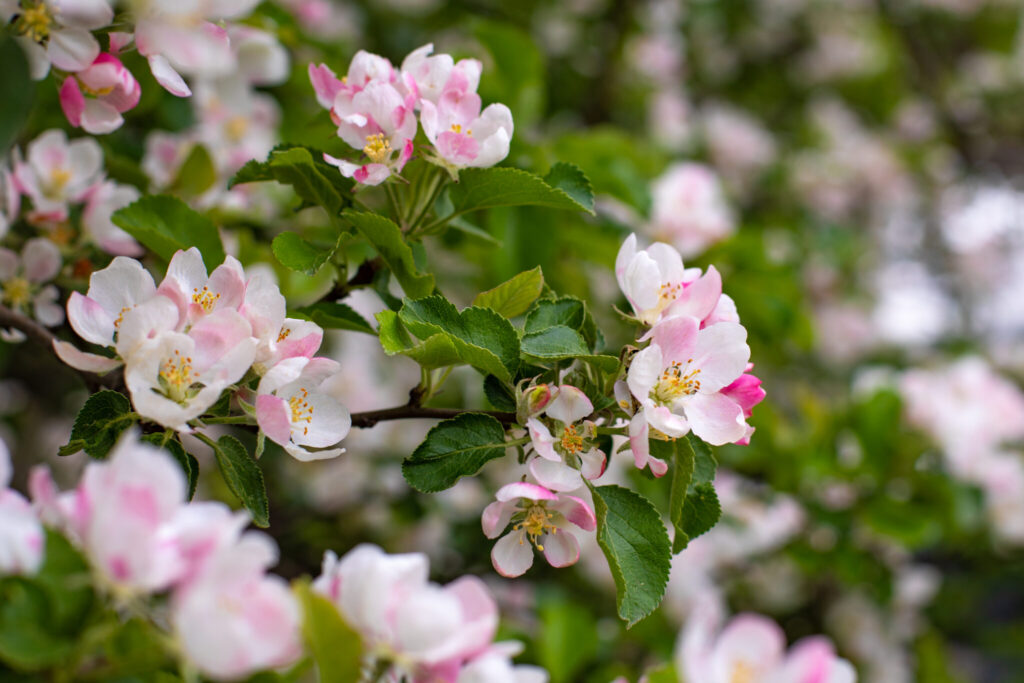
- Where to Say It: The blessing should be recited in front of two different species of fruit trees, both visibly in bloom, with flowers on their branches.
- When to Say It: The ideal time to recite the blessing is from the beginning of Nisan until the end of the month. Many make an effort to recite it as soon as possible, on Rosh Chodesh.
- Women: Although Birkat Ha’Ilanot is a time-bound mitzvah (commandment), most halachic authorities maintain that women are obligated to recite it.
- Type of Tree: The blessing should be made only over fruit-bearing trees, not decorative or barren ones.
- Reciting on Shabbat: There are halachic (Jewish law) opinions that permit reciting Birkat Ha’Ilanot on Shabbat, though local customs may vary.
- Community Traditions: In many Sephardic communities, it is customary to add psalms and prayers to elevate the occasion spiritually.
Birkat Ha’Ilanot beautifully captures the essence of Nisan—celebrating the renewal of nature, the miracles of creation, and the opportunity to begin again with gratitude after the winter of hard times.