
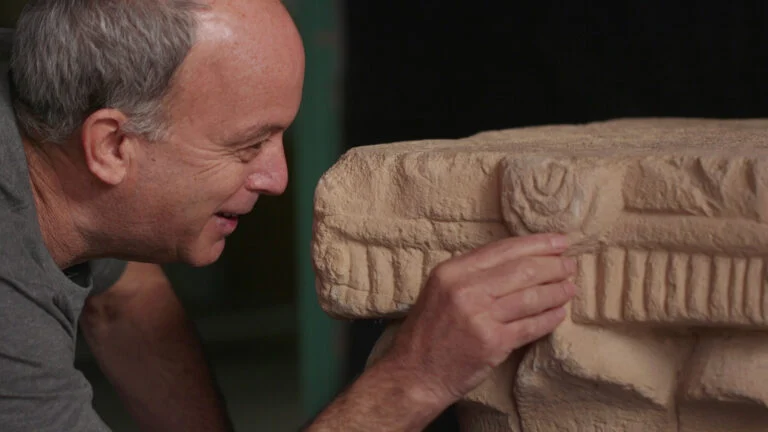
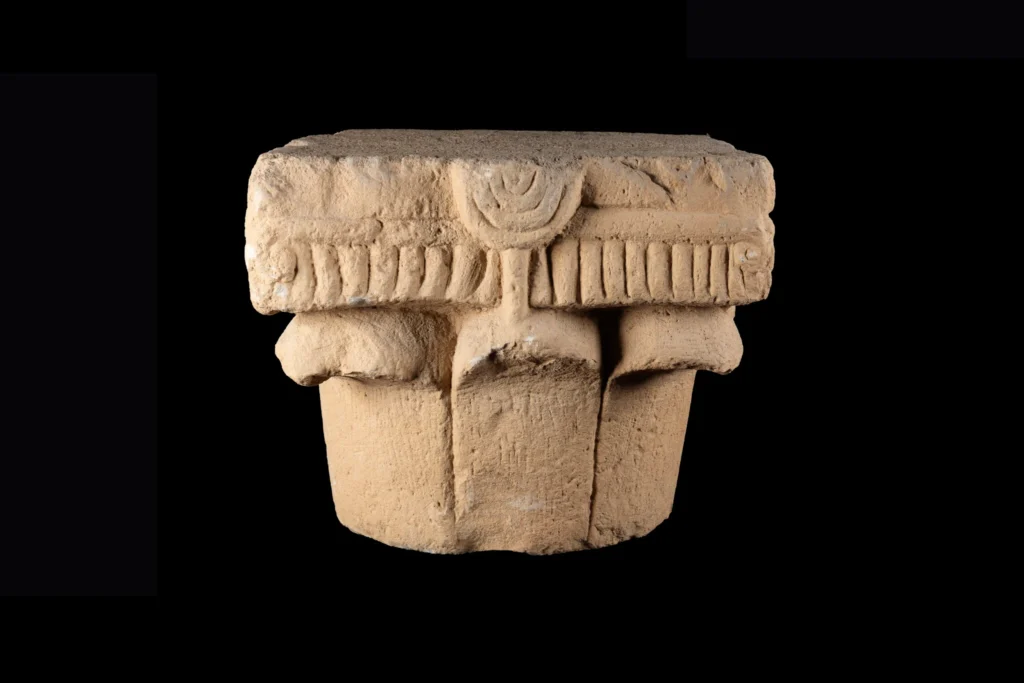
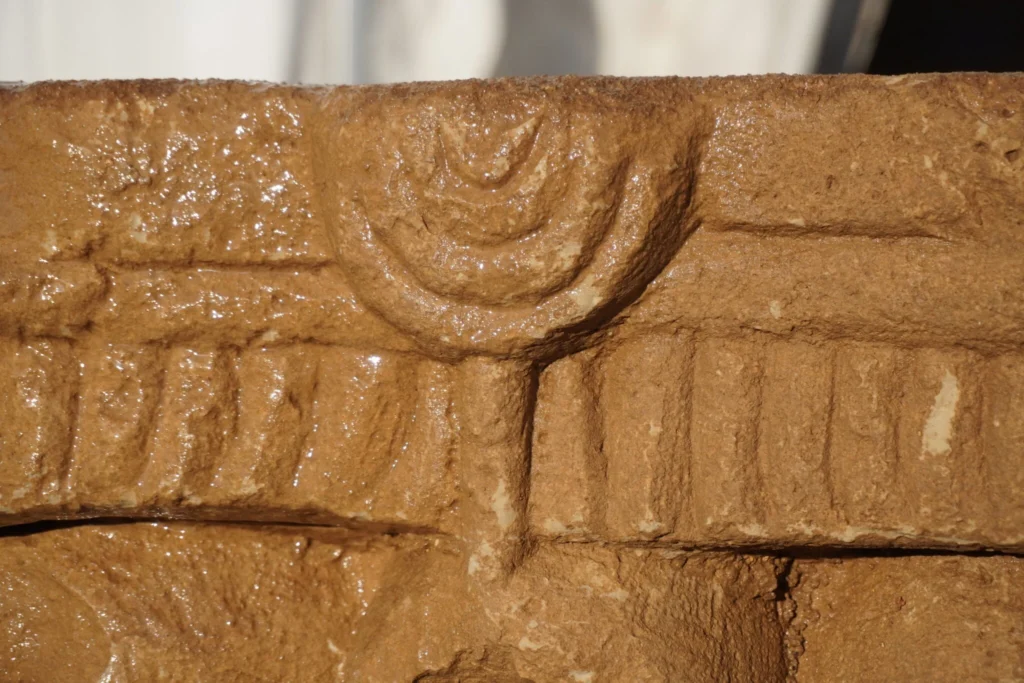
A rare limestone column capital (the top of the column), decorated with an eight-branched menorah, will be unveiled to the public for the first time as part of Israel’s 77th Independence Day celebrations.
The artifact will be the centerpiece of the new exhibition at the National Campus for the Archaeology of Israel in Jerusalem—the flagship project of the Israel Antiquities Authority.
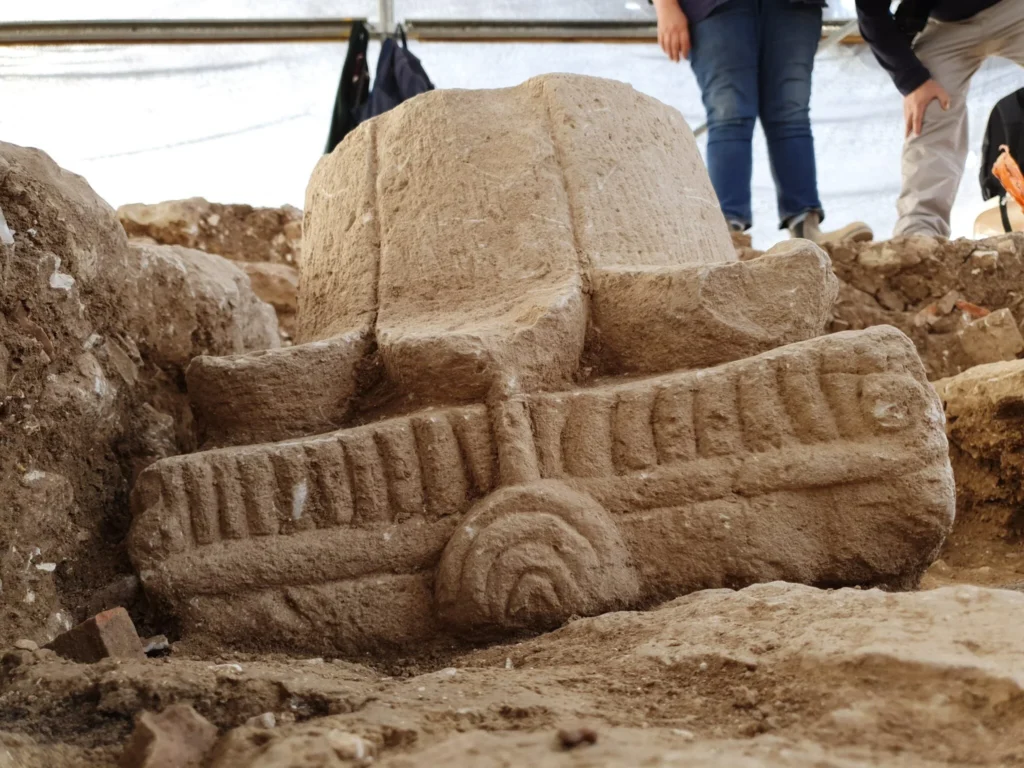
The capital was discovered about three years ago during archaeological excavations by the Israel Antiquities Authority, ahead of the construction of the new entrance bridge to Jerusalem. It was found lying upside down on the floor of a room in an ancient structure and has since been studied by researchers from the Israel Antiquities Authority and the Hebrew University.
An Archaeological Mystery: What Is a Menorah Doing in a Roman Settlement?
Researchers believe the capital originally crowned a column in a building or on the main street of a Roman-Byzantine settlement, likely inhabited by retired Roman soldiers. The appearance of a menorah—a clear Jewish symbol—on such a capital raises intriguing questions.
Dr. Uzi Ad and Anna Eirikh, directors of the excavation, note that it remains a mystery how a menorah came to be found in an area without evidence of a synagogue or a confirmed Jewish presence from that period.
National Symbol or Random Artifact
According to Dr. Yuval Baruch, Deputy Director of Archaeology at the Israel Antiquities Authority, the menorah “became a distinctly Jewish symbol shortly after the destruction of the Second Temple, and such a find—especially a heavy stone—could indicate a Jewish settlement. However, the absence of additional evidence makes it impossible to confirm this with certainty. It is possible that the capital was brought from elsewhere and reused.”
He added that the capital’s discovery specifically in the Motza area, in the Jerusalem hills—an area believed to have been largely devoid of Jews following the suppression of the Bar Kokhba revolt—is particularly noteworthy.
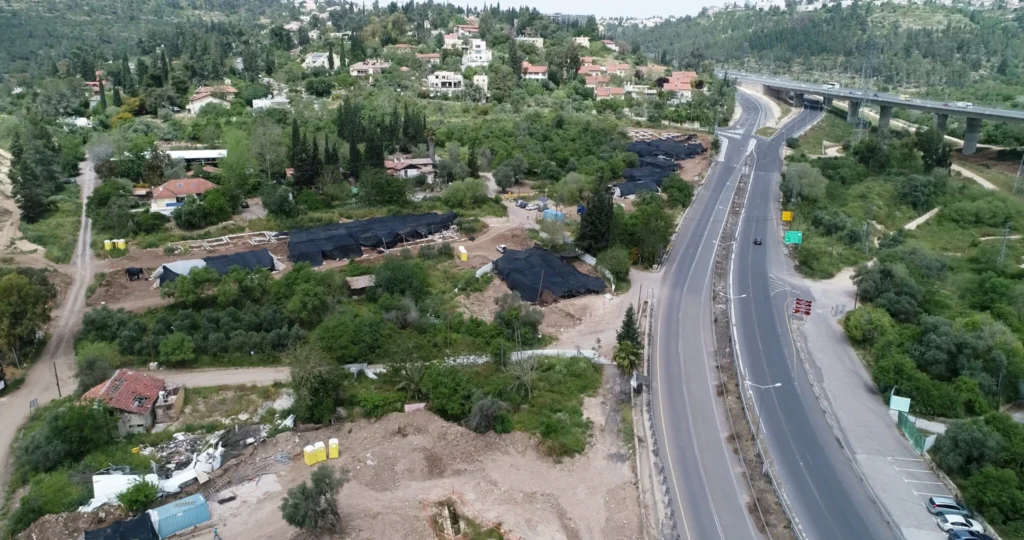
Public Unveiling During Independence Day Celebrations
Minister of Heritage, MK Amichai Eliyahu, welcomed the public unveiling of the discovery, saying, “This is tangible evidence of the undeniable bond between the Jewish people and Jerusalem. This capital, unique in the world, bridges a glorious past with a renewed independence.”
Israel Antiquities Authority Director-General Eli Eskosido also emphasized the public significance of the find, saying, “We invite the public to join guided tours and reconnect with their roots. There is no better time to reveal such a discovery than during the Independence Day festivities.”
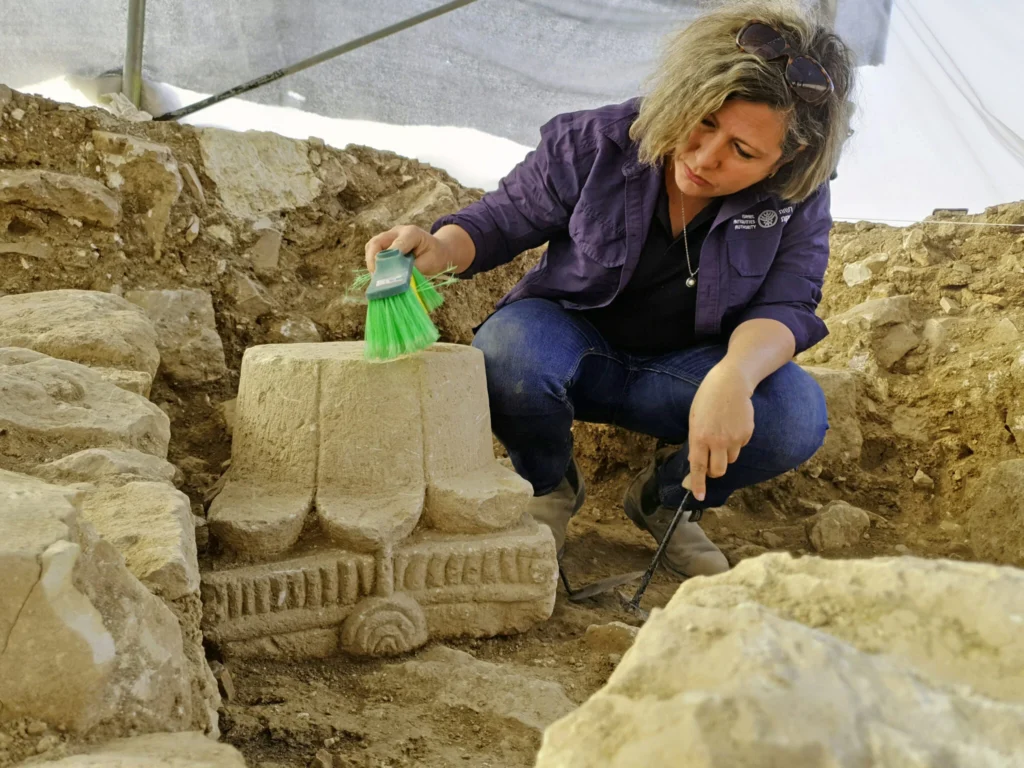
The capital, featuring an eight-branched menorah and a foot-like element carved on each of its four sides, may be more than an extraordinary decorative item—it offers an additional glimpse into the development of Jewish identity in the Land of Israel.