
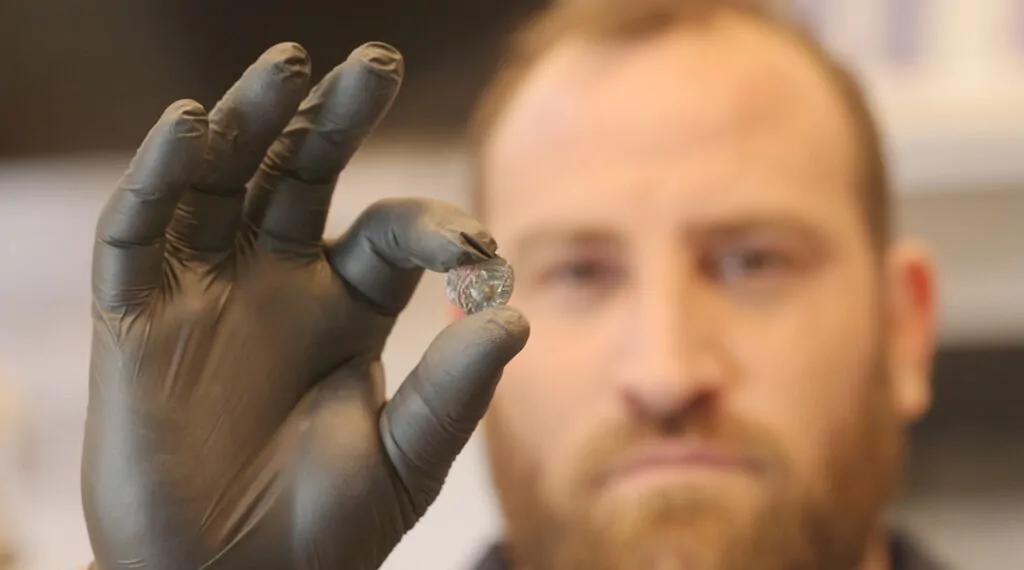
A Greeting from the Jewish Rebels
On the rare coin, which was discovered near the southwestern corner of the Temple Mount, north of the City of David, there appear words in ancient Hebrew script: “For the Redemption of Zion”—reflecting the heartfelt hope of Jerusalem’s Jews during the waning days of the Great Revolt against the Romans.
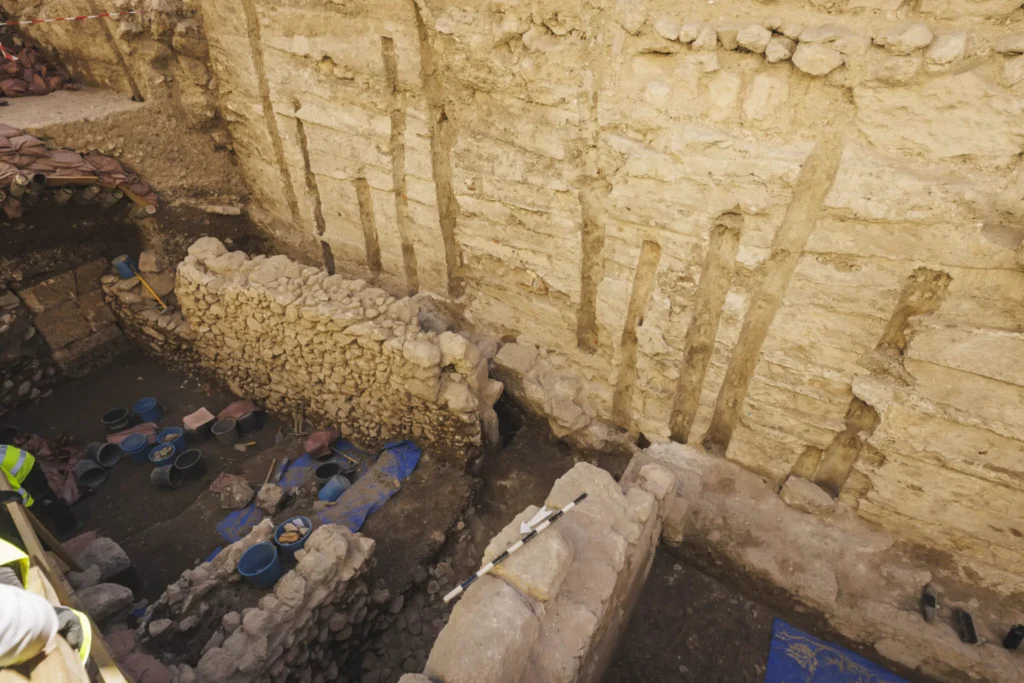
Esther Rakow-Mellet, an archaeologist with the Israel Antiquities Authority, spoke about the discovery: “We thought it might be a rare coin. We waited eagerly for several days until it returned from cleaning, and it turned out to be a greeting from the Jewish rebels in the fourth year of the Great Revolt.”
A Particularly Rare Coin
According to Yaniv David Levy, a researcher in the coin division of the Israel Antiquities Authority, “The coin is made of bronze and is fairly well-preserved. On its obverse side, a goblet design is visible, with the inscription in ancient Hebrew script: ‘For the Redemption of Zion.’ On the reverse is a lulav (palm branch), flanked by two etrogim (citrons), along with the inscription: ‘Year Four.’ This inscription marks the count of years since the revolt began and allows us to date the coin precisely to the period between the month of Nisan in 69 CE and Adar of 70 CE.”
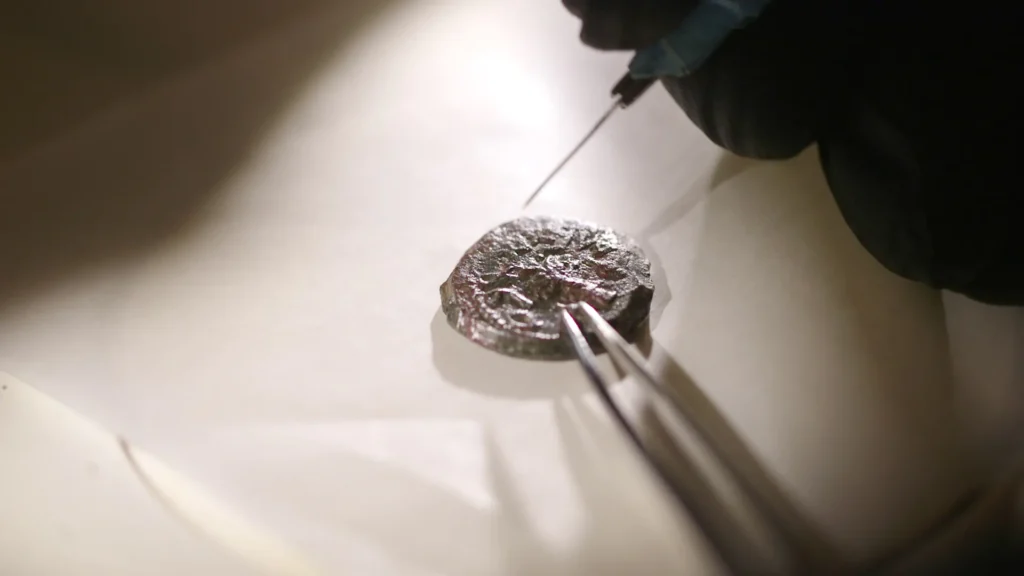
Yaniv explained that the bronze coins from “Year Four” differ from earlier coins; their size and weight increased significantly, and the inscription “Freedom of Zion” was replaced by a new inscription—”For the Redemption of Zion.”
Scholars generally believe that the “Year Four of the Great Revolt” coins were minted in Jerusalem under the leadership of Shimon Bar Giora, one of the prominent commanders during the revolt’s final year. These coins are considered relatively rare, with most discovered in Jerusalem and its surroundings.
A Profound Shift in Consciousness
According to Dr. Yuval Baruch, Head of the Archaeological Division in the Israel Antiquities Authority and a researcher of the site for about 25 years, “The inscription on the coin—’For the Redemption of Zion,’ instead of the earlier ‘Freedom of Zion’—indicates a profound shift in consciousness, and perhaps also the desperate state of the rebel forces about six months before the fall of Jerusalem, on the ninth of Av (Tisha B’Av) in August of 70 CE. It seems that by the fourth year of the revolt, the mood of the besieged rebels in Jerusalem had shifted from euphoria and hope for freedom to despair and a yearning for redemption. It is also possible that the Arba Minim [the four species used on the holiday of Sukkot] on the coin, symbols of the Sukkot holiday and pilgrimage to the Temple, were intended to stir among the rebels a sense of redemption and hope for miracles and better days.”
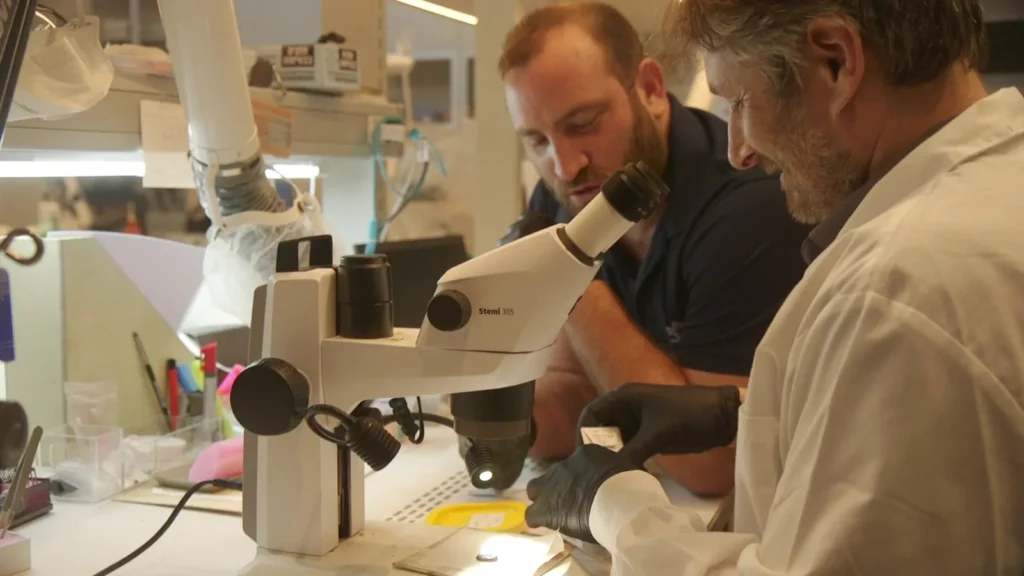
“Two thousand years after this coin was minted, we come and find such an emotional piece of evidence of the great destruction, just days before Tisha B’Av, and I think nothing could be more symbolic,” concludes Rakow-Mellet.
Go See the Ancient Coin
The unique coin will be on public display for the first time during family tours this summer at the Jay and Jeanie Schottenstein National Campus for the Archaeology of Israel in Jerusalem.