

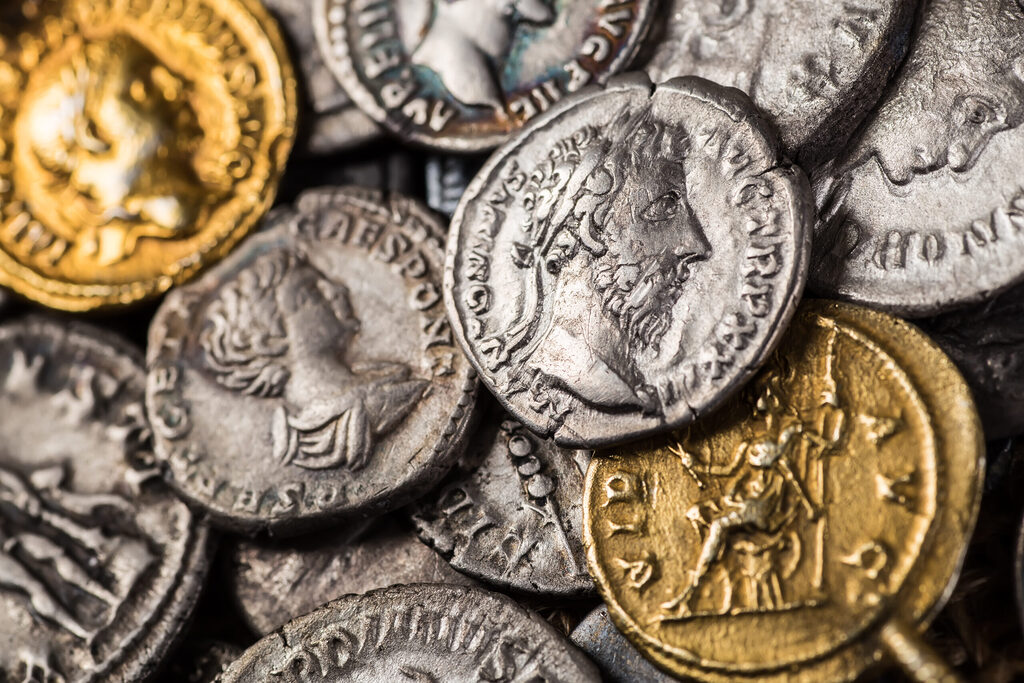
Archaeologists in Israel are battling against time to save a 1,500-year-old Byzantine mosaic in the Gaza border region, while two major discoveries elsewhere in the country are reshaping our understanding of the ancient past: a rare gold coin of Queen Berenice II in Jerusalem, and evidence of a money-based economy in Israel more than a millennium before coins were invented.
Together, these efforts and findings highlight both the urgency of protecting Israel’s fragile heritage and the depth of history embedded in its soil.
Rescuing the Byzantine mosaic near the Gaza border
On the eroding banks of Nahal Besor, near Horvat Gerarit west of Kibbutz Be’eri, a dramatic salvage mission is underway. A 6th-century Byzantine church and its mosaic floor—first uncovered in 1917—are at risk of being lost forever due to soil collapse and erosion.
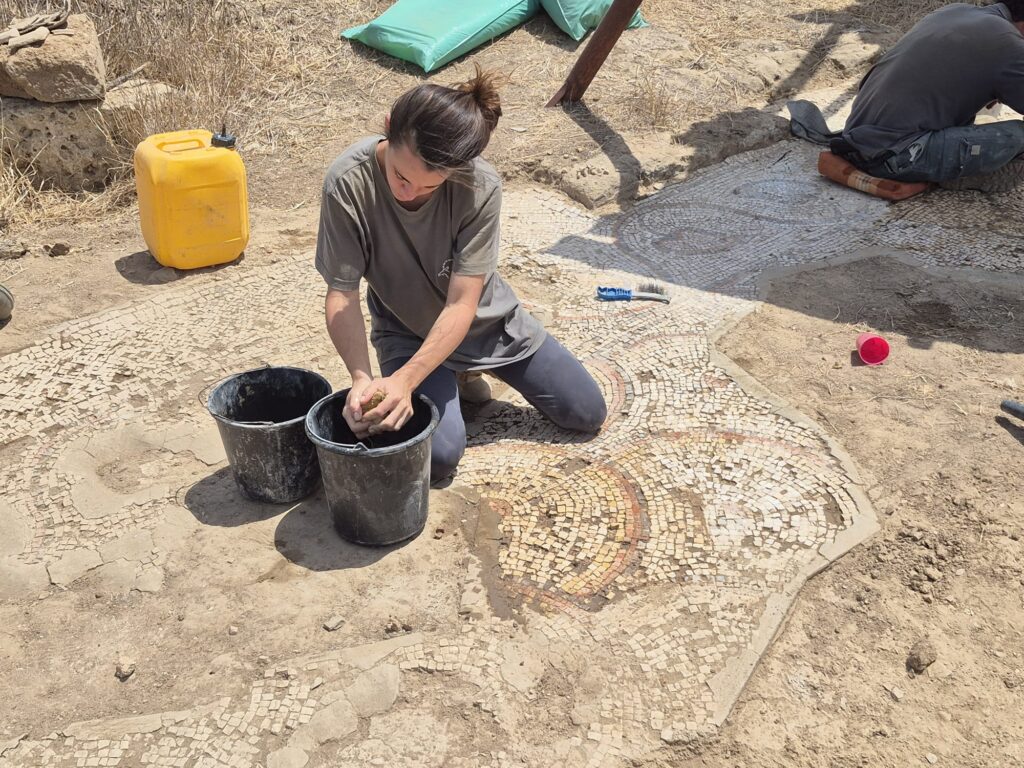
The Israel Nature and Parks Authority and the Israel Antiquities Authority have launched a delicate operation to uncover, clean, and prepare the remains for relocation. While sections of the mosaic had been preserved decades ago, much still lies exposed and in poor condition.
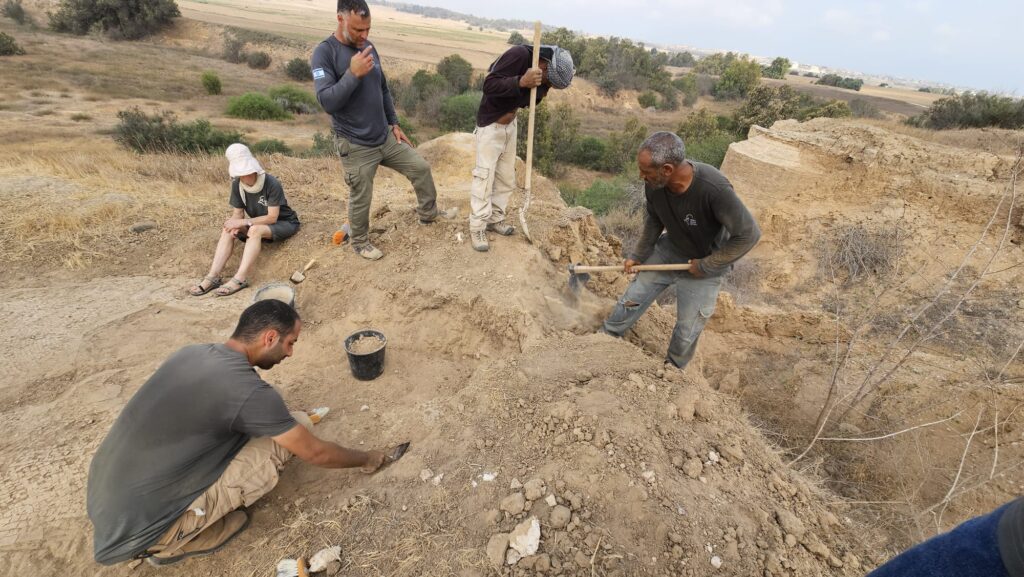
“We usually avoid moving antiquities from their original location, but in this case if we don’t act, all will be lost,” said Orit Bortnik, director of Archaeology and Heritage at the Israel Nature and Parks Authority. Ami Shahar, Conservation Department Head at the Israel Antiquities Authority, added: “Saving these remains means ensuring that the story of the community that once thrived here is not erased.”
Rare gold coin of Queen Berenice II unearthed in Jerusalem
While the Gaza envelope mosaic is being rescued from nature’s destruction, a remarkable discovery in Jerusalem is shedding light on a different chapter of history. In the City of David excavations, archaeologists have unearthed a 2,200-year-old gold coin bearing the portrait of Queen Berenice II of Egypt—one of only about 20 known worldwide, and the first ever found in a controlled excavation.
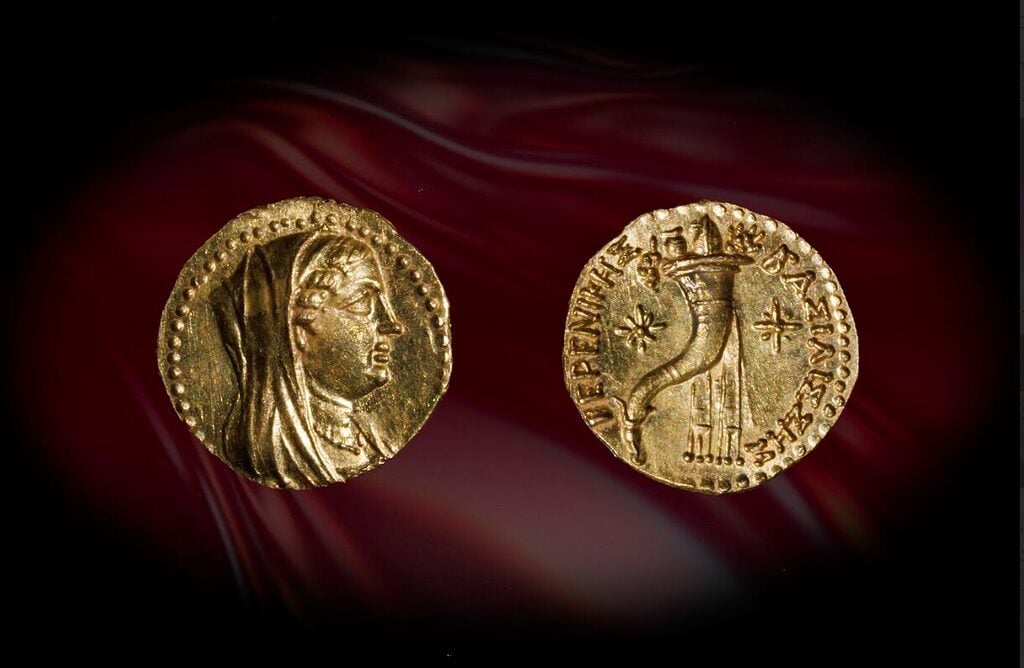
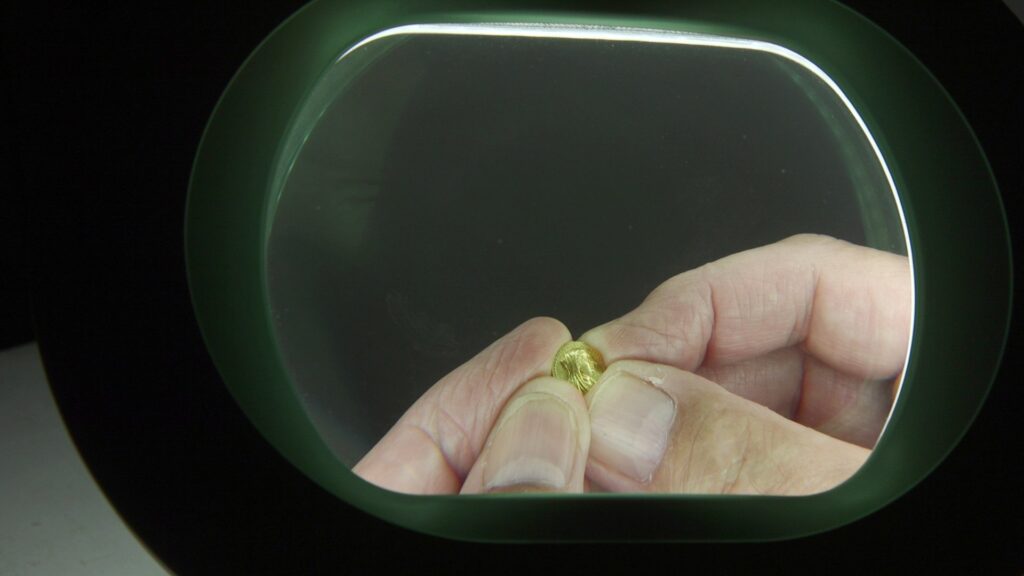
Made of nearly pure gold, the coin shows Berenice with a crown, veil, and necklace. Its reverse side depicts a cornucopia with stars and the inscription “of Queen Berenice” in Greek, marking her as a powerful figure in her own right during the Ptolemaic dynasty.
Excavator Rebecca Langler recalled: “I was sifting the soil when I suddenly saw something shining. At first I couldn’t believe it—but within seconds I was running with excitement across the site.”
Watch the discovery:
Scholars note that this depiction of Berenice is rare in Ptolemaic coinage and reflects unusual independence and political influence. The discovery also challenges long-held assumptions about Jerusalem in the Hellenistic era. “Until now it was thought Jerusalem was a small, poor town,” said excavation directors Dr. Yiftah Shalev and Efrat Bocher. “This coin shows the city was integrated into regional centers of power and economy.”
Before coins: Israel’s early silver-based economy
Beyond mosaics and gold, a new study is revealing an even earlier stage of economic history in the Land of Israel—long before coins were minted. Research from the University of Haifa shows that silver was already in widespread use as money more than 3,600 years ago, over 1,500 years before the first coins appeared.
In research published in the Journal of World Prehistory, archaeologists analyzed 19 hoards of silver from Bronze and Iron Age sites such as Shiloh and Gezer, containing ingots, broken jewelry, and cut silver fragments, all weighed for use in trade. Chemical analysis revealed changes in purity over time, including deliberate alloying with copper and arsenic—pointing to both economic adaptation and early counterfeiting.
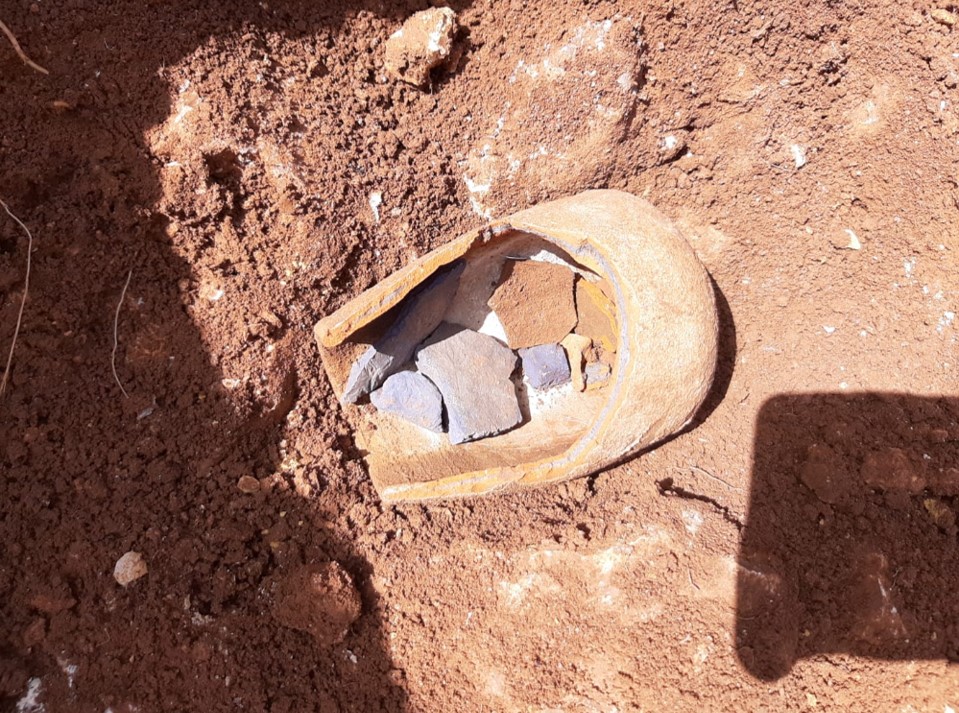
In the ancient Near East, especially in Mesopotamia, silver was already used as a means of payment as early as the 3rd millennium BCE. In the Land of Israel, despite the absence of natural silver sources, dozens of hoards from the Bronze and Iron Ages have been uncovered. For years, scholars assumed these were the surplus products of silversmiths, raw metal stockpiles, or ritual foundation offerings—but the evidence shows otherwise.
Analysis indicates that from the 17th–13th centuries BCE, trade relied on relatively pure silver, but from the 12th century BCE, alloys containing copper and arsenic began to appear—possibly as a deliberate cost-cutting measure or as counterfeits.
“The first coins were invented only in the 7th century BCE, but the principles of a monetary system were already operating here centuries earlier—with concepts such as standardization, control of value, and even forgery. The continuous use of silver points to an advanced economy that developed gradually from within the society itself,” concluded Dr. Eshel.