
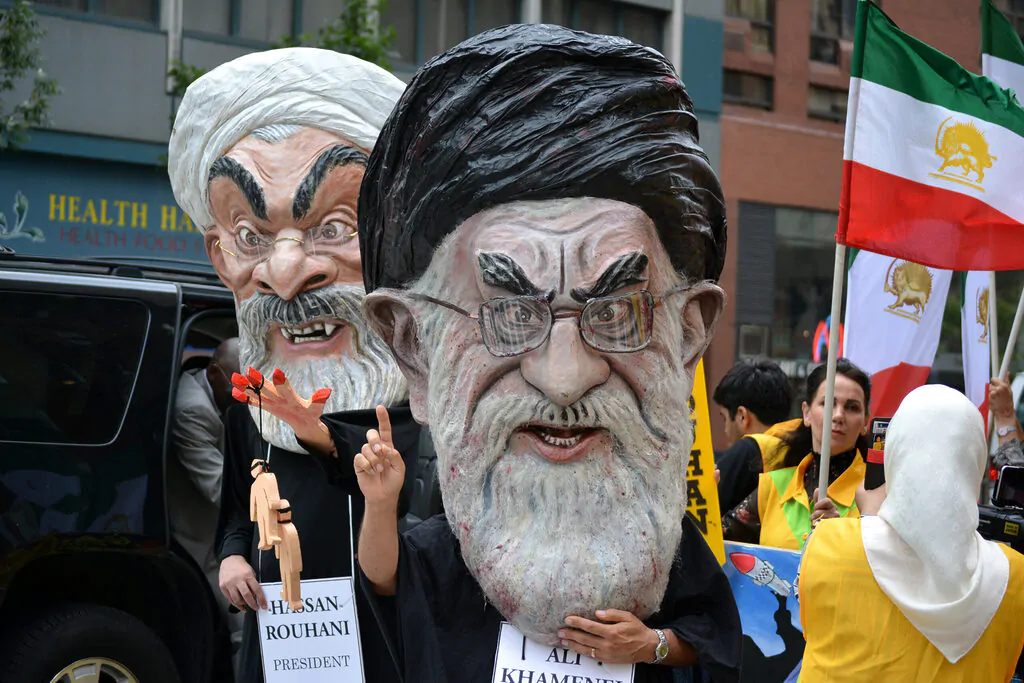
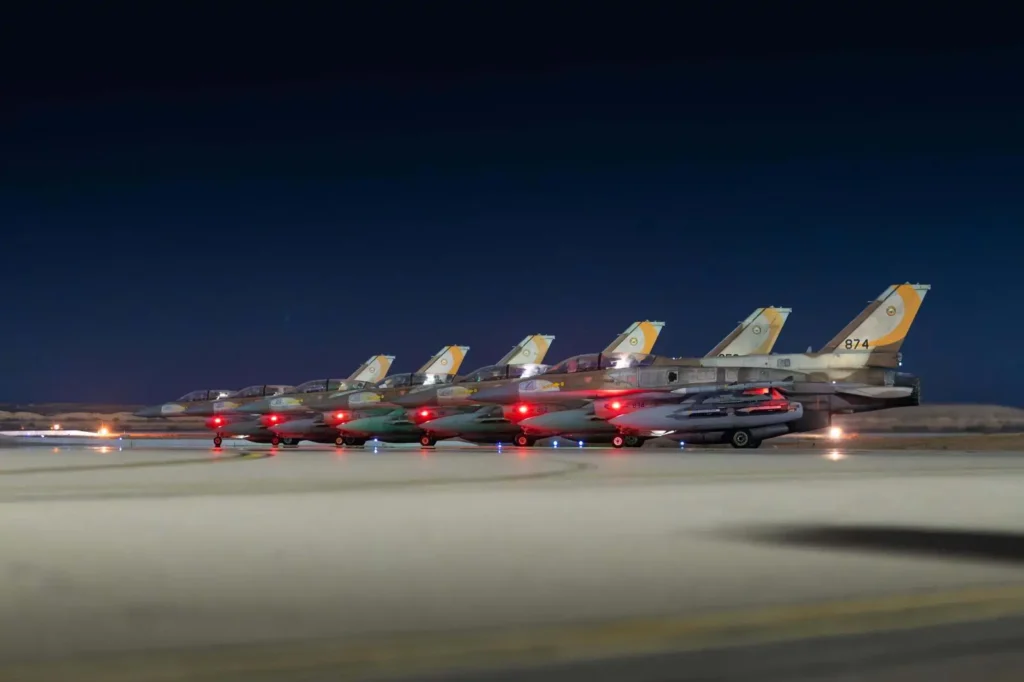
When sirens pierced the skies of Tehran on June 13 and the echoes of Israeli bombings shook the heart of the capital, one of the most secretive moves in the history of the Iranian regime unfolded: an emergency operation to evacuate leader Ayatollah Ali Khamenei underground.
In an isolated and disconnected underground bunker, he waited—watching, silent, and trying to understand what had gone wrong. As his senior officials fell one by one, and Hezbollah retreated in disgrace, Khamenei was left alone in the face of one of the gravest existential threats the Islamic Republic has known since its founding.
For over two weeks, the Supreme Leader disappeared from the public stage, as the pillars of his regime crumbled around him. Figures like Shamkhani and Shadmani were killed or wounded, and the emergency response Khamenei had prepared collapsed. Plans for a massive retaliation were delayed repeatedly, and some launchers never even activated. Social media overflowed with mockery.
Moment of Truth
For 35 years, Khamenei had built Hezbollah for this day of reckoning. Billions of dollars were poured into the organization that became a terror army stationed on Israel’s borders. In the moment of truth, Hezbollah’s series of defeats and the crushing pressure of Lebanese politics took their toll. The investment in the Lebanese arm was lost.
Hours passed before 200 missiles were fired toward Israel. According to a security source, the chain of assassinations in Tehran that decimated the air division’s leadership within the Revolutionary Guards prevented larger barrages.
He added that continued fighting further reduced missile fire due to the damage done to most launchers. For the second time, Khamenei found that his contingency plan had failed. Still, regime officials tried to preserve the thin façade of “regional power,” pretending nothing had cracked. The regime’s mouthpieces struggled to broadcast business as usual.
And yet, at the end of the fighting, Khamenei returned to the camera. His voice trembled, and his eyes looked sunken. “In such a regime, survival is the victory,” explained Dr. Ayelet Savyon of the MEMRI institute (Middle East Media Research Institute) in an interview with newspaper Israel Hayom.
Savyon, head of the Iran desk, noted the absence of key conditions needed for a revolution against a dictatorship—factors such as leadership, weapons, and food supply. “That doesn’t mean there won’t be an uprising in the future, but for now, people will take to the streets for fuel, food, and banks. They will be forced to support Khamenei ‘the victor.’ After that—who knows?”
The Day After
“They will work to rebuild all the damaged arms—nuclear (scientists, facilities, enriched material, tests), missiles, and the resistance axis. The problem is the regime’s ideology, and as long as it clings to it—the ideology of destroying Israel, Western culture, and Western civilization—the efforts will surely aim to restore these systems. Only this time, they’ll be more sophisticated, because they’ve been hit by surprise,” Savyon concluded.
Despite voices calling for stability, experts estimate: the next round is inevitable. Iran will try to restore what was damaged—missiles, nuclear assets, and proxies. But the blow it suffered—surprising, deep, and destabilizing—won’t be forgotten anytime soon.
Between a Quiet Coup and the Search for a Successor
Despite surviving, everyone knows Khamenei’s biological clock is ticking. Many Iranians suspect that in his final days he will pass power to his son. Mojtaba Khamenei is not the eldest son and certainly lacks the required religious rank. Nonetheless, he controls a fortune estimated in billions, maintains extensive ties within the Revolutionary Guards, and serves as the Supreme Leader’s “chief of staff.”
On paper, Khamenei is “prohibited” from appointing a successor, but in practice, the Assembly of Experts—formally responsible for the selection—is firmly in his grip, with members appointed with his approval. It’s doubtful they would oppose his will. Furthermore, senior figures in the Assembly have revealed over the years the existence of a secret, smaller council that oversees the process.
Reuters has named Mojtaba as a leading candidate in discussions within this secret committee. However, the agency also mentioned another contender—Hassan Khomeini, the grandson of the Islamic Revolution’s founder. Unlike Mojtaba, Khomeini is considered an ally of the reformist camp, which advocates moderate socio-economic changes. Ironically, the grandson of the Islamic Republic’s founder is viewed as the more “presentable face” to the West compared to Mojtaba.
“The twilight of 86-year-old Khamenei’s rule, and the question of what comes next, is rapidly approaching,” summarized Iranian affairs historian Karim Sadjadpour in The New York Times. “Despite the desire of most Iranians to live under a tolerant and representative government working for their prosperity, authoritarian power transitions are often contests of brutality, not popularity. Often, the winners are those who wield the greatest coercive force. In Iran, it’s the military—not civilian reformers—who are best positioned to take over the state.”