
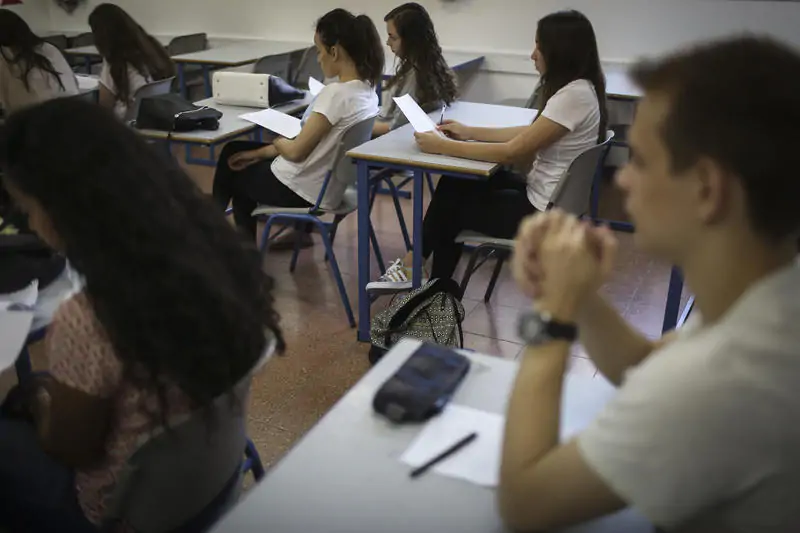
A New York State Regents exam study guide for 10th-grade students has ignited a firestorm over how it portrays the Israeli–Palestinian conflict. The material, part of the unit titled “Decolonization and Nationalism (10.7),” defines Zionism as an example of “extreme nationalism” and describes it as “the belief that Jews need a homeland in Palestine.”
Another section, labeled “Terrorist Acts by Israel and Palestine,” cites “the Jewish settlement movement taking land from Palestinians” as an example—language that has drawn sharp criticism from both political and educational figures.
New York State 10th grade Regent Exam study guide – this is straight out of a Hamas propaganda playbook @NYSEDNews
עוד באותו הנושא
- With Hope and Resilience, Hostage Survivors Embrace Life After Captivity
- Israel Strengthens Global Alliances Amid Regional and International Challenges
- The School Year Opens Across Israel with Historic Returns and New Beginnings
- Hostages No More: IDF Returns Two Fallen Heroes from Gaza in Daring Operation
Who compiled and approved this garbage? pic.twitter.com/nK7gmA2DAd
— StopAntisemitism (@StopAntisemites) June 9, 2025
The Material Was Not Approved and Will Be Reviewed
Brian Conboy, interim superintendent of the Half Hollow Hills school district, addressed the controversy at a school board meeting Monday. He clarified that the materials were neither written nor approved by the district’s social studies department and predate Hamas’s October 7 terror attack. “As previously discussed, the HHH social studies department will be convening over the next two months to revise its curriculum and address these exact issues. All future programs will be reviewed by an external panel of experts, and all teachers will use standardized materials and language,” Conboy said.
He added, “Inaccurate and offensive content like this does not meet our standards of excellence. We can and will do better.”
New York State Education Department Responds: “We Don’t Create Curriculum”
J.P. O’Hare, a spokesperson for the New York State Education Department, emphasized that NYSED “does not create or distribute curriculum or study guides,” adding that the department “will continue to monitor and take appropriate action as necessary.”
Outrage in Congress: “Demonization of Zionism”
Rep. Ritchie Torres (D-NY) condemned the material in a post on X (formerly Twitter), writing that the guide “demonizes Zionism while failing to label as extremism the anti-Zionist ideology that inspired the October 7 massacre—the belief that Jews must be violently expelled from the Land of Israel.”
He continued, “Anti-Israel indoctrination disguised as academic instruction is one of the pathologies of modern education.”
A New York State 10th grade Regents exam study guide demonizes Zionism—the belief that Jews have a right to self-determination in their ancestral homeland—as “extreme nationalism.”
Yet it does not label as extreme the anti-Zionist ideology that inspired the October 7th… pic.twitter.com/r2r2OTZyQW
— Ritchie Torres (@RitchieTorres) June 10, 2025
A Shameful Example of Indoctrination
Rep. Elise Stefanik (R-NY) also criticized the material, accusing Governor Kathy Hochul of failing to address educational bias. “The New York State exam is a disgraceful example of the widespread and ongoing indoctrination of our children, carried out by radical far-left Democrats,” she wrote.
In a follow-up post, she added: “The rot of antisemitism in New York is being backed by Democrats and their failed governor.”
Kathy Hochul and NY Democrats own this vile antisemitism on NYS Regent Exams.
A total amoral abomination!
This raging antisemitism in New York is appeased and promoted by Kathy Hochul and her failing antisemitic NY Democrat Party.
Enough is enough. https://t.co/wmRpkbxkXG
— Elise Stefanik (@EliseStefanik) June 10, 2025
Bottom Line
Despite assurances from school officials and state education authorities, the language and content of the study guide have turned it into yet another flashpoint in the debate over how Israel is portrayed in American classrooms. The open question remains: will the promised corrections be enough to restore trust—and how will Israel be perceived by the students shaping the next generation?