
On Sunday, June 7, 1981, the eve of the Shavuot holiday, the Israeli Air Force launched a strike on Iraq’s nuclear reactor. Eight F-16 fighter jets, accompanied by six F-15s, took off from Etzion Airbase and flew over Saudi Arabia en route to Baghdad. The reactor was destroyed, Iraq’s nuclear program was halted—and the world was stunned. A moment both historic and strikingly relevant.
Iraq’s Nuclear Arms Race
Iraq had been trying to acquire nuclear weapons since 1959. Under Saddam Hussein, these efforts intensified. His aim was twofold: to turn Iraq into a regional power and to leave Israel weakened and under threat. To that end, a nuclear reactor was constructed as the foundation for a weapons program.
Iraq’s nuclear ambitions began in the late 1950s with Soviet support. The Soviets agreed to build a research reactor, supply non-weapons-grade enriched uranium, and train Iraqi engineers. In 1961, an agreement was signed to build the reactor in al-Tuwaitha, near Baghdad.
The reactor was inaugurated in 1968 with a capacity of just two megawatts. It was later upgraded to five megawatts but remained under strict Soviet oversight. Once it became clear to the Iraqis that the Soviets would not provide weapons-related technology, cooperation was abandoned.
In the 1970s, Iraq signed an agreement with France to build two reactors: Tammuz 1 and Tammuz 2. France constructed the reactors and supplied enriched uranium. Israel, recognizing the threat, gathered intelligence and worked to block the deal. The Begin government exerted diplomatic pressure, sent warnings to the United States, and even carried out acts of sabotage and targeted assassinations. Still, the project moved forward.
The Iranian Strike and Increased Security
In October 1980, at the start of the Iran–Iraq War, two Iranian fighter jets attacked the Tammuz reactor, causing only light damage. France sent in teams to repair the site, and Iraq responded by significantly increasing security: missiles were deployed, berms were built, a high blast wall was erected, and helium balloons with steel cables were installed to disrupt potential airstrikes.
Intelligence for the Operation
- Intercepts and Surveillance: Unit 8200 intercepted phone calls and thousands of telex transmissions between Iraq and France, yielding critical technical information about the reactor.
- Covert Disruptions: Between 1979 and 1981, mysterious damage occurred to equipment and personnel linked to the nuclear project, primarily in France and Italy.
- Diplomatic Pressure: Israel lobbied France, Italy, and the United States to halt the deal—but persuasion failed.
- Visual Intelligence: Footage of the earlier Iranian airstrike was passed to Israel and used as a foundation for planning the operation.
Israel’s Preparations for the Operation
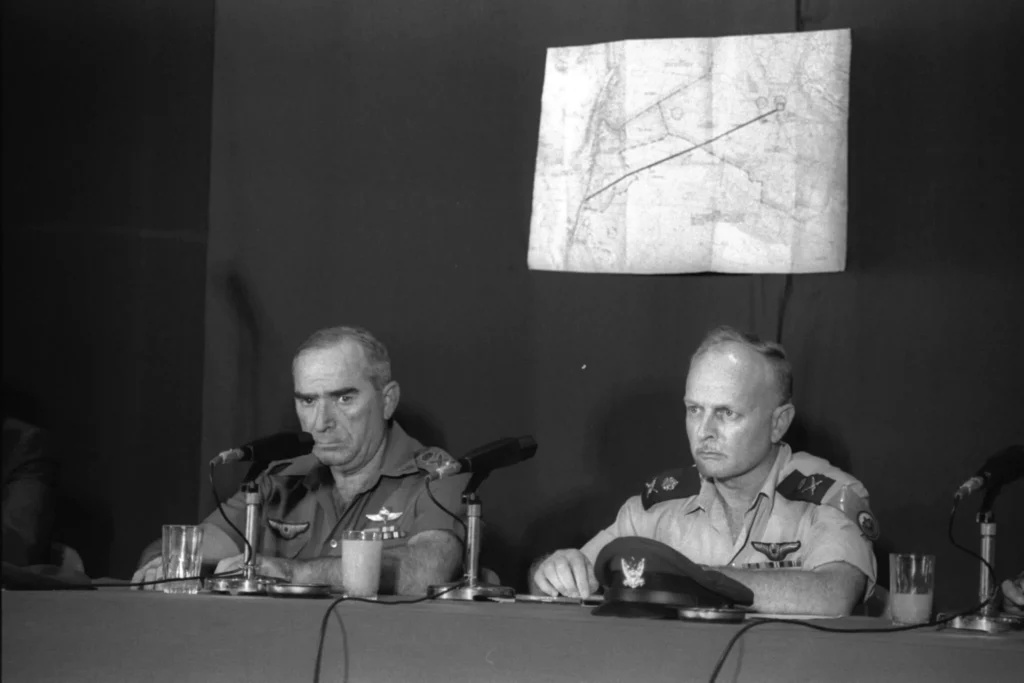
In advance of the operation in Iraq, the IDF formed a secret team named “New Era,” composed of representatives from the Mossad, Military Intelligence (AMAN), and the Air Force. The team reviewed intelligence from multiple sources and began developing an attack plan—maintaining strict secrecy and compartmentalization. Within the intelligence community, opinions were divided: the heads of the Mossad and AMAN opposed the strike, while their deputies and research officers supported it. Chief of Staff Rafael Eitan insisted that a military option be prepared, assigning the task to the Air Force.
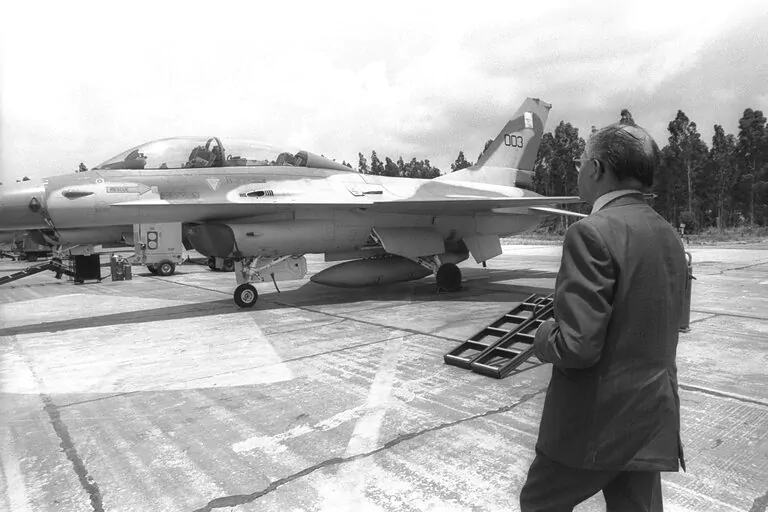
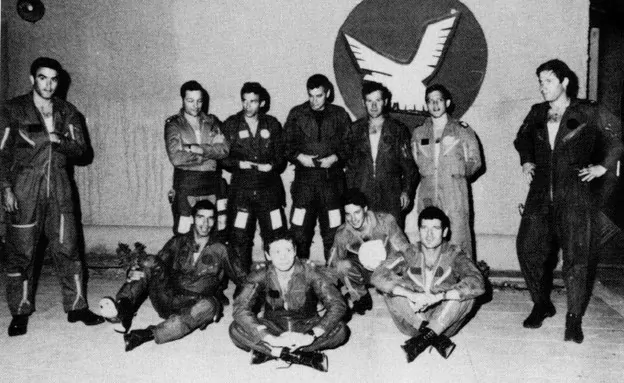
At first, Skyhawk and Phantom jets were considered, but their limited range posed a problem. Following the Iranian revolution, Israel received advanced F-16 jets earlier than expected, and they proved ideal for the mission. In August 1980, after Saddam Hussein threatened to “crush Tel Aviv with bombs,” Israel accelerated its preparations. The operation was initially named “Ammunition Hill.” Pilots underwent precise training, including simulation flights over desert terrain. During one training mission on January 20, 1981, pilot Ehud Ben-Amitai was tragically killed in a mid-air accident.
Postponements Before the Strike
The operation was postponed several times due to concerns over leaks and political pressure. Shimon Peres opposed the strike, sent a letter to Begin, and hoped France’s new president would intervene. Begin delayed the operation again and again until a final date was set: June 7. The operation’s name was changed to “Opera.” To deal with fuel limitations, the jets were refueled with engines running, and the pilots jettisoned fuel tanks mid-air.
The Strike
On Sunday, June 7, 1981, the eve of Shavuot, eight F-16s took off from Etzion Airbase in the south. They flew at low altitude, radio silent, and with their radar systems turned off to avoid detection. The aircraft crossed northern Saudi Arabia, covering a distance of 1,100 kilometers. Six F-15s flew alongside them, providing cover from the south, north, and rear, equipped with electronic warfare and communication systems. Nearing the target, the F-16s dropped their empty fuel tanks and increased speed.
At around 5:30 p.m., the jets climbed to 10,000 feet and executed an attack dive at a 35-degree angle. Each plane dropped two one-ton bombs—half designed to explode on contact with the dome, the other half to detonate after penetrating the structure. Seven of the eight pilots hit their targets directly. Of the 16 bombs dropped, 12 scored direct hits and destroyed the reactor. Iraqi anti-aircraft fire was weak: no missiles were launched, and no interceptor jets were scrambled.
Return to Israel
The planes returned safely to Israel. All landed at Etzion, were inspected, refueled, and flew back to their home bases in time for the holiday. About 60 additional aircraft participated in the operation, including helicopters, backup jets, and surveillance planes. The explosion killed ten Iraqi soldiers and one French advisor.
What Can We Learn?
In the past two decades—and especially since the outbreak of war on Simchat Torah 5784—Israel has grappled with the Iranian nuclear threat. Prime Minister Benjamin Netanyahu has been particularly vocal on the issue. But so far: many words, few actions. Israel has repeatedly chosen to act through sanctions, cyberattacks, and covert operations to delay Iran’s nuclear program, while maintaining coordination with its allies.
There are several reasons Israel hasn’t struck Iran yet: the need for coordination with the U.S., operational complexity, potential Iranian retaliation, and domestic political considerations. Israeli leaders weigh the political and international consequences of such a strike, especially in light of the upcoming U.S. elections and their impact on American policy toward Iran.
So Yes, There Was Criticism
While today’s reality differs, it’s worth recalling the reactions to the 1981 strike on Iraq. The backlash was intense—but in practice, little happened.
The U.S. condemned the attack, claiming it hurt prospects for peace, mainly because Israel had not coordinated the move in advance and had used American-made equipment. The UN Security Council and General Assembly issued official condemnations, with U.S. support. As a result, military shipments to Israel were temporarily frozen—but the freeze was lifted after Israeli elections three weeks later. The media also criticized Israel. A New York Times editorial labeled the action “unjustified and of short-term value.” Indeed.
But there was positive feedback too: despite official condemnations, the U.S. Air Force was impressed with the operation and requested details. American experts were astonished that the mission had been carried out without mid-air refueling.
A decade later, during the Gulf War, U.S. Secretary of Defense Dick Cheney sent a letter of thanks to Israel with a satellite photo of the destroyed reactor. On the image, he wrote: “With thanks and appreciation—you made our job easier in Desert Storm.”
Let Them Turn Up Their Noses
Yes, the situation today is different—but there is much to learn from that historic strike. Israel must find the right path forward—and act swiftly. “And if there are a few bleeding hearts turning up their noses—let them keep their noses turned.” Menachem Begin said this about those who wanted to create a Palestinian state, but the same sentiment applies to those who oppose striking Iran’s nuclear facilities.
Operation Opera – the bombing of Iraq’s nuclear reactor. WATCH: