

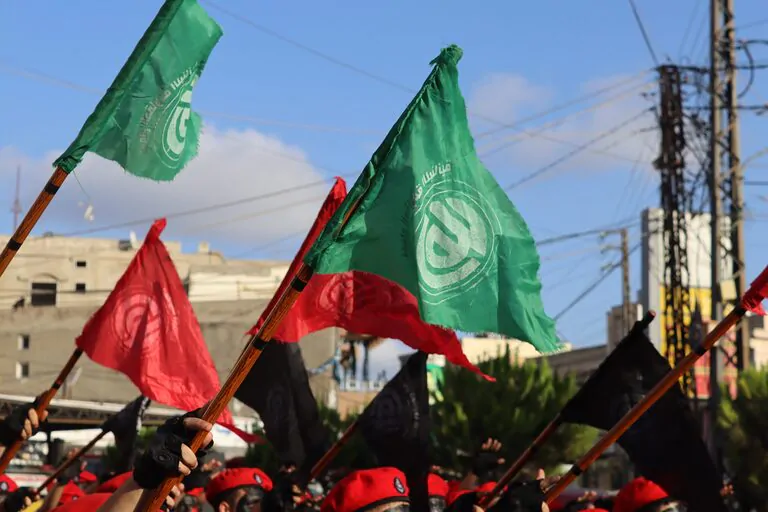
This past Sunday, a rare conference was held in Beirut bringing together Shiite opposition activists in Lebanon, organized under the banner of the “Meeting of Lebanese Shiites.” According to journalist Roi Kais, the event was intended as a challenge to the political and social dominance of Hezbollah and Amal—the two groups that have long controlled the Shiite community in Lebanon.
“Enough with the monopoly on our representation”
Opening the conference, journalist Jad Al-Akhaoui laid out a vision for national reform. “This is an alternative national path that emerges from within the Shiite community,” he said. “It does not seek separatism, but rather aims to redirect the compass toward the state, justice, and participation.”
He added that the participants were not seeking protection or patronage. Instead, they were taking responsibility and showing the courage “to say enough with the monopoly on our representation. Enough with pushing capable individuals to the margins.”

In a scathing critique of Hezbollah, Al-Akhaoui argued that the group has become a “regional player” involved in conflicts unrelated to Lebanon. As a result, he said, the country has experienced “deepening political divisions, isolation from the Arab and international community, and a transformation into a battleground for score-settling instead of a bridge between civilizations.”
The conference also saw the launch of a new initiative called “Toward 2030.” It aims to serve as a civilian political alternative to existing movements, with a focus on strengthening the connection between the Shiite community and the Lebanese state, and fostering integration into the broader national framework—instead of being drawn into foreign regional agendas.
Pressure from across the political spectrum
At last week’s Arab Media Summit in Dubai, Lebanese Prime Minister Nawaf Salam delivered a forceful speech. He declared that the Lebanese state-building project requires “liberation from the duality of weapons”—a direct reference to Hezbollah’s continued armed presence outside the state’s control.
“Our project is based on the link between reform and sovereignty, which demands exclusivity in arms,” he said. Salam warned that the current situation “has led to dual decision-making and the loss of the national state project.”