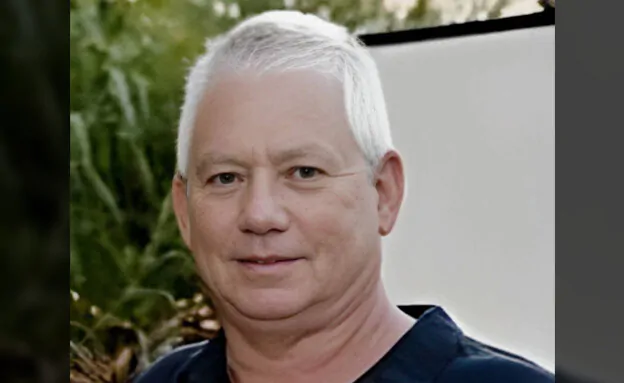
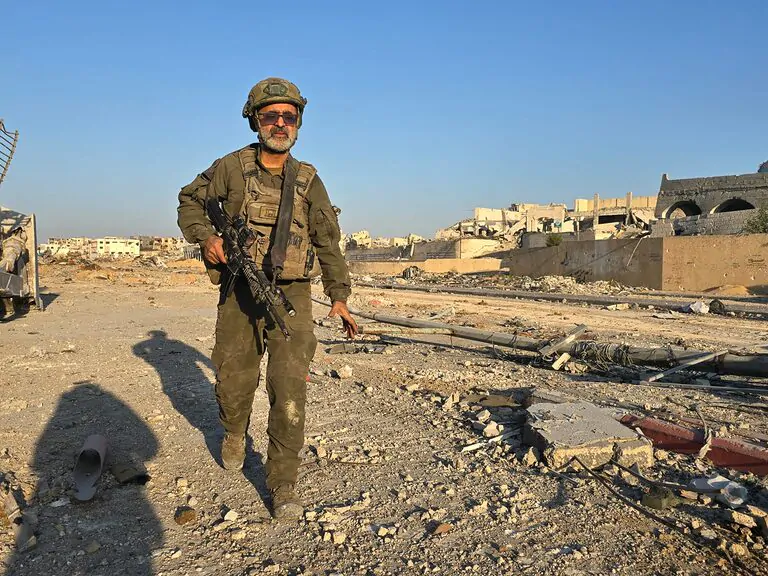
The day after Simchat Torah, Rabbi Avraham Zarbiv, a dayan (a rabbinic judge in a religious court), at the Tel Aviv Rabbinical Court, got into his car and drove to Sde Teiman.
“Everyone saw clearly what happens when, even for one day, there isn’t a functioning army,” he says. “There was real fear – maybe this was the beginning of the destruction of the Third Temple.”
He wasn’t called up. No orders were issued. But in Sde Teiman, he was already known – from his past service as a fighter in the Givati reconnaissance unit, from earlier operations, and from long-standing familiarity.
A Dayan in a D9
Within days, he was back in action: first with observation teams, and later as one of the founding members of the combat engineering (tzma”h) unit.
He learned something he had never done before – how to operate a bulldozer – right there on the ground. Before long, he was a fully active D9 operator, serving on the front line. Eventually, he developed a method for efficient demolitions – a method that would go on to save soldiers’ lives.
“This wasn’t a rational decision – it was burning inside me. I couldn’t sit at home while soldiers were fighting for our existence,” he explains.
But Rabbi Zarbiv, 53, a father of ten and grandfather of eight, brought more than combat experience with him to the battlefield. He carried with him entire worlds of spirit, Jewish law, and Torah – which he wove into each day and night, between dangerous engineering operations and efforts to uplift the morale of the troops.
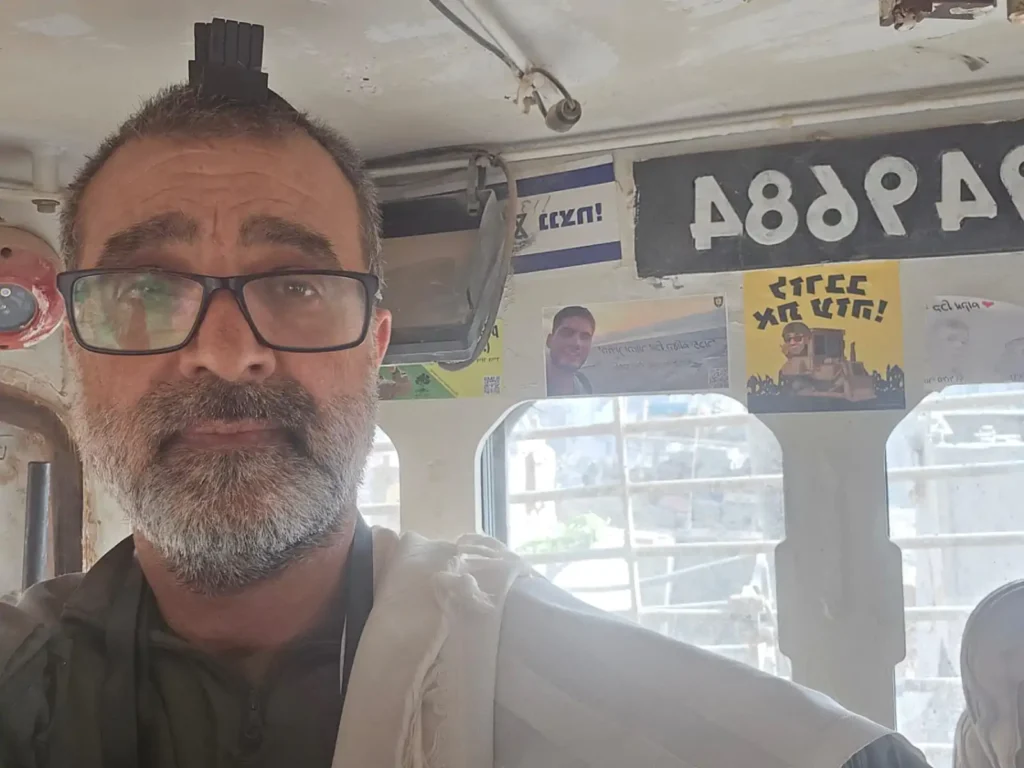
A Backpack on His Back, holy book in Hand
“Not a single day in the army went by without me learning Mishnah and halacha,” says Rabbi Zarbiv. Even during his regular army service in the reconnaissance track, carrying 60–70 kg packs, he refused to leave his books behind.
“On one march we covered 150 kilometers. When the company commander checked what each of us was carrying, he found my Mishnah Berurah. It wasn’t a compact edition like they make today – it was big. He said to me: ‘You’re not taking that.’ I told him: ‘If it doesn’t come with me – I’m quitting. This is a volunteer unit, right? So I don’t have to finish the course.'”
The commander didn’t believe him – but found a solution. He sent a jeep to bring printed copies of the book for him to use in the field. “That was my stand back then. And I’ve always moved between these worlds – and never felt a contradiction.”
Halachic Questions from Gaza
Since then, his military service has always been accompanied by learning – but this year in Gaza, that connection took on a new meaning.
Even after long hours maneuvering a bulldozer in hostile terrain, he found time to strengthen the spirit of those around him.
“I sat with the soldiers, talked to them, answered halachic questions. On Shabbat, I would give a talk – to remind everyone why we’re here.”
Watch Rabbi Zarbiv recite the Traveler’s Prayer from his D9:
A Double Mission
Rabbi Zarbiv sees no essential difference between operational action and spiritual support.
“It’s a dual mission – both in combat and in spirit. When I arrived at a team that had lost five soldiers, I came to them after a full day of maneuvering and spoke with them. I wasn’t embarrassed. It’s like losing five brothers – they need someone to talk to.”
Hundreds of religious soldiers turned to him with halachic questions during the fighting – about meat and milk, carrying on Shabbat, ritual immersion of utensils.
“Sometimes there are no books. But there’s divine help. You understand the principle, you feel the halacha – and your heart guides you.”
Watch Rabbi Zarbiv recite the blessing of Thanksgiving in Gaza:
A Change in Method Reduced Casualties
In the middle of the fighting, from the ground, a significant change emerged – one not reported in the media: no more dangerous entry into booby-trapped homes – instead, working from the outside.
Rabbi Zarbiv and his colleagues in the combat engineering unit developed a method based on demolishing buildings from the outside using heavy bulldozers. Instead of infantry entering through the front door, the bulldozer would break through the walls of large structures, clear paths, and eliminate threats.
“At first, it wasn’t obvious,” he notes. “But gradually we understood: this is how you protect the lives of the soldiers. You don’t enter, you don’t take the risk. The house collapses – and we move on.”
According to him, since this method was fully implemented, the number of wounded and fallen soldiers during maneuvers dropped dramatically. “Every neighborhood we passed through – we knew we weren’t just fighting, we were saving lives.”
Entering homes on foot – sometimes based on limited intelligence – had exposed soldiers to explosive traps and ambushes.
Watch the method in action:
Shavuot Takes on a New Meaning
For Rabbi Zarbiv, this year’s Shavuot has a deeper meaning than ever.
“I send a daily message about the Omer count, with a photo of me from the field in Gaza,” he shares. “For me, it’s not just a reminder about the calendar – it’s a reminder of purpose. Shavuot is the most important holiday, because without Torah – we have nothing. No nation, no values, no wisdom, and no army. ‘The Lord walks among your camp’ – that’s exactly what I saw.”
A Warm Embrace from the Public
Asked how the public has responded, he smiles. “I didn’t come to preach. I’m not a billboard. I just do what I feel I need to do. I love everyone – and they give that love right back. Haredim, secular, religious – everyone embraces me.”
He emphasizes, “I came to show that you can do both – love the Torah, and love the people of Israel.”
“With Him in Distress”
When Rabbi Zarbiv reflects on what he’s experienced since the war began, he doesn’t talk about heroism – but about responsibility. Not physical strength – but inner strength.
“‘With Him in distress’ – you don’t abandon the people when things get tough. You don’t run from war. You don’t seek comfort. This is a Torah that’s connected to life, to courage, to self-sacrifice.”
He took that Torah with him to Gaza – not just as an idea, but as a way of life.
“If you ask what carried me – it wasn’t physical training. It was the soul. That’s what carried me all the way,” concludes Rabbi Zarbiv.