
As part of efforts to expose Iranian phishing attempts targeting senior Israeli officials, the Israel Security Agency (Shin Bet) today released (Wednesday) a transcript of a WhatsApp conversation in which a foreign agent posed as Cabinet Secretary Yossi Fuchs. The impersonator was quickly unmasked—thanks to the alertness of the Israeli citizen on the other end.
The Iranian impersonator opened the exchange with an elaborate introduction: “I’m Yossi Fuchs, head of the coordination department at the Prime Minister’s Office…” But the first slip was immediate—Fuchs is not a department head, but in fact serves as the Cabinet Secretary.
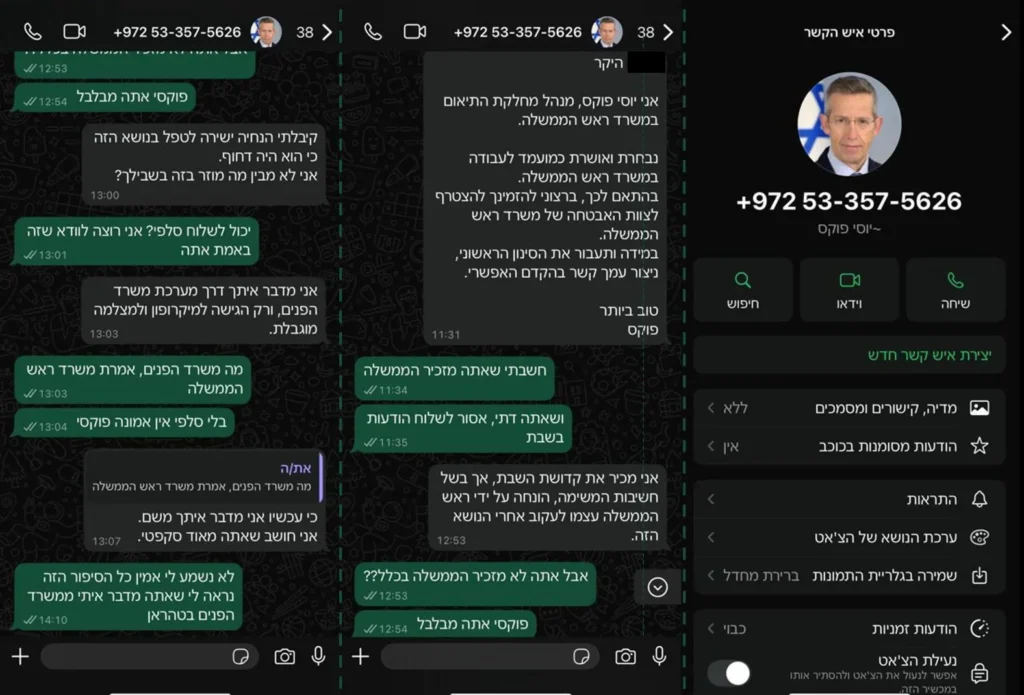
The citizen responded right away, with suspicion: “I thought you were the Cabinet Secretary… and that you observe Shabbat. You’re not supposed to send messages on Shabbat.”
As the conversation continued, the citizen requested a “selfie, to make sure it’s really you”—but the request was dodged. When the impersonator suddenly claimed the conversation was happening through “the Interior Ministry system,” the citizen pushed back: “What Interior Ministry? You said the Prime Minister’s Office… You’re very suspicious.”
The Shin Bet noted that such vigilance can sometimes save lives: “Iran continues its attempts to target individuals in Israel using psychological and technological means. Public awareness is the first line of defense.”
According to Shin Bet data, 85 Iranian cyberattack attempts against Israeli citizens have been foiled since the beginning of the year, most of them aimed at senior figures in the public sector. Targets have included security officials, politicians, journalists, and academics.
The attacks were usually carried out via applications such as WhatsApp, Telegram, and email, involving impersonation of official figures and the use of sophisticated phishing methods to gain access to personal and sensitive information—including emails, locations, photos, and passwords.