
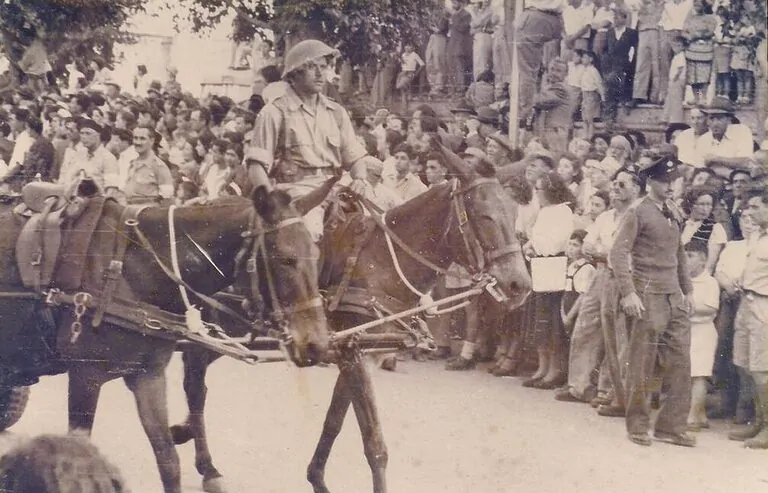
The IDF parade was one of the most prominent national symbols in the early years of the State of Israel—a grand military procession held each year on Independence Day for the country’s first 25 years. In 1997, to mark 30 years since the liberation of Jerusalem, a smaller parade was held. It was the last one to date. This historic moment has present-day relevance.
The Centerpiece of Independence Day
The first IDF parade took place in 1948, during the War of Independence. The following year, it became an annual tradition. Every Independence Day—for 20 years in a row—IDF soldiers marched through the streets of Israeli cities before massive crowds.
The parade became the central event of the holiday. People would arrive early, sometimes the night before, to claim a good spot along the route. They waited patiently and cheered as the soldiers passed by. For many, it was living proof that the Jewish people now had a country—and an army.
The IDF invested heavily in these events. Soldiers canceled training to rehearse. Reservists were called up. Tanks, artillery, and heavy vehicles rolled through the streets. Fighter jets flew overhead. The costs were high, and the preparations complex—security arrangements, coordination, decorations, road repairs. It was for these reasons that the government decide, after the 1968 parade, to stop holding them annually.
The First Parade
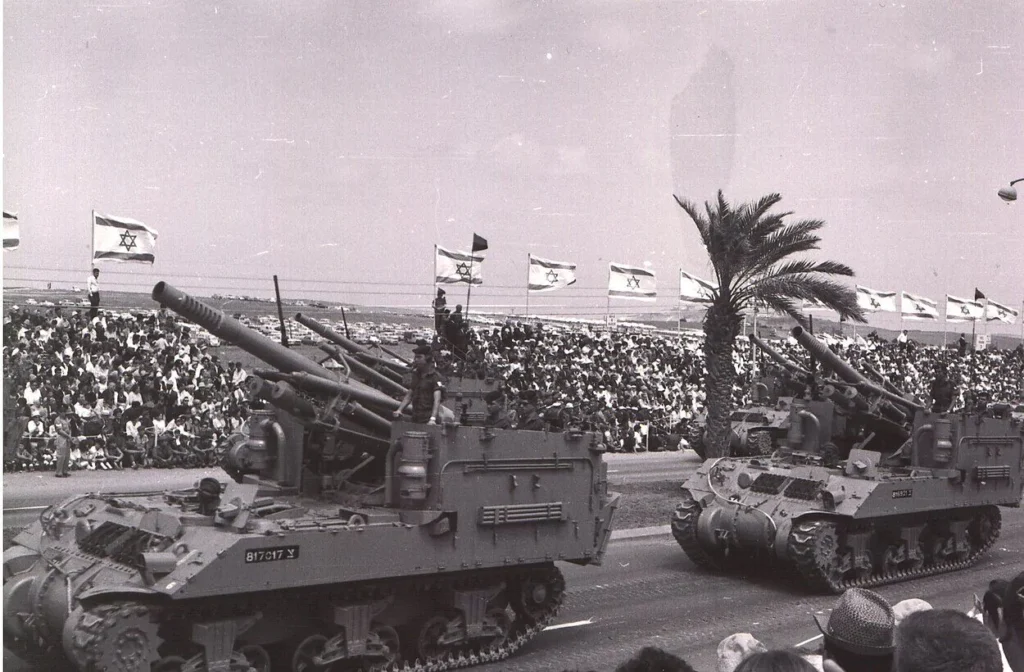
Just three months after the founding of the state, on July 27, 1948, the IDF marched for the first time through the streets of Tel Aviv. This was six days after the beginning of the second truce in the War of Independence—shortly after a series of IDF victories on the battlefield.
The parade made its way along Allenby and Ben Yehuda streets. At 5:00 p.m., the procession set out from Moshavot Square, heading toward the Maccabiah Stadium near the mouth of the Yarkon River. There, the troops assembled before the official platform, where Prime Minister and Defense Minister David Ben-Gurion stood alongside IDF Chief of Staff Yaakov Dori, cabinet ministers, and senior military commanders. For the first time, officers wore standard-issue rank insignia on their uniforms.
The parade featured the full spectrum of military power: flag bearers and marching bands, tanks, armored cars, artillery, mules, and service dogs. Arab army armored vehicles captured in combat were also on display, clearly marked as “Captured.”
Overhead, a squadron of Air Force bombers flew in formation. On the ground, a huge crowd—made up largely of veteran residents and new immigrants—cheered from the sidelines and rooftops. The young IDF was met with enthusiasm and pride. It was the first time the Israeli public saw its army in all its glory.
The Parade That Didn’t March
Israel’s first Independence Day drew about 300,000 people into the streets. All had come to watch the IDF parade. But as the soldiers passed the official platform near Mugrabi Square, the crowds surged onto the parade route. Attempts to stop them failed, and within minutes it was clear the parade couldn’t go on. It was canceled, and the disappointed public dispersed.
The incident became known as “The Parade That Didn’t March.” The parade commander had requested barbed wire barricades, but the head of the IDF’s Manpower Directorate refused, fearing they would remind viewers of the Holocaust. Instead, ropes were strung—which proved ineffective.
A commission of inquiry was established following the failure. Three officers, including the parade commander, were dismissed. Two and a half months later, on July 17, 1949 (20 Tammuz 5709), a make-up parade was held. This time everything went smoothly, and the press emphasized the success.
Footage from the parade that didn’t march:
IDF Parades in Jerusalem: A Historical Overview
Most parades over the years were held in Tel Aviv, Haifa, and Be’er Sheva. But in honor of Jerusalem Day, we’ll focus on those that took place in the capital.
1950 (5710): On Israel’s second Independence Day, the parade was held in Jerusalem to express Israeli sovereignty in the city. Under the terms of the armistice agreements, it was limited to foot soldiers, jeeps, and light artillery.
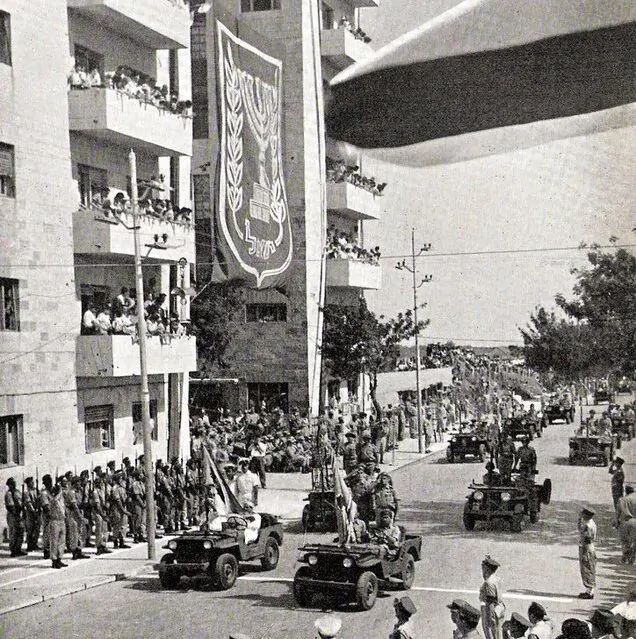
1951 (5711): The parade was again held in Jerusalem, this time including Sherman tanks—in breach of the agreement. It would be the last parade in the city until 1968.
1958 (5718): For Israel’s 10th anniversary, the “Decade Parade” was held in Jerusalem. It began with a formation at Givat Ram and continued with a march through the city. Jordan responded by deploying tanks, but the event passed without incident. Among the equipment on display were AMX-13 and Sherman tanks.
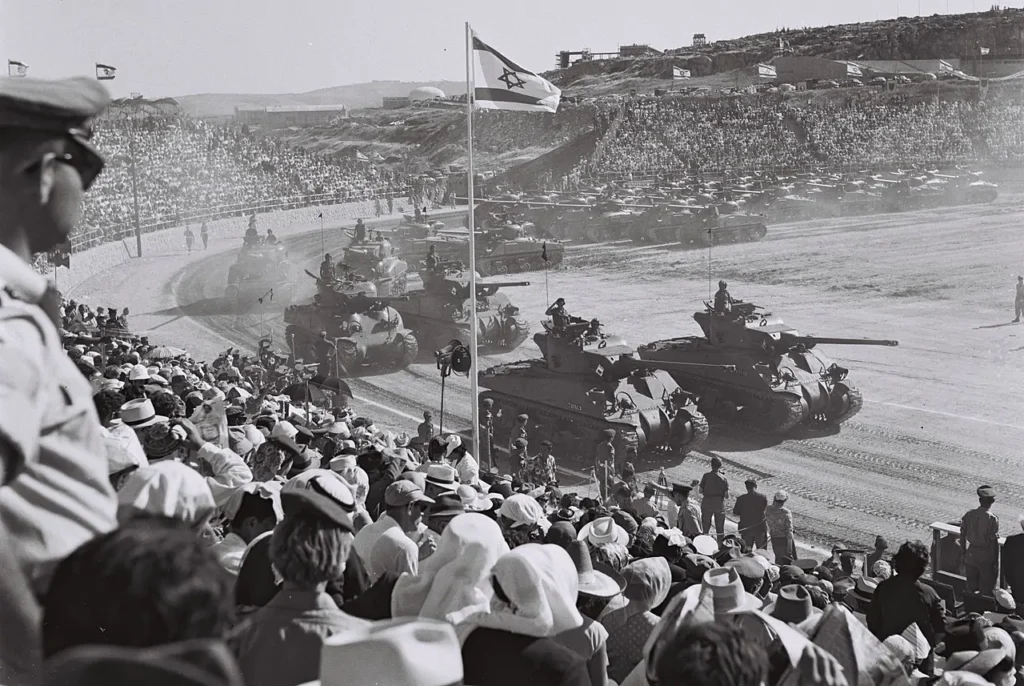
1961 (5721): Another scaled-down parade took place in Jerusalem. Despite pressure from Jordan and Western countries, the IDF showcased the Centurion tank for the first time. The Armistice Commission condemned Israel.
1967 (5727): A “small parade” was held in Jerusalem only three weeks before the outbreak of the Six-Day War. A mere 1,600 soldiers participated, but some 200,000 spectators showed up. Meanwhile, ominous intelligence warnings were coming in from the Egyptian front.
1968 (5728): Following Israel’s victory in the Six-Day War, a massive, celebratory parade was held in the unified Jerusalem—the largest in Israel’s history. It featured 4,500 soldiers, hundreds of military vehicles, and a flyover of 400 aircraft. The parade was broadcast live—the first such broadcast by Israeli television.
1973 (5733): The last full-scale parade. On Israel’s 25th Independence Day, the IDF held a major parade in Jerusalem, covering a 25-kilometer route through the northern part of the city. It included a large-scale flyover of around 400 planes and new artillery systems. Among the armored vehicles were Soviet T-55 tanks captured in the Six-Day War and refurbished for IDF use. The parade was held amid a “Blue and White Alert” due to warnings of an Egyptian-Syrian attack. In hindsight, the threat was real—and led half a year later to the outbreak of the Yom Kippur War. This was the last official IDF parade.
Attempts to Bring the Parade Back
Proposals to revive the IDF parade for Independence Day were rejected in 1988, 1993, and 1998—marking the 40th, 45th, and 50th anniversaries of the state. However, in 1997, to mark 30 years since the liberation of Jerusalem, a scaled-down parade was held in the capital. It remains the last one to be held to this day.
What Can We Learn?
IDF parades proudly showcased Israel’s military might—tanks, armored vehicles, and aircraft. The scenes were both powerful and stirring. For longtime residents, they were the fulfillment of a dream. For new immigrants, they were a vision of strength and sovereignty.
At times, it feels like our sense of purpose has blurred. What was once the realized dream of generations now seems taken for granted. Where there was strength and sovereignty, we now see weakness and a lack of governance.
Yes, the parades were costly—but maybe it’s time to reconsider. Whether in full form or in some modern adaptation, bringing back the IDF parade could be valuable. It matters inwardly—for national pride—and outwardly, for how the world sees us. The State of Israel is here to stay. With God’s help.