

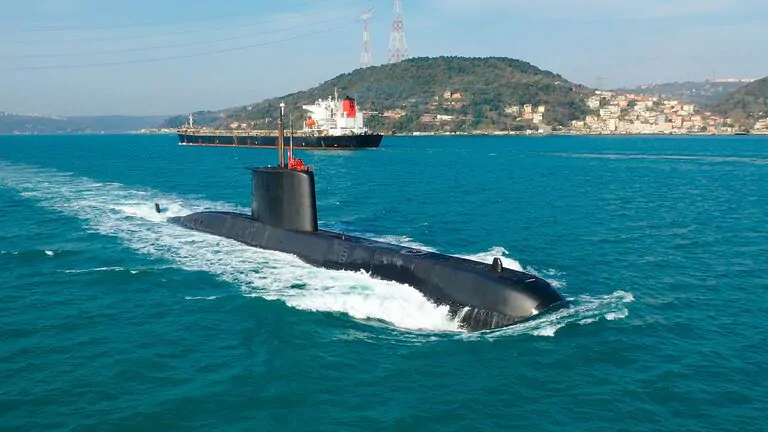
On May 23, 1967, fifteen days before the outbreak of the Six-Day War, Egypt blocked the Straits of Tiran—a narrow sea passage connecting the Gulf of Eilat to the Red Sea. In Israel, this move was seen as a clear casus belli, and it was one of the direct causes of the war.
The Straits of Tiran – and Why They Matter
The Straits of Tiran are a narrow maritime passage connecting the Gulf of Eilat to the Red Sea. It is one of the most strategic places in the Middle East. Whoever controls the passage controls access to the Gulf of Eilat and to the Port of Aqaba in Jordan.
Already in the 6th century, during the time of the Byzantine emperor Justinian, a Jewish settlement existed on the island of Tiran. In those days the island was called “Yotvata.” The Jews charged passage tolls to ships entering the Red Sea through it. From then until today—the importance of the place has not changed.
In the 20th century, the islands of Tiran and Sanafir passed to Saudi Arabian sovereignty. In 1950, Saudi Arabia agreed to lease the islands to Egypt. Egypt wanted to prevent Israel’s free access through the Straits of Tiran, and thereby block the Gulf of Eilat. The move sparked growing tensions.
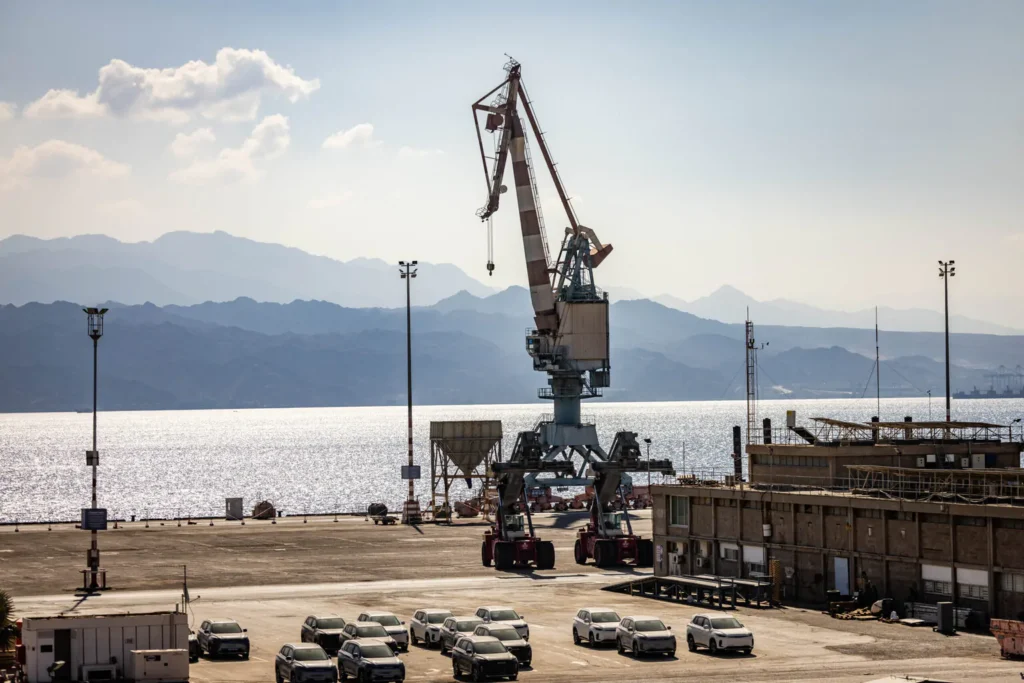
Egypt Blocks – and Israel Responds
In 1955, Egypt closed the Straits of Tiran to Israeli ships. It demanded that every ship request its permission before passing through the strait.
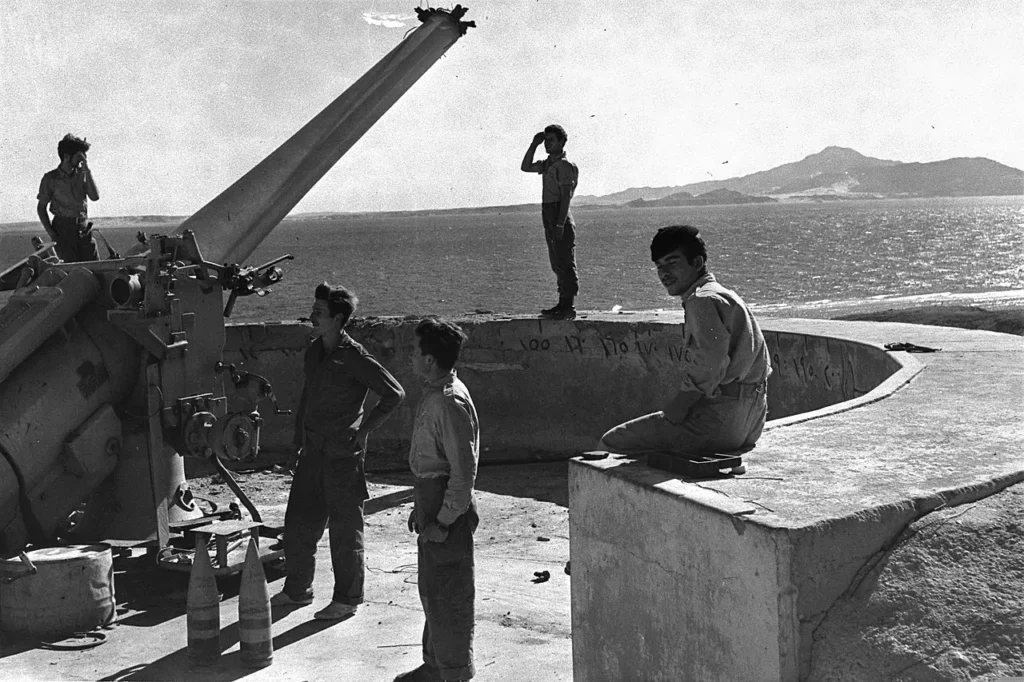
In 1956, on the eve of the Sinai War, Egypt stationed cannons on the coast at Ras Nasrani in Sinai—a position overlooking the strait. This blockade was one of the central reasons for the outbreak of the war.
Israel didn’t wait. Navy forces and infantry troops captured the island of Tiran. A reconnaissance unit from the 9th Brigade reached Ras Nasrani almost without a fight, because the Egyptians had concentrated their forces in Sharm el-Sheikh.
At the end of the Sinai War, Israel withdrew from the island of Tiran and the area, but only after receiving written American guarantees. President Dwight Eisenhower committed to David Ben-Gurion that Israel’s freedom of navigation would be preserved.
The Six-Day War Begins Again at the Strait
A decade passed. Israel continued to sail through the Straits of Tiran. Everything was quiet—until May 1967. On May 23, Egypt once again closed the strait. This time was different. In Israel it was seen as a casus belli—a reason for war. The situation was explosive.
Chief of Military Intelligence, Aharon Yariv, warned:
“If Israel does not respond to the closure of the straits—its credibility and deterrence capability will lose all meaning. The Arab states will interpret Israel’s weakness as an excellent opportunity to endanger its security and very existence.”
During the Six-Day War, Israel captured the island of Tiran and held it until 1982. Since the peace agreement with Egypt in 1979, an international observer force has been stationed on the island to monitor freedom of navigation. In 2016, Egypt and Saudi Arabia agreed to transfer the islands to Saudi control, subject to commitments under the agreements with Israel. The agreement also included a plan to build a land bridge, but it sparked opposition in Egypt. In June 2017, it was officially approved.
Why the Straits of Tiran Are Important to Israel
The Straits of Tiran are Israel’s only gateway to the Red Sea. All commercial shipping from the Port of Eilat to the world passes through them—mainly to Africa, India, and the Far East.
Blocking the strait directly harms the Israeli economy, exports, imports, and trade relationships. Beyond that, it is considered a strategic threat—one that justifies a military response.
What Can We Learn?
The Bab el-Mandeb Strait, at the southern end of the Red Sea, is a major shipping route connecting the Indian Ocean to the Mediterranean via the Suez Canal. Most of Israel’s maritime trade with Asia passes through it—including imports and exports of goods.
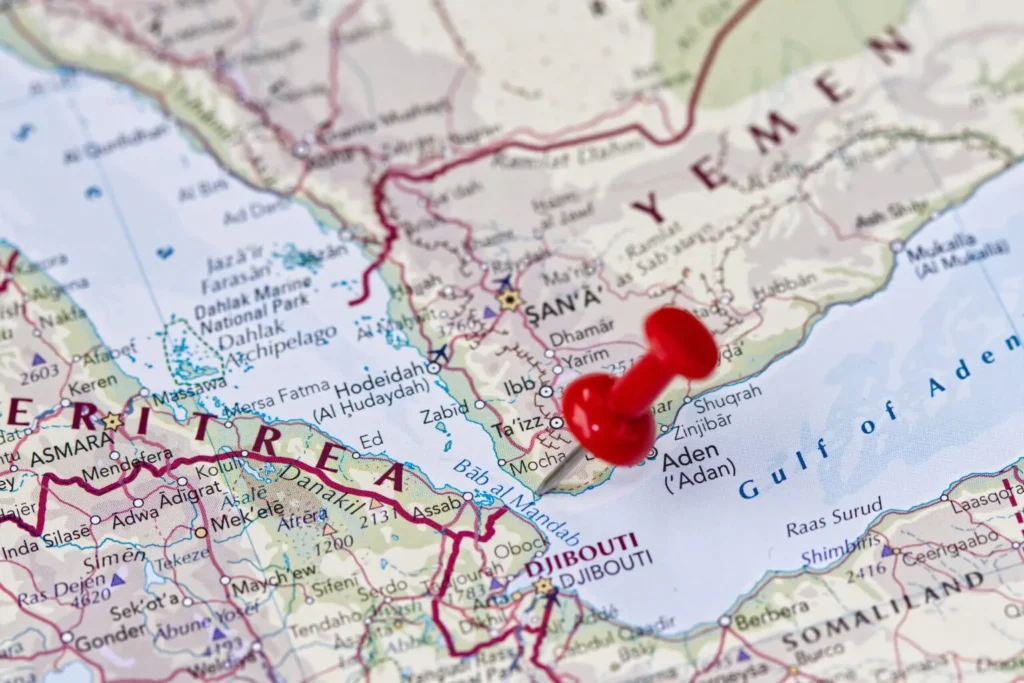
According to Professor Shaul Chorev of the University of Haifa, one-third of Israel’s trade with the world takes place in the Far East. Any disruption at Bab el-Mandeb directly harms trade worth billions of dollars.
Since October 2023, the Houthis—one of Iran’s proxy arms in Yemen—have been targeting ship traffic in the area. They launch drones, cruise missiles, ballistic missiles, and deploy unmanned naval vessels. Some ships have been damaged, others hijacked or sunk.
Such attacks undermine freedom of navigation and also harm Israel’s economy. Delays result in higher shipping costs, driving up prices for goods entering Israel.
Therefore, Israel cannot afford to lose control in the area. Bab el-Mandeb is a strategic interest. As long as Israel’s trade flows through it, Israel must ensure it remains open and secure.
The Defense Establishment Must Think About the Navy
The Houthi threat at Bab el-Mandeb exposed the weakness of Israel’s Navy. The ones actually dealing with the attacks are the United States and the United Kingdom. The Israeli Navy isn’t there—not because it doesn’t want to be, but because it’s not built to operate regularly at those distances.
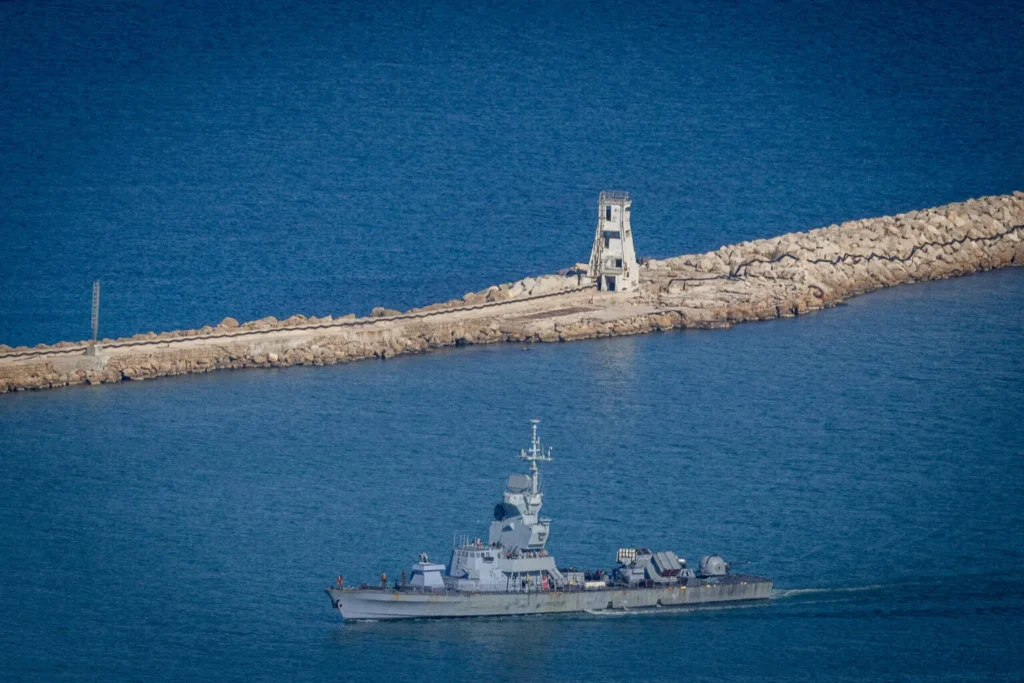
Three Reasons to Expand the Navy
- Ability to Operate at Long Range.
The Houthis operate more than 2,000 kilometers from Israel’s shores. Today, the Israeli Navy cannot reach that far. To protect freedom of navigation in the Indian Ocean and Arabian Sea independently and without relying on foreign countries, Israel needs a naval force that can operate far from home. - Ability to Stay at Sea for Long Periods.
Most of the Israeli Navy’s ships are designed for nearshore operations and short missions. But in a theater like Bab el-Mandeb, what’s needed is a naval force with appropriate weapons that can stay at sea for weeks—not just to respond, but to be present and create deterrence. This lack of capability hurts Israel’s flexibility and readiness. - Strategic Backup in Case of Emergency or Air Force Downtime.
Israel relies heavily on the Air Force as its main decisive arm. But if its strength is compromised—by surprise, a preemptive strike, or operational overload—Israel must have a strong naval force that can operate from the sea, both deep and wide. Right now, it doesn’t.
This isn’t a proposal to turn the Navy into a fleet on the scale of the Air Force. But if Israel wants to maintain its freedom of navigation—it must think big.
A Discussion on the Tiran and Sanafir Transfer Deal. WATCH: