
A year and a half into the war, it seems that little has changed in Israel in terms of its internal divisions. The social crisis and polarization in Israeli society are reflected back in the messages Hamas broadcasts to the Palestinian public. Protests against the government strike a raw nerve and highlight sensitive issues such as the hostages and the enlistment of the ultra-Orthodox.
Hamas Highlights Israeli Social Fractures
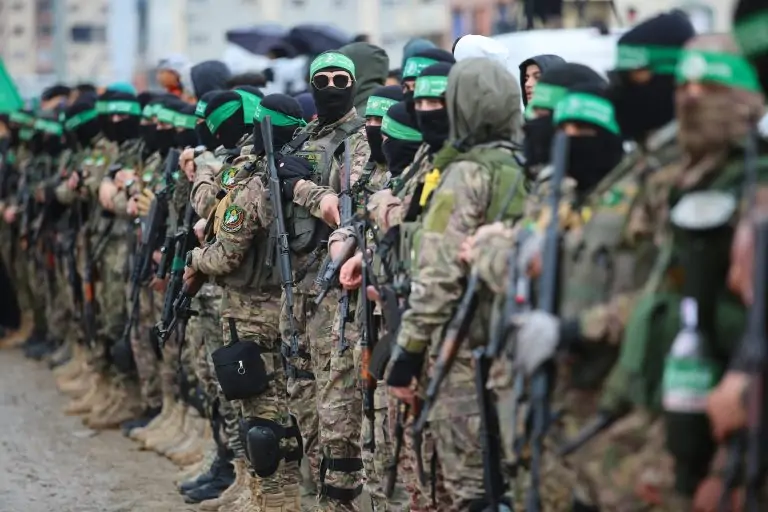
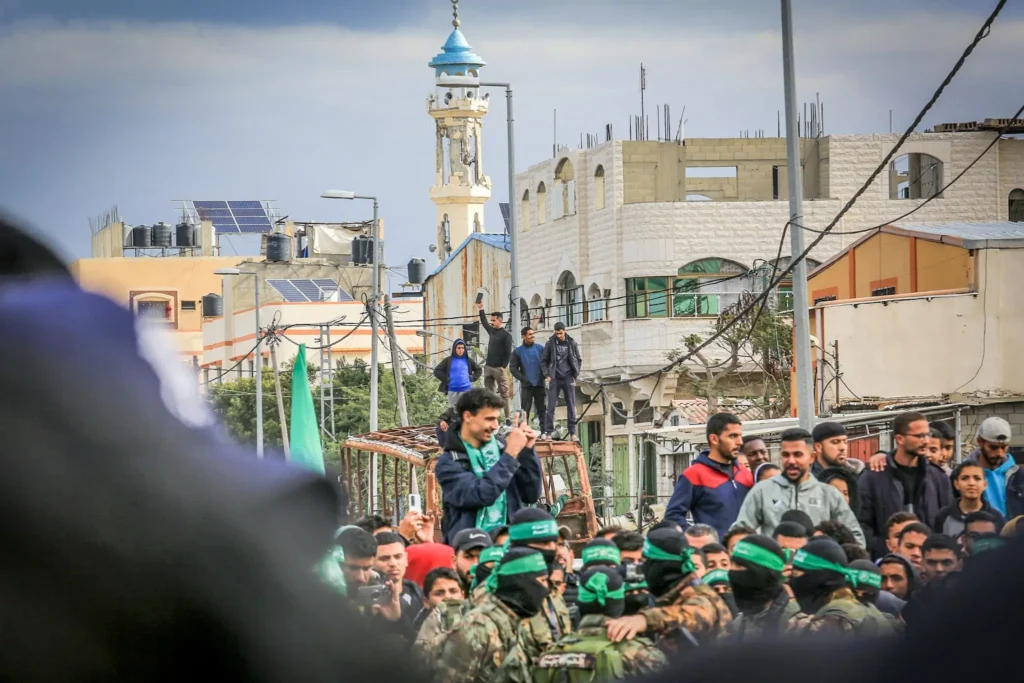
Demonstrations and harsh rhetoric, both for and against the government, are amplified across Hamas’s media platforms. These outlets present a distorted picture of a fatigued and fractured society. In such a climate, Hamas asks the Palestinian public: why should we blink first?
Israel’s internal disputes affect Hamas’s endurance during this grueling war and allow the organization to argue that eventually, Israel will agree to its demands—chief among them a return to the pre-October 7 reality.
Hamas interprets Israeli societal tensions—especially around military conscription, the cost of a hostage deal, and the judicial reform—as signs of crisis and weakness. This perception bolsters their fighting spirit.
Hamas’s known conditions for ending the Swords of Iron war include: a complete Israeli withdrawal from the Gaza Strip; full rejection of any security buffer zone; the release of hostages in exchange for Hamas prisoners according to a negotiated formula; a binding Israeli commitment not to resume hostilities or target the organization’s leadership—all backed by international guarantees.
“The Hostage Weapon”
Through the hostage issue, Hamas seeks to return Israel to the October 6 status quo. These positions are expressed across all Palestinian and Arab media channels—especially Al Jazeera, which consistently promotes Hamas’s stance. The organization’s main spokespeople include Khalil al-Hayya, head of Hamas in Gaza and the man responsible for negotiations in Doha, and Osama Hamdan, the group’s representative in Beirut.
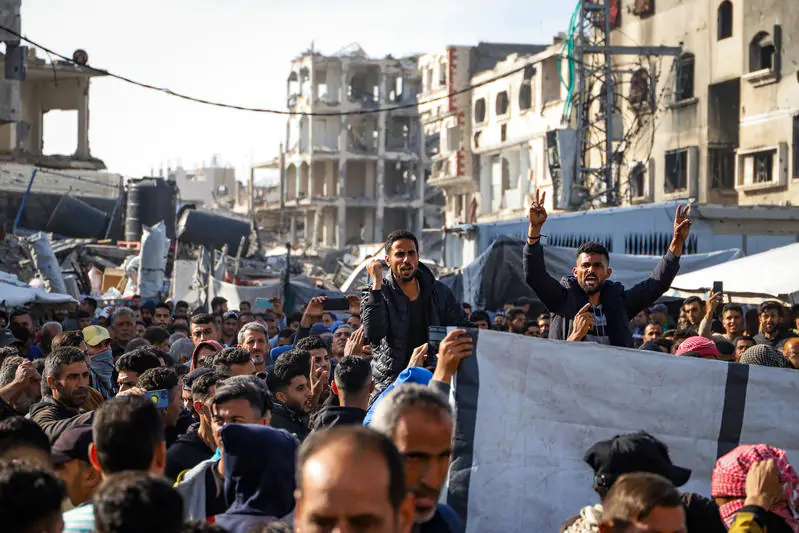
Most Palestinians in Gaza no longer support Hamas as a governing force and view October 7 as a strategic mistake that brought widespread death and another Nakba-like disaster. Protests in Beit Lahia and Beit Hanoun reflect a growing desire among many Palestinians to restore normalcy and end the war.
On social media, many Palestinians are asking how much more suffering and loss Gaza must endure before Hamas realizes that the Palestinian interest lies in relinquishing power and returning the hostages to Israel.
To convince the Palestinian public it is still on the right path, Hamas regularly highlights internal divisions in Israeli society. Hardly a day passes without an editorial or news piece showing anti-government protests, often exaggerated to emphasize strong criticism of Prime Minister Benjamin Netanyahu. To Palestinian viewers, it creates the impression that Israel is on the verge of internal collapse. According to this logic, Hamas believes that ending the war in its favor is only a matter of time.
Hamas Spreads Division Within Israel
One of the IDF’s primary and most vital missions remains the return of the hostages. Hamas, well aware of this, seeks to influence the Israeli public to intensify protests—expanding both their size and spread. Deeply fearful of the IDF’s strength, Hamas attempts to shape the narrative that military pressure will not free the hostages— only negotiations and surrender to their terms.
The hostage videos Hamas releases are aimed at both Israeli and Palestinian audiences. For Israelis, the goal is to stir public pressure on the government to accept Hamas’s terms and to undermine trust in the country’s military and political leadership. For Palestinians, the goal is to encourage continued patience and to buy Hamas more time to break Israel’s resolve. The message is: if we just apply a little more pressure—through psychological warfare and social media—Israel will crack on its own.
In an editorial published on a Hamas-affiliated site, Palestinian journalist Hussam Abu Hamed wrote that the judicial reform in Israel has caused ideological and religious rifts. According to him, the publicized internal disputes and protests prove that Israel is a fractured and unstable society—a result of the “curse of occupation.” One of the recurring phrases on Hamas media platforms is “Israel is collapsing.” On social media, users argue only about when it will happen.
Israeli Media Is Open—Even to Hamas
Israel is a democratic, pluralistic country where freedom of expression and the right to protest are foundational rights. This transparency also makes Israeli media accessible to Hamas, which selectively quotes headlines to persuade a frustrated Palestinian public that their patience will be rewarded.
There’s no doubt that social issues—especially the hostage crisis—are tearing at the fabric of Israeli society. Hamas views this as its trump card, the one that will eventually end the war and force Israel back to the reality that existed before October 7.
By highlighting internal divisions, Hamas argues that Israel will ultimately concede to its demands.
Hamas cynically distributes heartbreaking hostage videos with political messages like “The war continues because Netanyahu wants to preserve his government.” The Israeli public longs to see the hostages return. But Hamas is unlikely to give up this bargaining chip without a significant price—one that will place Israeli society and political leaders in a painful ethical, moral, and security dilemma.
The internal disputes within Israeli society, therefore, influence Hamas’s ability to endure this prolonged war. Presenting these divisions in black-and-white terms enables Hamas to claim that, in this brutal dilemma, Israel will eventually accept its terms.
This article was written by Dr. Shaul Bartal, lieutenant colonel (res.) who served in a variety of roles in Judea and Samaria. He is a senior researcher at the Begin–Sadat Center for Strategic Studies (BESA Center) and a research fellow at the Center for Middle Eastern Studies at the University of Lisbon.