

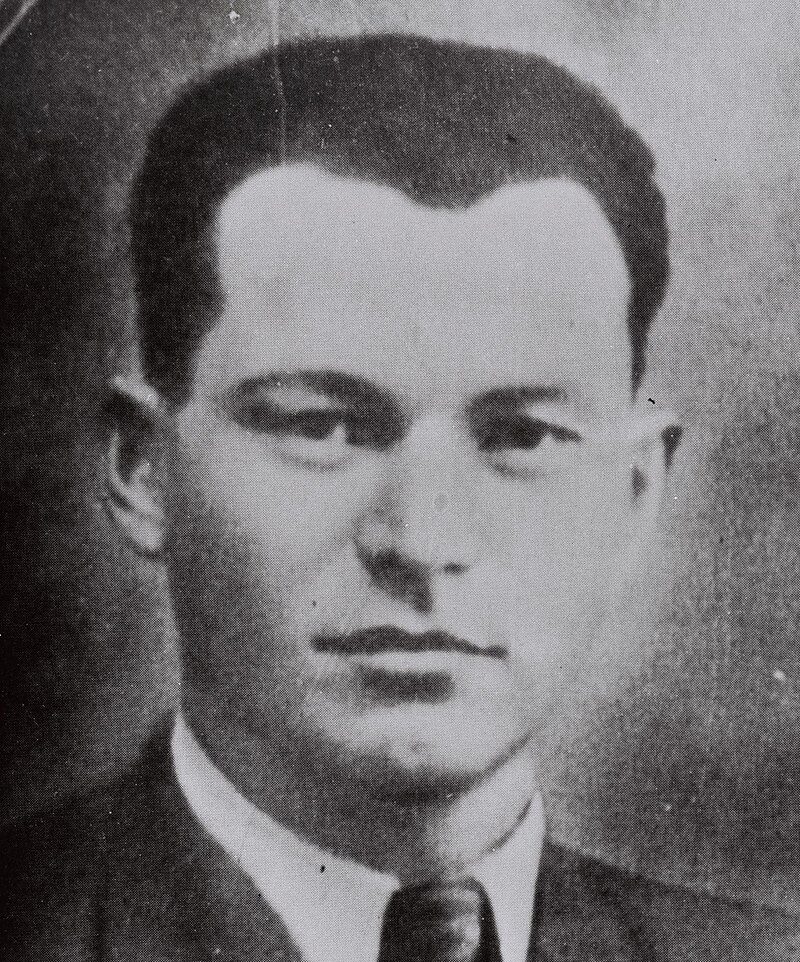
Born in Russia on November 19, 1910, and raised in Jerusalem, David Raziel managed to fight the British, serve prison time, lead the underground organization the Irgun — and then go on a military mission for the same British he had once seen as an enemy . The militant leader known as “General Ben Anat” was killed in an explosion in Iraq on May 20, 1941 — at the age of only 30 years old. His is a moment in history that still resonates today.
Childhood, Youth, and Early Path
David was born in the town of Smorgon in the Vilna district. He came from a rabbinic family, the son of Bluma and Mordechai Raziel — a Hebrew educator who spoke Hebrew at home with his children. At the age of four, the family moved to Tel Aviv, where his father had received a teaching position. During World War I, the Ottoman authorities expelled all Jews with Russian citizenship. The family was exiled to Egypt, returned to Russia, and only managed to return to the Land of Israel in 1923.
As a teenager, David studied at the Tachkemoni School in Tel Aviv. He later moved to Jerusalem and enrolled in the Mercaz HaRav Yeshiva, where he became a study partner of Rabbi Zvi Yehuda Kook and was close to Rabbi Avraham Shapira. Alongside his Torah studies, he pursued Jewish philosophy, mathematics, and philosophy at the Hebrew University.
The Irgun and a Book of Warfare
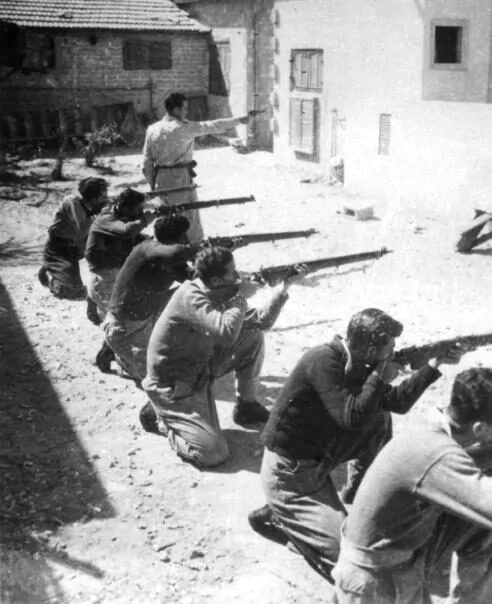
In 1931, Raziel left the Haganah underground organization and became one of the founders of the Irgun — which advocated a more militant approach. When the Arab Revolt broke out in 1936–1939, he strongly opposed the policy of restraint. Alongside Avraham Stern, he co-authored “The Gun” under a pseudonym — a combat manual that became a foundational tool for the underground fighters.
Around that time he married Shoshana Spitzer, the daughter of a prominent Jerusalem educational family. Shoshana ran the Spitzer Girls’ School. Raziel refused to participate in the attempts to unify with the Haganah and remained loyal to the Irgun. He was widely seen as a symbol of resolve and self-sacrifice.
Appointed to Lead the Irgun
In 1938, Ze’ev Jabotinsky appointed him commander of the Irgun. Raziel preferred the title “first among equals” rather than “head of command.” He adopted the codename “Ben Anat,” after the biblical judge Shamgar ben Anat.
Under his leadership, the Irgun carried out a series of retaliatory operations, particularly in Jerusalem. Gunfire attacks, bombings, and acts of sabotage claimed the lives of more than 200 Arabs. The official institutions of the Yishuv (the pre-State Jewish civilian population in Israel) condemned these actions, and political criticism grew increasingly harsh.
Political Activity and Hiding in Jerusalem
In January 1939, Raziel left the country under a false identity and attended a conference in Paris. During the visit he met Jabotinsky, who told him he had waited 15 years for that meeting, and appointed him the head of the Betar movement in the Land of Israel.
Upon his return, he was arrested but managed to escape. In Jerusalem, he often went into hiding and would occasionally sleep at the home of the Shapira family in the Geula neighborhood. Rabbi Avraham Elkana Shapira would give up his bed for Raziel and go out to study at night.
In May 1939, he was arrested again. He was released in October on bail provided by Pinhas Rutenberg.
When World War II broke out, Raziel called for a halt to the struggle against the British to support them instead in the fight against Nazi Germany. This decision stirred controversy. Avraham Stern left the Irgun and founded Lehi, a third underground organization.
The Mission to Iraq and His Death
In May 1941, following a pro-Nazi uprising in Iraq, the British approached Raziel and asked him to lead a commando unit on a sabotage mission. Despite the risk, Raziel insisted on leading the operation himself. The team included Ya’akov Meridor, Yaakov Sika Aharoni, and Yaakov Terzi.
On May 17, they flew out from Tel Nof and landed in Habbaniyah. The British changed the plan and sent the team to gather intelligence ahead of a battle in Fallujah. On May 20, Raziel was killed when a German bomb struck the vehicle he was traveling in, along with a British officer who was escorting him. His comrades completed the mission.
The British buried Raziel in Iraq under the name “Ben Moshe.” Only in 1955 did Iraq agree to transfer his remains — on the condition that they not be brought to Israel. The British moved the coffin to Cyprus, and only in 1961, following an appeal by Menachem Begin to the President of Cyprus, was Raziel’s body transferred to Israel and buried with full military honors on Mount Herzl.
Remembrance and Commemoration
After his death, the IDF posthumously awarded him the rank of Major General. Menachem Begin declared the 23rd of Iyar as the memorial day for the fallen of the Irgun.
Shoshana, his widow, did not know she was pregnant at the time of his death. She gave birth to a son and named him David, but the child died in the hospital. His grave on the Mount of Olives was destroyed during the years of Jordanian rule — as were many other graves in the cemetery.
What Can We Learn?
This morning (Tuesday), in an interview on Kan Reshet Bet, Chairman of the Democrats party and retired IDF General Yair Golan made a provocative remark. Golan said: “A sane country doesn’t kill babies as a hobby.”
History teaches us that Jews do not kill for sport. That kind of cruelty belongs to the Islamic enemy that surrounds us — not to us. In the early 20th century, Jews did not walk the streets of Europe shouting “Shema Yisrael” and blowing themselves up.
Likewise today, the State of Israel does not act out of bloodlust but responds out of self-defense — in the wake of the October 7 massacre. As IDF Chief of Staff Eyal Zamir said this evening: “We are defending ourselves, and for that, we must strike.”
David Raziel, WATCH: