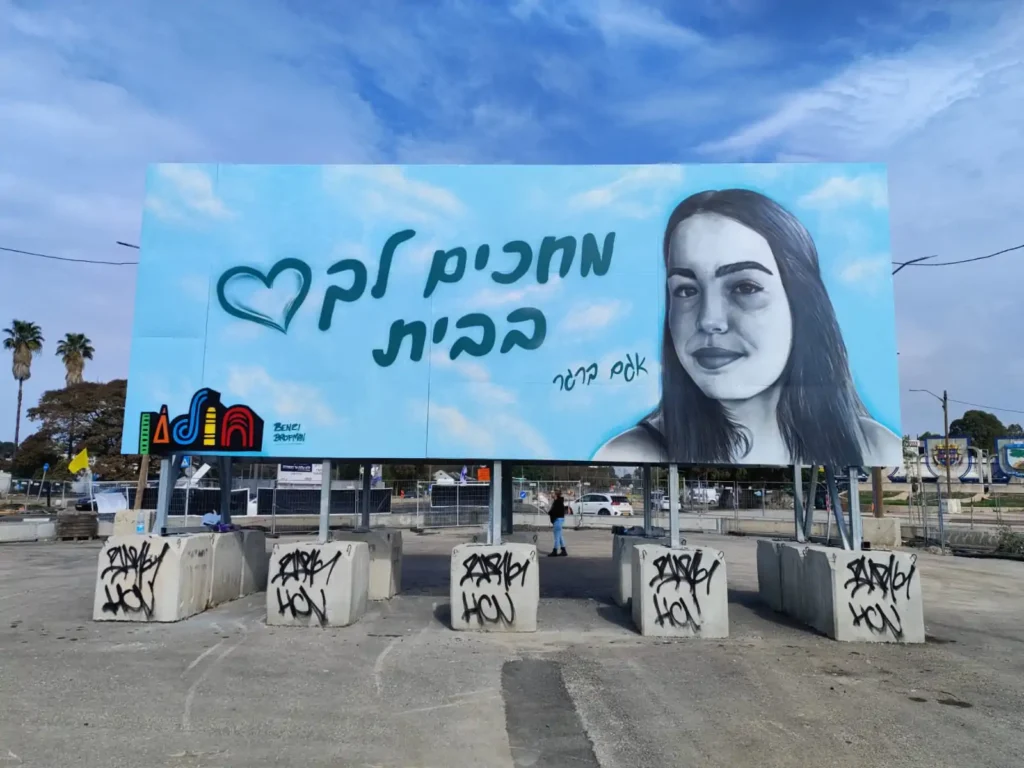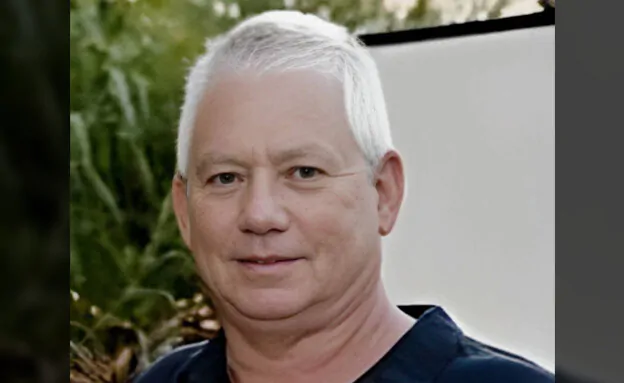
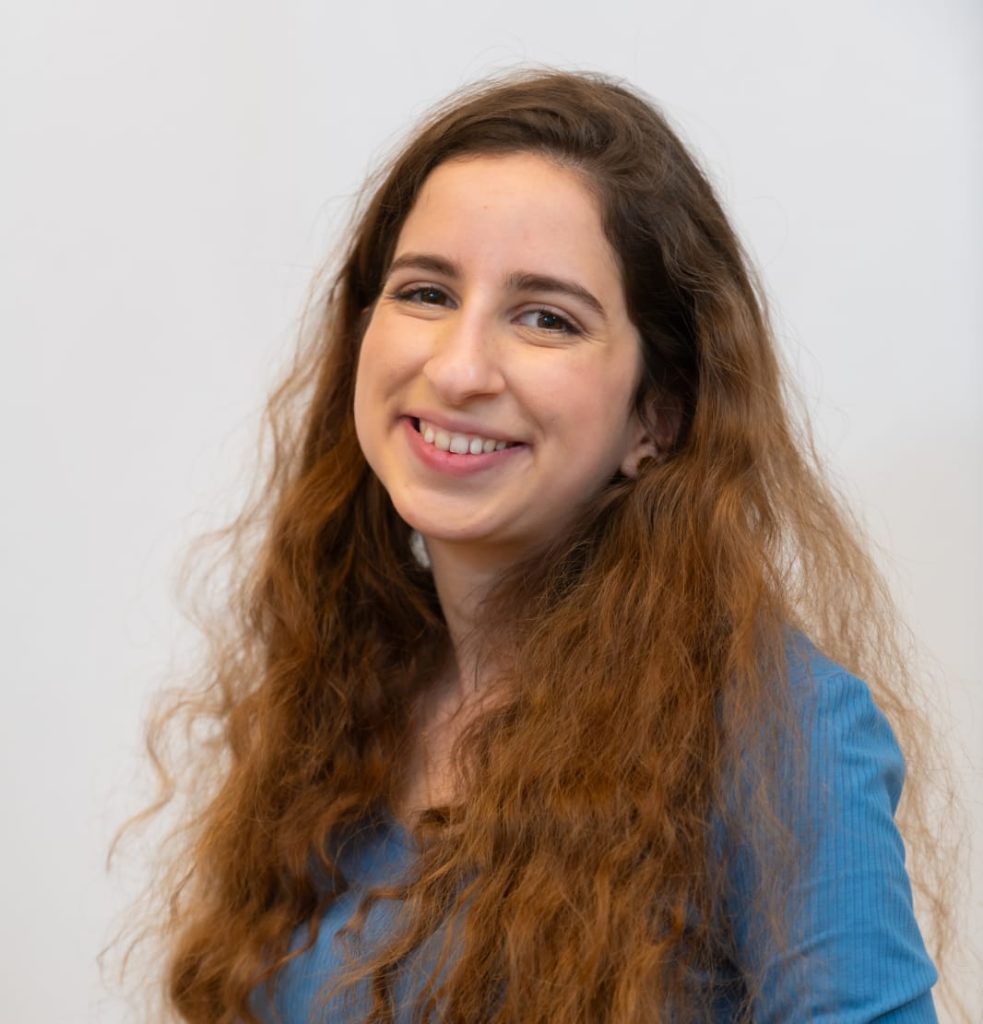
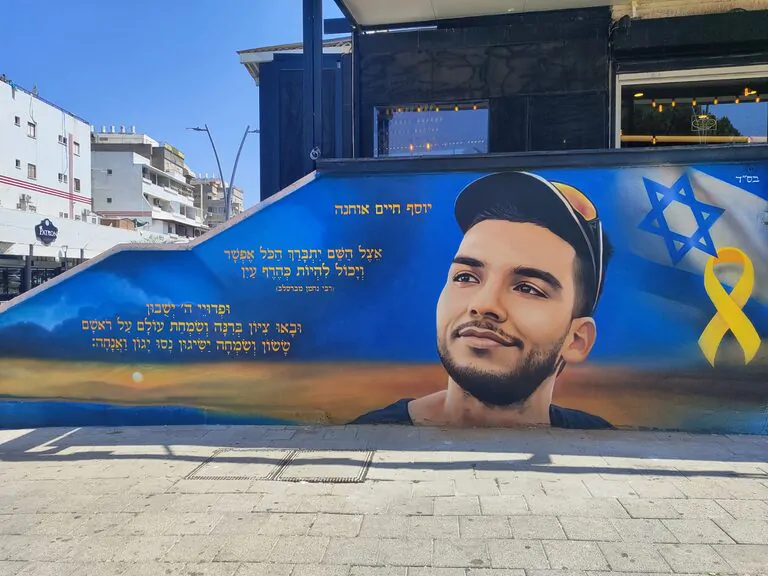
Since October 7, 27-year-old Uri Elman from Rehovot has devoted his days and nights to one mission: reminding the public of the faces of the hostages. He’s not an artist, but a connector. Quietly, he reaches out to families, coordinates with graffiti artists, and communicates with municipalities—all to install memorial walls in the cities where the hostages were born and raised. Each wall, for him, is a calling: to allow the hostages to remain present in the public space, and to keep their faces in the hearts and minds of the Israeli people until they return home.
“How the idea was born”
Speaking with RegaNEWS, Uri described how the emotional initiative came to be:
“On October 7, I evacuated from Kibbutz Kfar Giladi. I was supposed to start studying social work at Tel Hai College, but classes were postponed. I used that time to join civilian initiatives supporting soldiers, raising awareness about the hostages, and helping bereaved families.
One of my close friends is Ilay David. His brother, Evyatar David, is being held hostage by Hamas in Gaza. At the beginning of the war, I suggested doing a graffiti mural for his brother. He told me, ‘Sure, I’d be glad to do it, but let’s do it legally—we need permission from the municipality.’ That conversation sparked the whole idea.”
Why graffiti?
The choice to use graffiti to raise awareness wasn’t obvious. Uri explains that he saw it as an act that connects the street, the people, and the hostages. But that’s not the only reason he chose it:
“Graffiti lasts. It’s not a poster that can be torn down, or a flag that fades in the weather. It’s a powerful, enduring symbol that delivers the message clearly and boldly.”
The first mural
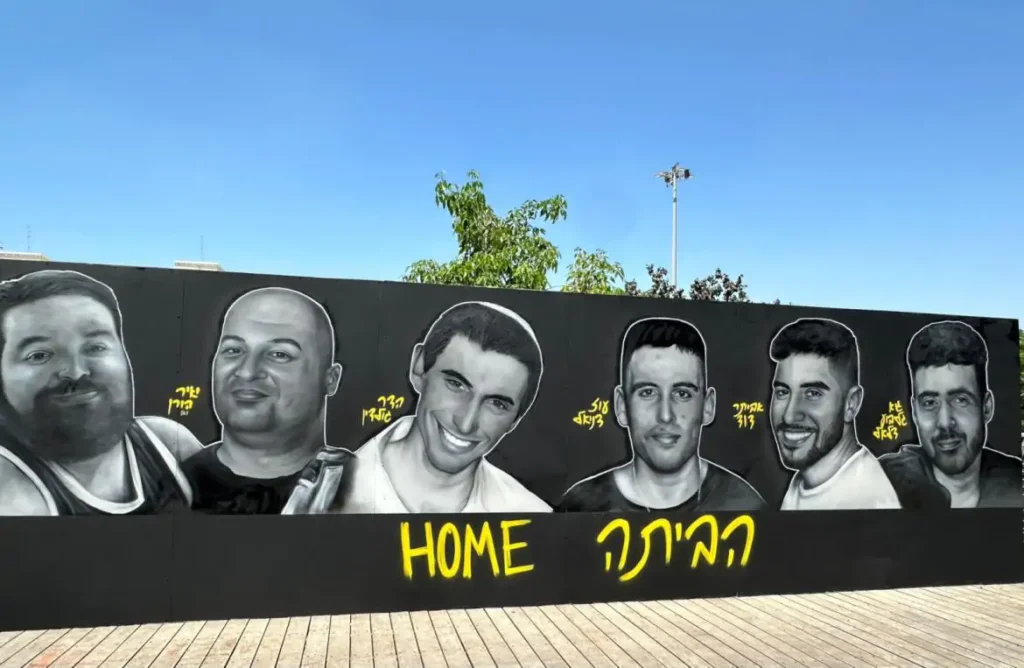
Ilay suggested that the mural feature all the hostages from their city, and Uri took up the challenge. He contacted the families and the municipality, and pushed the complex process forward. He found an artist, and the wall transformed from an idea into reality.
In the heart of the city, the faces of Evyatar David and Guy Galboah Dalal—both from Kfar Saba—were painted, along with Hadar Goldin and Oz Daniel, who were killed and abducted, and brothers Eitan and Yair Horn, kidnapped from Nir Oz. One of the brothers had also grown up in Kfar Saba. It’s worth noting that Yair Horn was returned to Israel as part of the ceasefire and hostage release deal this past February.
From one wall to a national project
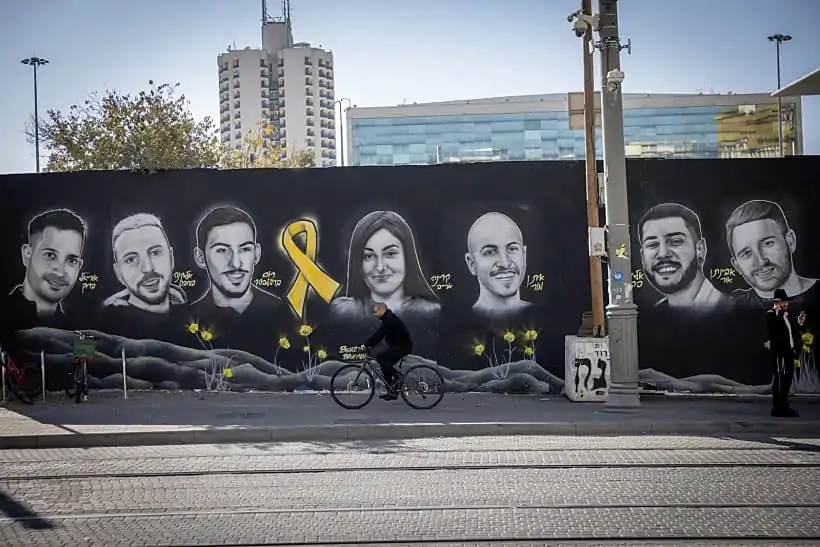
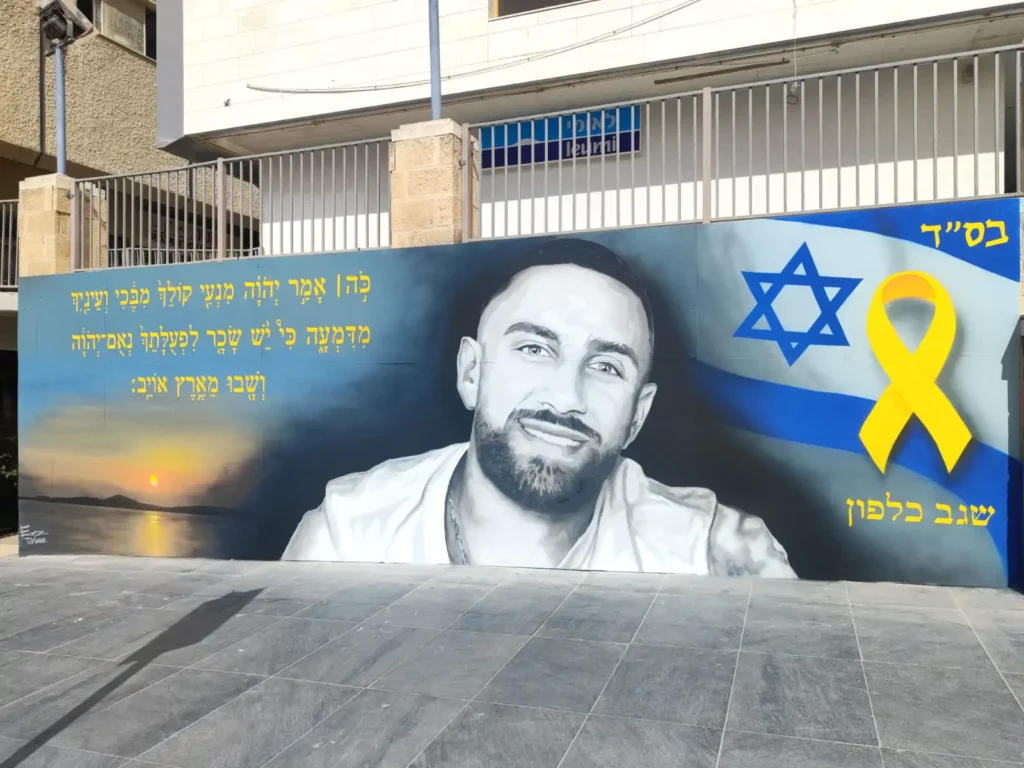
“Once I saw the project achieving its goal—how the public connected with it and was emotionally moved—I decided to expand it to other places,” Elman recounts. Since then, he has contacted dozens of families and helped create murals in cities like Jerusalem, Holon, Dimona, and Kiryat Malachi—where today (Tuesday) a portrait of hostage Yosef Chaim Ohana was unveiled.
All of Israel
Each mural project takes around two to three months to complete, but the emotional reactions they spark last far longer:
“The responses from the public are incredible. Elderly women stop with walkers and canes, stare, pray, and say deeply moving things. Little children look up at the murals. Everyone—across Israel. You realize just how badly they want the hostages to come home. It’s not just a figure of speech—you can actually see it in their expressions, in the glimmer in their eyes, how much they truly want the hostages to return.”
Fame forced on the most modest people
“The families are incredibly moved. You can’t believe how modest they are. They’ve been through the most horrific experience—and now they’re being forced into the public eye, having to take on roles so far removed from their natural humility.”
Dealing with such a sensitive subject also brings emotional challenges:
“I especially remember when we made a wall for Agam Berger. A week later, she was supposed to be released—and then it turned out she had to remain in Hamas captivity for another week.”
“For almost two years now, I’ve seen how their lives have changed. How this event has affected all of us. The grief, the depression, the pain of loss. The wounded, the evacuees, the businesses that were hurt. So many people in Israel now find themselves in a place they weren’t before—sitting at home, but no longer feeling safe,” Uri shares.
And what will happen to the murals when the hostages return?
Despite all the work poured into the street murals, Uri says his biggest hope is actually to erase them:
“Preserving them is the least of my concerns. These are painted on removable walls—and nothing would be more moving than taking them down. The whole point of the project is to raise awareness. Once everyone comes home, its mission will be complete.
It would be a huge joy to remove them. What I’d love most is for people to continue supporting one another and to truly push for the hostages’ release. I honestly feel—and this is no slogan—I’ll only feel like myself again once they return.”