
While the entire nation contends with external threats, a no less significant process is quietly taking place beneath the radar: tens of thousands of Jews from around the world are choosing to make aliya (immigration) to Israel—despite the war. This isn’t a fleeting trend or an emotional impulse. It’s a profound statement of identity, belonging, and hope.
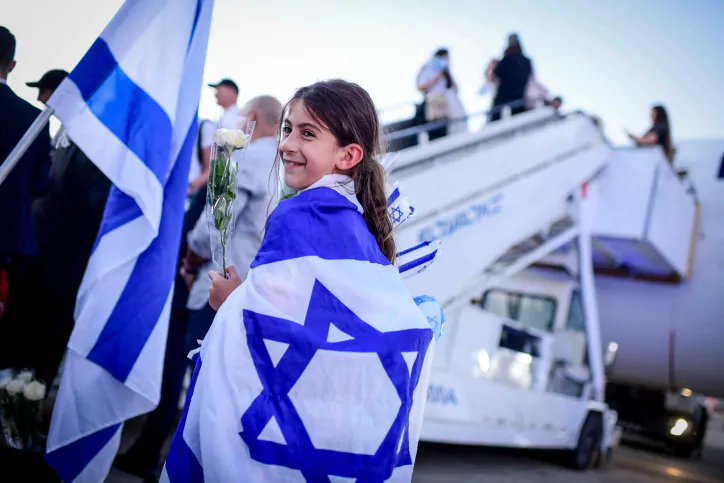
Since the last Independence Day, more than 26,000 people have immigrated to Israel. Most came from Russia, but others arrived from the United States, France, Ukraine, South America, and Ethiopia. This ongoing wave of aliya, unfolding during a complex security situation, underscores Israel’s role as the national home of the Jewish people. And more than that—it presents a moral and leadership challenge for the state.

Choosing to Join the Zionist Project
These are people who didn’t wait for “normal times” to make the move. They left behind their homes, their languages, their jobs, and their familiar surroundings—and chose to join the Zionist project precisely when the situation is most unstable. They are not just “new olim.” They are future citizens, visionaries, and a human resource that can—and must—be part of Israel’s renewed story.
“We must recognize it as a strategic lever in all areas of life”
But for that to happen, our perspective must change. Instead of treating aliya as a technical issue to be “managed,” we need to understand it as a strategic asset across all fields: medicine, high-tech, defense, education, culture, even sports. Every wave of immigration, if managed properly, strengthens the pillars of Israeli society.
The Key Is Integration
The key lies in effective absorption—and above all, in access to the language. Fluency in Hebrew isn’t a luxury; it is a basic requirement for integration. Ulpanim (Hebrew language schools), especially the flexible and professional models operating today, must receive full support. Without command of the language, a new immigrant won’t find work, won’t connect with the education system, and won’t feel at home.
Beyond that, the state must provide a full support framework: accessible housing solutions, employment guidance, emotional assistance, and adapted educational settings. Olim who arrive during wartime are not only coping with the usual challenges of integration, but also with anxiety, uncertainty, and exhausting bureaucracy.

Partners in Building the Nation
Equally important, Israel must speak differently about aliya—not as a budgetary burden, but as an investment in the future. Every immigrant is a potential partner in building, renewal, and growth. And there is another layer: aliya strengthens the crucial bond with Diaspora Jewry—especially at a time when many around the world feel confusion, alienation, or fear about expressing support for Israel.
Seventy-five years after the great waves of immigration that helped build the country, it’s time to take the next step. We must view the current wave not just as “the next generation of olim,” but as the next generation of nation-builders. Those who welcome them with sensitivity, investment, and trust will gain a stronger, more rooted, and more unified Israel.
This article was written by Alex Lellouche, Chairman of the Hebrew Ulpan Forum, veteran immigrant from France, and a leading figure in the field of aliya (immigration to Israel) and integration.