
Against the backdrop of the ongoing war and the vital medical work being carried out on the ground, this morning (Thursday) we publish official data from the IDF Medical Corps.
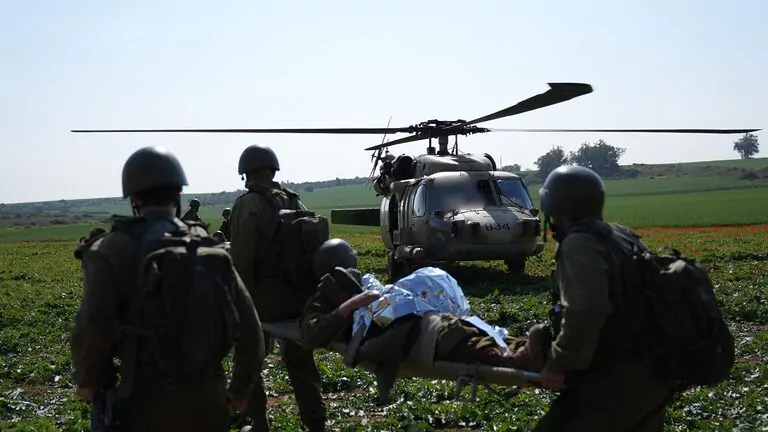
Since the beginning of the war, the corps has been providing medical care both on the front lines and on the home front. Its evacuation times are now considered among the fastest in the world, made possible by the integration of advanced technologies, tight coordination between ground forces and the Air Force, and an increase in the number of senior medics stationed in the field. This life-saving work is the result of technological innovation, inter-branch cooperation, and constant learning.
Rapid Evacuation and Field Treatment
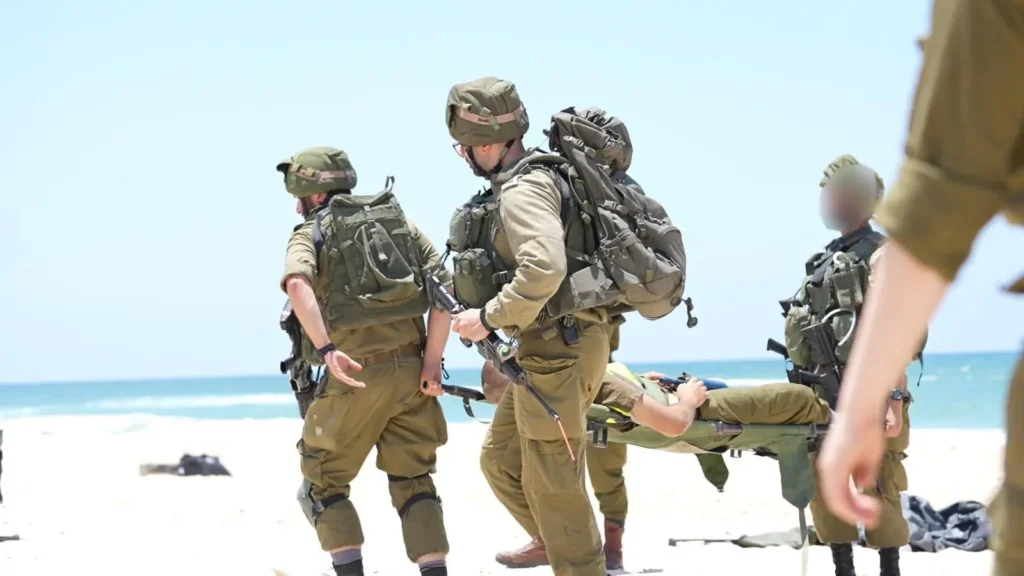
Average response time for a senior medic to reach the field: 1–4 minutes.
Average evacuation time from the Gaza Strip to the hospital:
- Air evacuation: approximately 51 minutes
- Ground evacuation: approximately 61 minutes
Roughly 300 units of whole blood have been administered on the battlefield for the first time.
Around 150 wounded soldiers survived thanks to the use of tourniquets in the field.
IDF Medical Corps | Photo: IDF Spokesperson’s Unit
Fast Evacuation Saves Lives
Medical personnel are equipped with advanced systems that allow for remote monitoring, on-site diagnosis, and seamless integration with Air Force aerial evacuation systems.
The IDF Medical Corps attributes its success to the adoption of advanced technological solutions that reduce response times and enable fast, accurate treatment. Increasing the number of senior medics deployed at the front has further improved the speed and quality of care—often at great personal risk to the medics working alongside combat troops.
Medical and Rehabilitation Support
- Approximately 1,300 soldiers are currently assigned to the RAM 2 unit—2.5 times more than before the war.
- About 80% of career soldiers who were injured have returned to duty, thanks to medical support.
- Roughly 85% of soldiers treated by combat stress teams have returned to service.
- The corps assists wounded soldiers in securing their rights through the Ministry of Defense’s Rehabilitation Department, including accompanying them to medical committees and providing transportation.
- Distribution of medical and rehabilitative equipment such as wheelchairs and medical mattresses.
Mental Health Support on the Battlefield
- More than 1,000 mental health officers (Kabanim) have been deployed since the beginning of the war.
- Kabanim entered combat zones over 80 times to process traumatic events with soldiers in real time.
- Around 800 soldiers—90% of them combat troops—have been treated at the “Ta’atzumot” Clinic, which specializes in post-trauma support.
- About 85% of those treated for combat stress have returned to duty.
Dedication and Commitment
Personnel in the RAM 2 unit work around the clock to provide professional, sensitive, and humane care to the wounded and their families.
They offer close support from the soldier’s initial admission to the hospital until their discharge from military service.
Each case is handed off in an orderly process to the Ministry of Defense for continued care and rehabilitation.
Treatment Under Fire in Gaza
The IDF has released rare footage from medics’ body cameras showing life-saving treatment under fire deep in the Gaza Strip. In the video, one medic is heard saying: “I’m with you—lead me to the wounded. Five casualties, all conscious, ready for evacuation.”
Mental Health on the Battlefield
Another area in which the Medical Corps has shown leadership is mental health. Since the war began, more than 1,000 mental health officers have been deployed, and for the first time, Kabanim have entered combat zones in both Gaza and Lebanon over 80 times.
Their mission: to help soldiers process difficult events in real time, during the fighting itself. This marks a significant shift in treatment philosophy—providing immediate psychological support while still in combat.