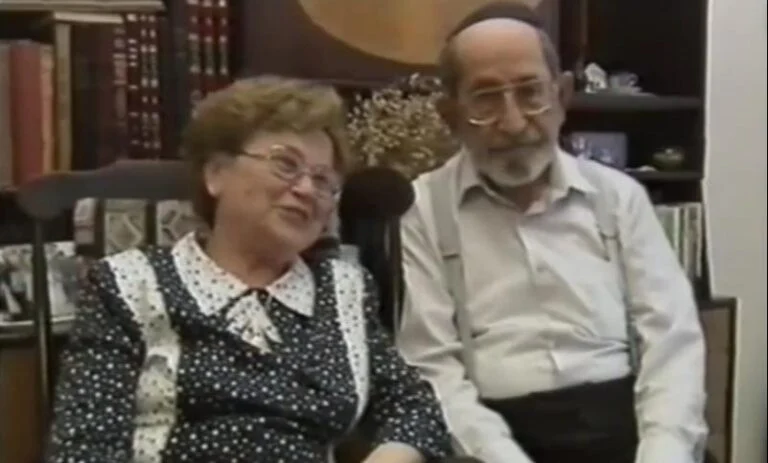
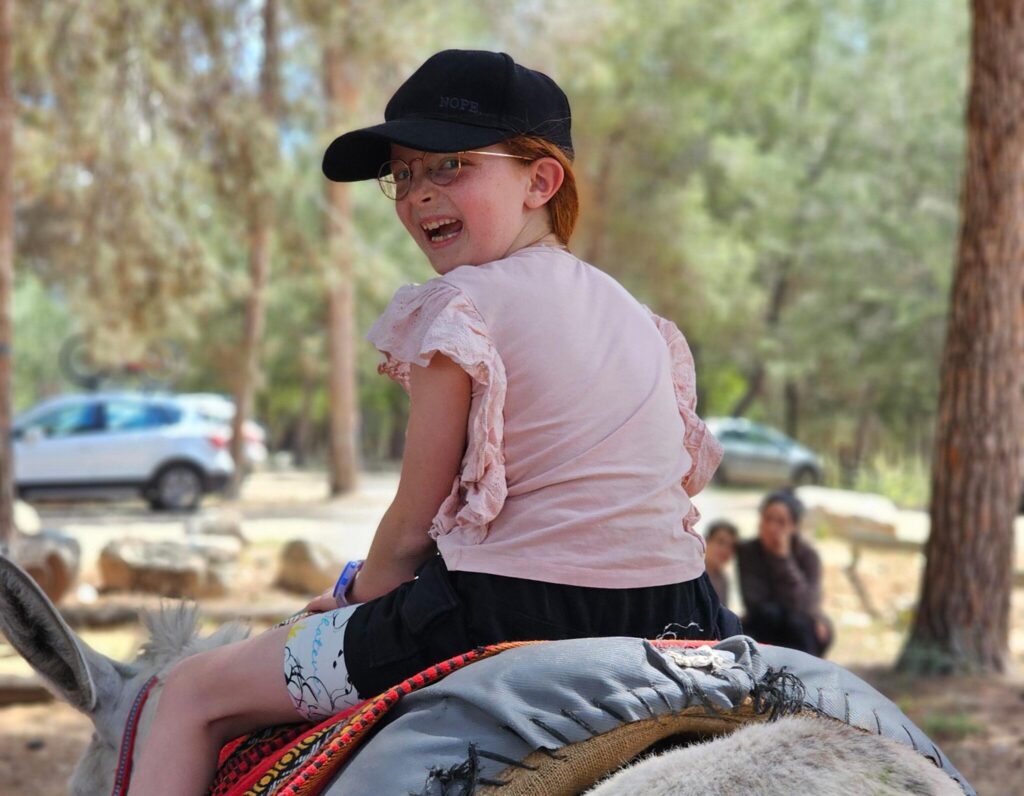
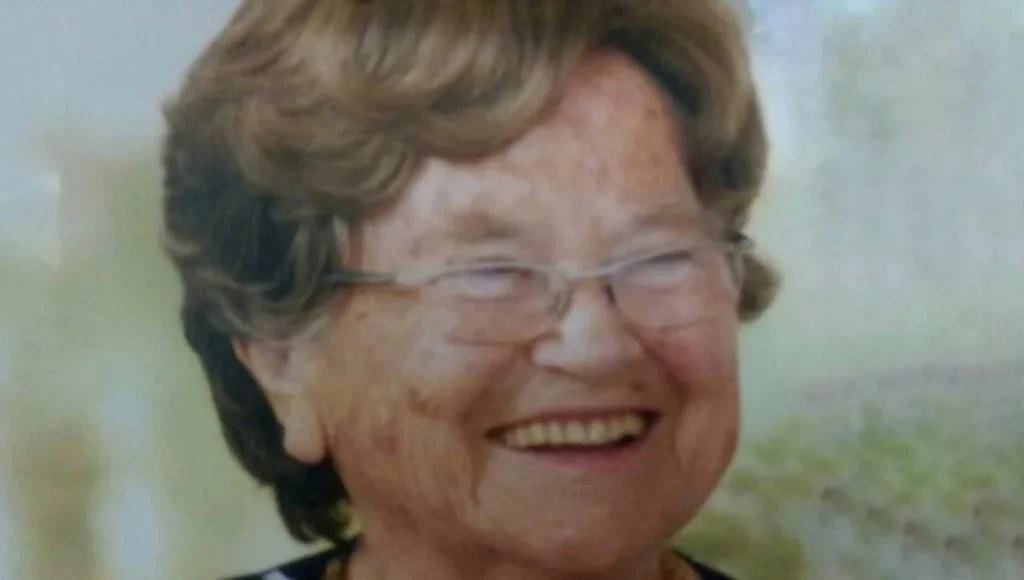
“I include it in every prayer—that God will remove baseless hatred from among us and bring unconditional love.” I met my wife’s aunt, Wally (Valerie), during her final years, when she lived alone following the death of her husband, Yaakov (Egon) Flaschenberg. Wally, whose Hebrew name was Bat-Sheva, passed away in late 2015 without children, a result of the horrors she endured during the Holocaust. A few months after she passed, my wife and I had a daughter. We named her Ela, and we knew immediately her second name would honor Aunt Wally: Ela Bat-Sheva.
On June 17, 1998, Jewish filmmaker Steven Spielberg sent interviewers to document Holocaust survivors. Wally was one of them. For the first time, she told her story to interviewer Iris Shalev, 43 years after her liberation from Bergen-Belsen.
Sabbath Songs by the Fireplace
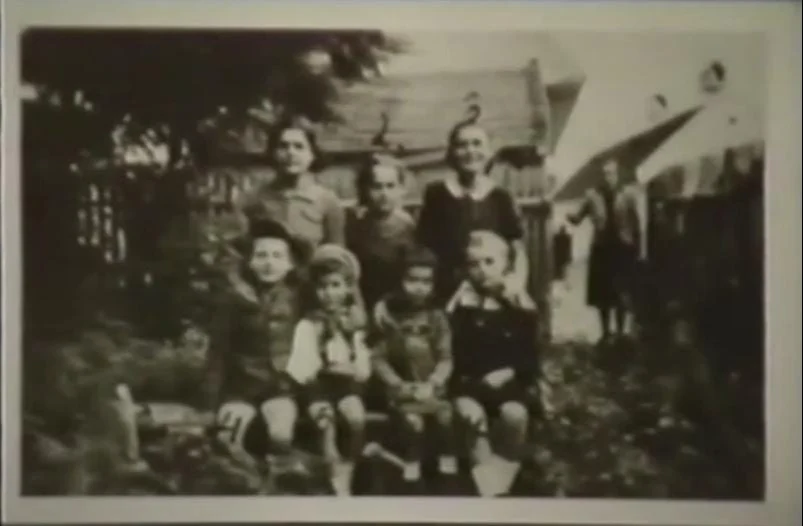
Valerie Reichental was born in 1928 in a small village near Breichl in Czechoslovakia (now Slovakia), to Shlomo Ksenoval and Czerni Ozynir. Her childhood was spent in a modest two-room house with a large kitchen, a garden of vegetables and flowers, and a general store her father owned. There were six Jewish families in the village; the rest were non-Jews.
Wally loved every Jewish holiday. “It was the one time our mother wasn’t busy. The maid served and did the dishes. We sat with Father by the fireplace and sang Shabbat songs. Even now I feel myself on his lap. It was so moving and intimate. Only on Shabbat did he have time for us.” Her mother died when she was ten.
She studied through eighth grade, until age 14. As money became scarce, her older sister began working. “It was just me and Father at home. He said Psalms. In our spare time, we played chess and other games. It was too quiet. Tense.” Life was growing darker.
Until deportation to the ghettos, the Jews had no problems with the Hungarian police or their neighbors. “We stayed quietly at home, in fear. But everyone thought: it won’t reach us.”
We Didn’t Think It Was the End
In April 1944, her family was sent to a ghetto. They packed a few belongings and rode a wagon to the Budvaso ghetto, where they stayed for four weeks. “We knew trouble was coming, but we didn’t think it was the end.” In early June, they were loaded onto trains. “They said we were going to work. We were naive.”
They were first brought to a brick factory in Ishaukover, where conditions were terrible. “No one knew what was happening or what was coming. Everyone was terrified. The unknown.” After ten days, they were put on trains again.
After Three Days, the Doors Opened: ‘Quick, Quick, Quick’
Wally, her father, sister Heda, younger brothers Yossi and Hrani, a cousin with four small children, another uncle and aunt with three children (only one survived), and three more cousins boarded the train. Her older sister survived the Holocaust. Her two younger brothers did not.
“I think there was only room to sit. There was a bucket for a toilet.” After three days, the doors opened. The Germans shouted: “Quick, quick, quick.” Men were separated from women and children. “I saw Father holding my little brother’s hand far away. I waved goodbye. It was just my sister, me, and our cousin with her four little ones.”
He Asked, ‘Are You Strong Enough to Work?’
Wally remembers Mengele. “He stood at the gates of Auschwitz—tall, handsome. I was short and heavy. He grabbed my arm and asked, ‘How old are you?’ The Slovaks and Poles whispered to lie—the young were sent left. I said 18. He asked, ‘Are you strong? Can you work?’ I said yes. He pushed me and I ran after my sister. She was the only one left. The older aunts went left. We never saw them again.”
The walk through the camp was horrifying. “We passed fences, people shouting for food, in striped clothes. We thought they were mad. Not Jews. Not people. We gave them what little we had. They pounced like animals. Weeks later, we were the same.”
“Before I realized, I was in a building. They told us to undress, fast, into showers. We were counted, naked. SS officers walked among us. No time to think. Then they gave us rags to wear.”
From Auschwitz to Bremen
After about six weeks, near Tisha B’Av, they were once again loaded onto trains. “They took us from Auschwitz to Bremen, Germany. The night was dark because of British and American bombing raids. By morning, after a long march, we arrived at the camp. There were blocks of three-tier bunks, clean bedding, a small piece of soap, and even showers. It felt like paradise. We worked there and were sometimes mistreated, even by the Jewish kapos who had to act that way.”
“Each morning, a truck arrived to take us to very hard, dirty labor. We cleared rubble. When there were bombings, the Germans ran for cover, and we didn’t have to work for a while. In the ruins, we sometimes found food. We were less hungry than we were in Auschwitz.”
“We had no idea what was happening in the war. We looked at the Germans living among the ruins and were amazed. In the mornings, when we drove past burning streets, we saw apartments that still had curtains. People slept in normal beds. It made no sense to us.”
You Didn’t Want to Fast—Now You Are
Until Hanukkah, they managed to follow the Jewish calendar. Wally recalled an emotional story: “A day or two before Yom Kippur, we didn’t eat our bread so we could save it for the evening. We knew we’d get back after nightfall and wouldn’t be able to eat. There were about 20 Orthodox girls. Others mocked us: ‘Idiots, we fast all year—why fast now?’ On the way back to camp, we ate the bread just before sunset. When we got back, we were told the kitchen had been destroyed in the bombing. No food was distributed. We laughed: ‘You didn’t want to fast—now you are.'”
Would Crying Help?
“In the pouring rain on the way to work, I started singing a Zionist song in Hungarian: ‘Don’t despair, Jew, we will go up to the Land of Israel. We will be okay.’ My sister scolded me, ‘What are you singing for? We’re wet and starving!’ I asked her, ‘Will crying help?’ Everyone joined me. Even the Germans didn’t understand how we were still singing and hoping.”
From Bergen-Belsen to Freedom
They remained at the labor camp, factory, and ruins until April 1945. Then they were loaded onto trains once more—ten days before the war ended—and sent to Bergen-Belsen. “No one said anything. We were put on a train in the middle of the night. Bergen-Belsen was endless. I don’t know if there were more dead or alive.”
“The conditions were inhuman. Five or six girls to a bed. Feces everywhere. Lice. We didn’t dare get down from the bunks—there were corpses on the ground. Through the barrack windows, we saw wagons full of the dead.”
We Rejoiced Without Strength
“After a few days, we heard tanks and cheers. We walked outside and saw British soldiers. We rejoiced—but without strength. After ten days without food, I was given a can of beans with meat. Twenty-eight thousand people died there even after the liberation. Everyone got typhus.”
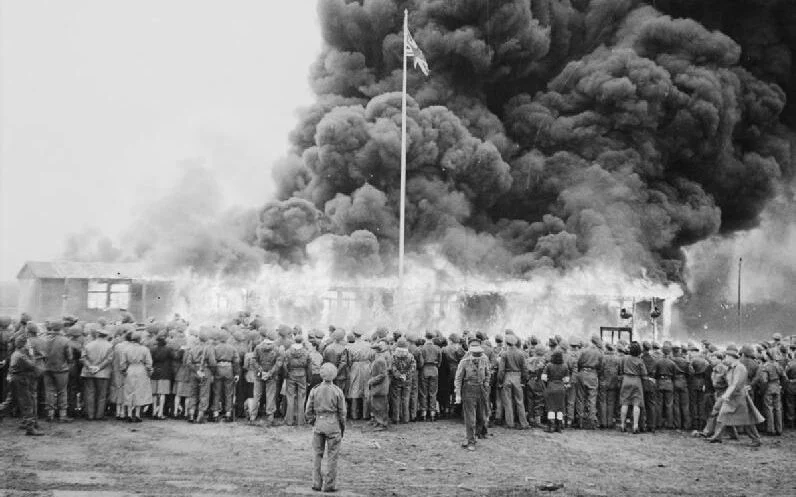
It took Wally and her sister six weeks to recover. “We hoped to return home. We knew our mother’s grave was there. No one else had a grave. When we got to our home, the non-Jew who once seemed kind said, ‘I live here now,’ and slammed the door.”
Where I Met My Husband
Wally and her sister knew there was no future for them in exile. “We went to Bratislava and joined a Bnei Akiva hachshara. That’s where I met my husband, Yaakov (Egon) Flaschenberg. He was a counselor there. The goal was to make Aliyah. We stayed there until February 1946.”
Wally and Egon married in Italy and later reached Cyprus—two days before Yom Kippur 1946. After six months, they boarded a Palmach ship and arrived in Israel on March 15, 1947. They spent two months in Atlit, then moved to Givat Olga for three days, and finally settled in Bnei Brak thanks to Egon’s job—near Wally’s sister.
I Had No Children, But My Sister Has a Legacy
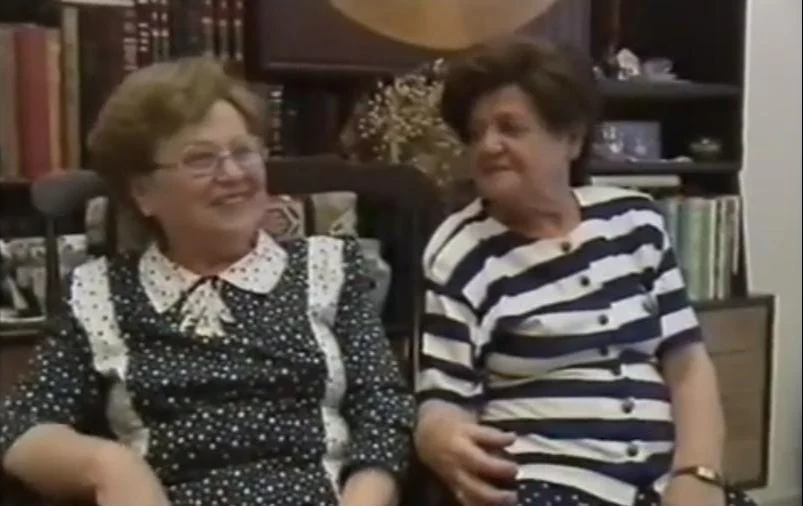
Wally recounted her difficult feelings after arriving in Israel: “Holocaust survivors kept to themselves. We didn’t connect with outsiders. I had a neighbor who had been in Buchenwald and later fought in the War of Independence. He told me they never spoke, fearing the soldiers would find out they’d been in the camps—because people said we went ‘like sheep to the slaughter.’ After his friend died, he regretted never opening up to him. We were ashamed to talk.”
Faith remained central to Wally’s life, despite the horrors and despite not having children of her own. “Faith and religion helped me. I never had the chance to have children, but my sister does. A next generation lives on.”
She ended with a message: “On the train after liberation, I told myself—when we get home, everyone will love each other. Everyone will be friends. Sadly, we don’t see that. I include it in every prayer—that God will remove baseless hatred from among us and bring unconditional love and brotherhood.