
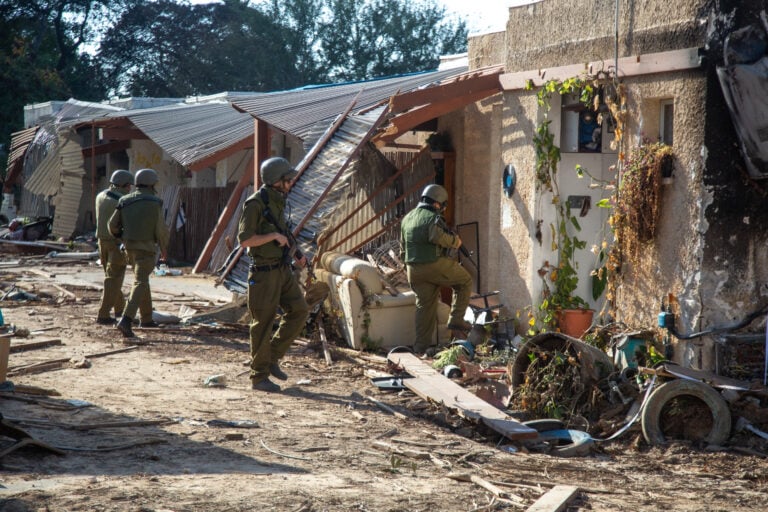
The IDF released today (Wednesday) its official investigation into the events that unfolded in Kibbutz Ein Hashlosha during the October 7 terror attack. The inquiry, led by Col. Ziv Nemani, was presented directly to residents of the kibbutz. The findings reveal a series of operational failures—from intelligence preparation and troop deployment to the initial response on the ground.
The third wave was stopped
According to the report, the first wave of approximately 15 terrorists, most from Hamas’s Nukhba unit, infiltrated the kibbutz in the early morning hours. A second wave of 15 to 25 terrorists followed. A third wave was likely thwarted by contact with IDF forces in the area. During the attack, three residents and Maj. (res.) Ram Negbi, the kibbutz’s chief of security, were killed.
Key failures identified in the investigation
עוד באותו הנושא
- Selichot Season Opens with Spiritual Power and Unifying Prayer at the Western Wall
- With Hope and Resilience, Hostage Survivors Embrace Life After Captivity
- Beyond the Conventional: Haredi Soldiers and Wives of Warriors Stand with the IDF
- The School Year Opens Across Israel with Historic Returns and New Beginnings
- Threat assessment scenarios failed to reflect the true scale of the attack
- Inadequate state of readiness
- Disruptions in relaying critical instructions to forces on the ground
- Delays in IDF reinforcements, which only reached the kibbutz in the afternoon
- Full evacuation of residents was not completed until 18:00 the following day
The report also questions the performance of some members of the local rapid response team but commends civilians who demonstrated courage and actively sought contact with the terrorists.
Recommendations from the investigation
- Upgrade and fortify defense infrastructure
- Adapt siren systems to address evolving threats
- Reopen and properly stock the kibbutz armory; increase the quantity of weapons in local communities
- Improve communication and coordination between the IDF and civilian settlements
- Ensure all protected spaces can be securely locked
Lessons learned and next steps
The investigation outlines several operational lessons, including the importance of situational awareness shown by the chief of security, the need to reinforce the breached border fence, and the critical role of reliable communication between the military and the settlements. It also highlighted a shortfall in the quantity of weapons allocated to the rapid response team—an issue for which the IDF has accepted responsibility.
The IDF stressed that lessons from the attack are already being implemented and that comprehensive changes are underway in response to the failures of that day.