
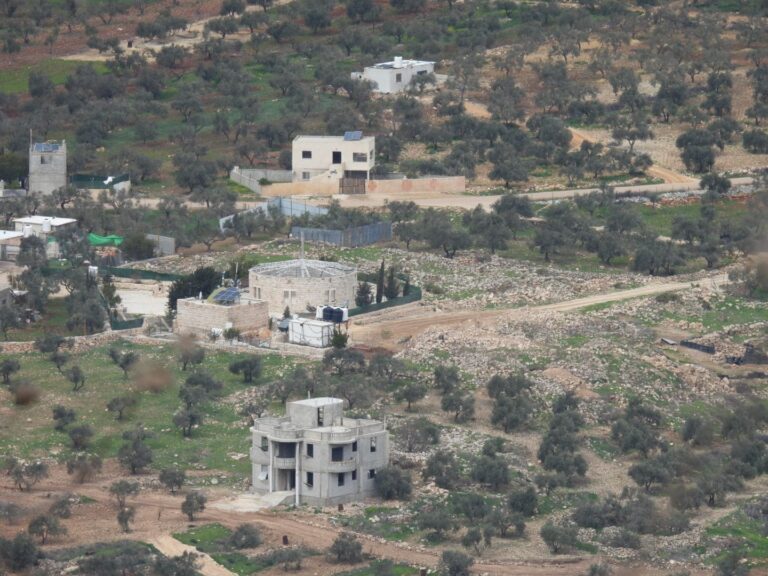
Inspectors from the Samaria Regional Council, together with the organization “Protecting the Eternal,” have revealed troubling findings of ongoing destruction at Khirbet Tana al-Fauqa—an archaeological site considered one of the most significant in eastern Samaria. The site is identified by researchers as the biblical city of Taanath Shiloh, a historic border town of the Tribe of Ephraim, located on the slopes of Mount Itamar.
According to the researchers, illegal Palestinian construction at the site has intensified in recent years, including the building of new structures, renovation of a mosque, and the erection of a large pergola directly atop the ancient ruins.
The damage was discovered by the Samaria Council’s field coordinator during a routine patrol. The findings were documented and studied in cooperation with “Protecting the Eternal,” a coalition of organizations dedicated to the protection, preservation, and development of antiquities and heritage sites across Judea and Samaria.
Findings from the Early Bronze Age to the Middle Ages
According to the organization, the site is uniquely multi-period, containing archaeological layers from the Early Bronze Age through the Middle Ages. The leading academic view identifies it as the biblical city of Taanath Shiloh, a northeastern border town of the Tribe of Ephraim.
“Since 2019, there has been a significant rise in illegal construction at the site, which reached a peak in recent months with the erection of a large pergola directly on the ruins, the construction of homes nearby, and the renovation of the central mosque,” said representatives from “Protecting the Eternal.”
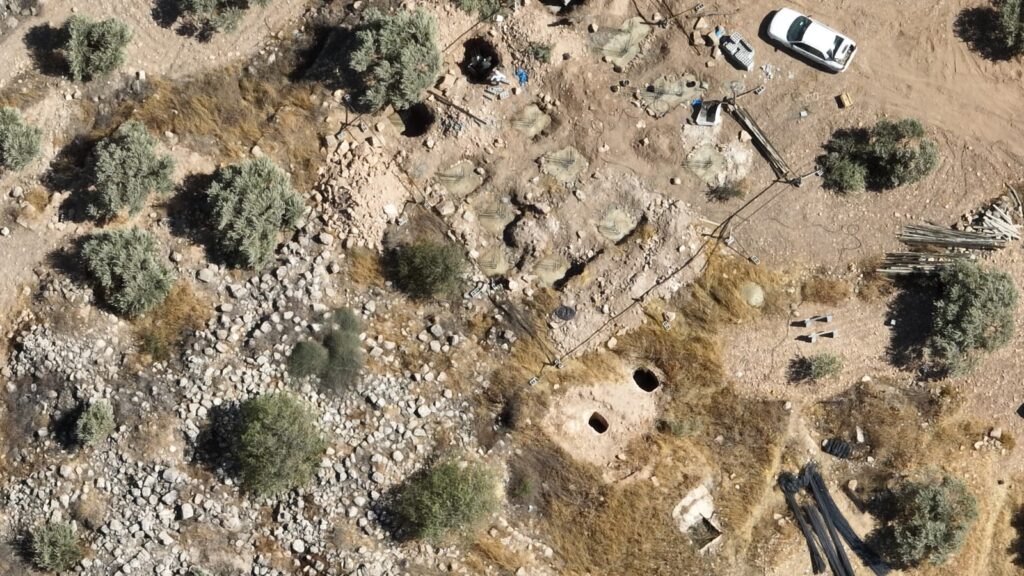
The organization noted that because the site is located in Area B, enforcement and access are limited. “Aerial photographs from 2019 compared to the current situation show the scale of the damage and the changes that have taken place. Parts of the site are now undergoing destruction, and irreplaceable archaeological information is being lost forever,” the organization warned.
Urgent Action Required
Head of the Samaria Regional Council, Yossi Dagan, emphasized: “Immediate action is required to stop the destruction and to protect the Jewish heritage of the Land of Israel. Law enforcement cannot stand idly by while archaeological sites of immense historical value to the Jewish people—and to world civilization—are being systematically destroyed.”
Dagan called on the relevant government ministries to act to halt the damage to this and other historical sites throughout Judea and Samaria.