
The Israel Defense Forces (IDF) released a damning internal report on Wednesday detailing critical failures that contributed to the massacre in Sderot during Hamas’ October 7, 2023 invasion. Among the most serious findings: the city’s local rapid response team was forced to confront heavily armed terrorists using only handguns.
Rifles Were Removed Over a Year Before the Attack
According to the IDF’s investigation, long rifles were confiscated from the civilian defense team as far back as August 2022—nearly 18 months before the massacre—due to the lack of a proper weapons storage facility. The rifles were never returned. When the attack occurred, volunteer responders had only their personal sidearms to defend the city.
The report also notes that no raid scenarios had been rehearsed in the two years prior, no combat training was conducted, and no emergency response protocols were in place for such a scenario.
עוד באותו הנושא
Hundreds of Soldiers Arrived—But Got Stuck
The Gaza Division’s northern brigade, responsible for protecting Sderot, had no specific defense plan for the city. No command center was activated, and there was no mission breakdown or coordination with other forces. A senior defense official admitted: “If this isn’t abandonment—I don’t know what is.”
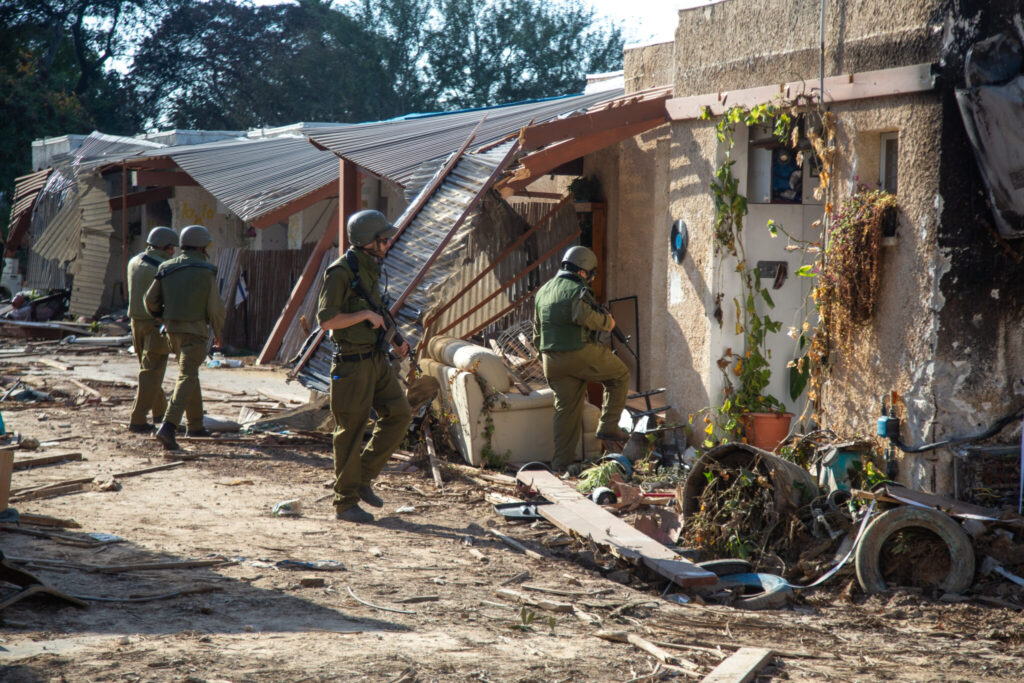
Hundreds of soldiers poured into the city throughout the day, but many were trapped by blocked roads and traffic bottlenecks. Of approximately 1,000 troops deployed to Sderot, only 800 were able to engage. Though no residents were kidnapped, the toll was grim: 53 civilians and security personnel were killed—37 civilians, 11 police officers, 3 IDF soldiers, and 2 firefighters.
Police Station Battle Lasted Over 16 Hours
The Hamas assault began with coordinated attacks on two sites: the Mall 7 shopping center and the Sderot police station. Militants stormed the city in pickup trucks, fired on police officers, and took over the station.
Elite Yamam counterterrorism units only regained control in the late evening—more than 16 hours after the battle began. Six officers were killed during the assault and subsequent rescue operations.
Report’s Conclusion: No Coordination, No Command Post, No Preparedness
The probe outlines several core failures:
- No synchronization between IDF, police, and municipal leadership.
- No joint operations center established, despite the large presence of troops.
- No real-time alert was issued to residents that could have allowed roadblocks or early evacuations.
- The city’s security framework relied on generic IDF protocols rather than local-specific planning.
- Communication between forces was disjointed and unstandardized.
The report concludes starkly: “The IDF was not prepared for a wide-scale infiltration. There was no operational depth, no readiness, and Sderot was left exposed.” It recommends assigning a permanent defense force to Sderot and a complete rebuild of its security infrastructure to prevent future vulnerabilities.